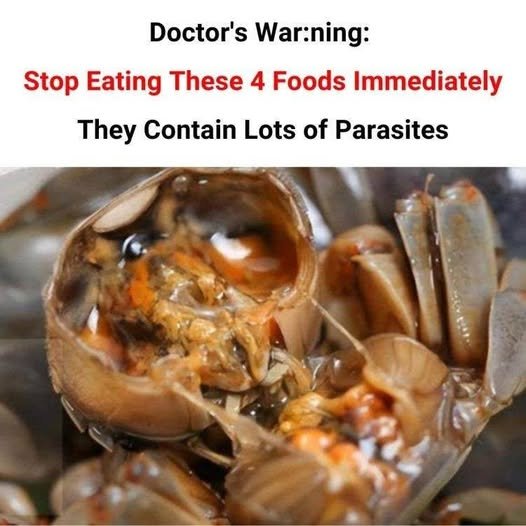
The claim “Doctors warn: Limit eating these 4 foods immediately, they contain a lot of parasites” is a sensational headline that is commonly used in clickbait articles and social media posts. While some foods can occasionally carry parasites if they are raw, undercooked, or contaminated, the claim is misleading because it implies these foods are inherently full of parasites and should be avoided altogether. That is not supported by food safety evidence.
The Facts Behind the Claim
Parasites are organisms that live in or on another organism. Some foodborne parasites can infect humans, but the risk depends largely on how food is produced, handled, and cooked, rather than on the food itself.
1. Raw or Undercooked Fish
Claim: Fish contain many parasites.
Reality: Some wild fish can carry parasites such as roundworms (Anisakis) or tapeworms. However, these parasites are usually killed by:
- Cooking fish to an internal temperature of 63°C (145°F).
- Freezing fish according to food safety guidelines before it is served raw (as in sushi).
Most commercially prepared sushi is made from fish that has been frozen to reduce parasite risk.
2. Pork
Claim: Pork is full of parasites.
Reality: Historically, undercooked pork was linked to the parasite Trichinella. Today, improved farming practices and meat inspection have made this infection rare in many countries. The main risk comes from eating raw or undercooked pork.
Cooking pork thoroughly makes it safe to eat.
3. Fresh Vegetables and Leafy Greens
Claim: Vegetables contain parasites.
Reality: Fresh produce can become contaminated with parasite eggs or cysts through soil, untreated water, or poor hygiene during harvesting and handling. Examples include Giardia and Cryptosporidium.
The solution is not to avoid vegetables but to:
- Wash them thoroughly under running water.
- Peel when appropriate.
- Practise good kitchen hygiene.
4. Shellfish
Claim: Shellfish are loaded with parasites.
Reality: Shellfish are more commonly associated with bacteria and viruses than parasites, although contamination is possible if they are harvested from polluted waters.
Buying shellfish from reputable suppliers and cooking them properly greatly reduces the risk.
Why These Headlines Are Misleading
These viral posts often:
- Exaggerate a genuine food safety issue.
- Omit the fact that proper cooking or washing makes most foods safe.
- Suggest avoiding nutritious foods without scientific justification.
- Use vague phrases like “doctors warn” without identifying any experts or citing credible research.
How to Reduce Your Risk of Foodborne Parasites
You do not need to eliminate these foods from your diet. Instead, follow good food safety practices:
- Cook meat, fish, and seafood to recommended internal temperatures.
- Wash fruits and vegetables thoroughly before eating.
- Avoid cross-contamination by using separate cutting boards for raw meat and ready-to-eat foods.
- Drink clean, treated water.
- Purchase seafood and meat from reputable retailers.
- If eating raw fish, choose products intended for raw consumption that have been handled according to food safety standards.
The Bottom Line
The statement that these four foods “contain a lot of parasites” is misleading. While raw or contaminated foods can occasionally harbour parasites, the risk is generally low when food is produced, stored, prepared, and cooked correctly. Public health authorities recommend safe food handling, not avoiding these foods altogether. A balanced diet that includes properly prepared fish, meat, vegetables, and shellfish remains an important part of healthy eating.