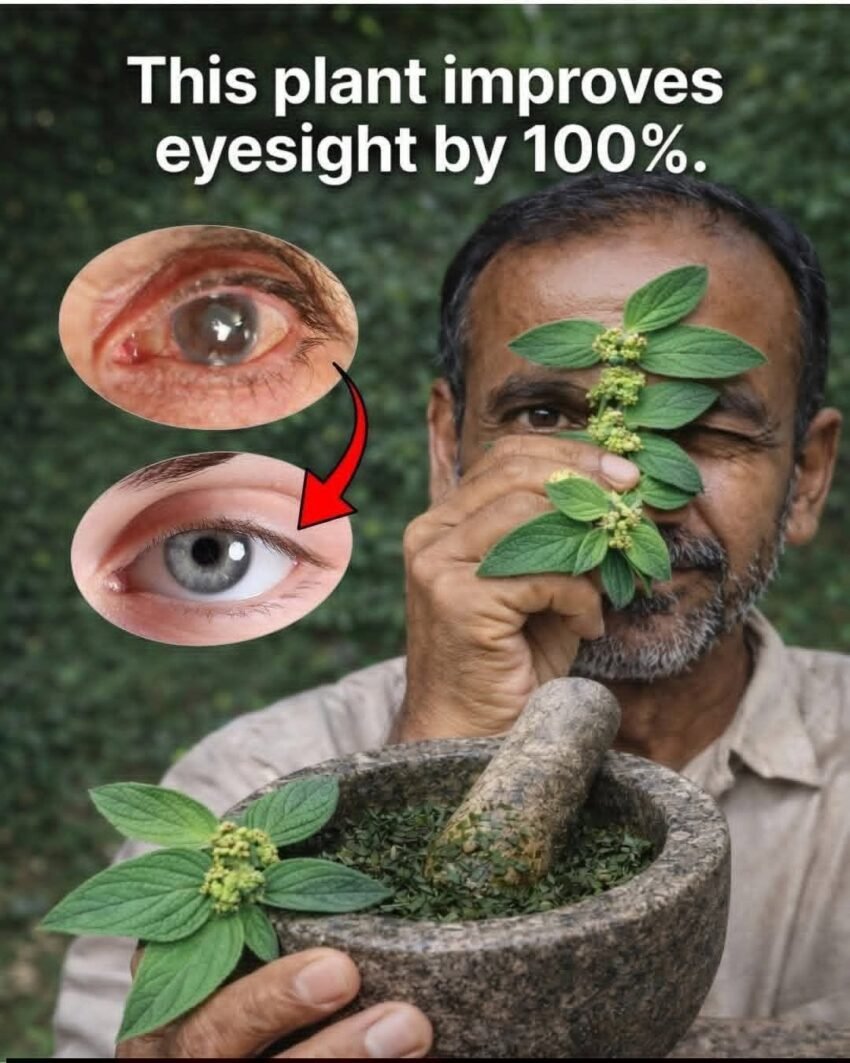
Don’t Ignore This Plant! The “Big-Leaf Milkweed” Herb in Traditional Eye-Care Remedies
Across different regions of the world, traditional herbal practices often highlight local plants believed to support overall wellness. One such plant sometimes mentioned in folk remedies is “big-leaf milkweed”—a broad category name that is often used loosely in traditional discussions rather than a single clearly defined medicinal species.
It’s important to understand from the start: while this plant appears in cultural remedies, there is no strong scientific evidence that it can treat or cure eye diseases such as cataracts, glaucoma, or vision loss.
Still, its role in traditional knowledge systems makes it interesting to explore.
What Is “Big-Leaf Milkweed”?
The term “milkweed” generally refers to plants in the genus Asclepias. In some regions, large-leafed varieties or similar-looking plants are used in folk herbal practices and may be collectively referred to as “big-leaf milkweed.”
These plants are more commonly known for:
- Their milky sap
- Their role in ecosystems (especially for pollinators like butterflies)
- Their traditional use in small-scale herbal preparations
However, identification is important—many milkweed species can be irritating or toxic if misused, so they should never be consumed or applied without proper expert guidance.
Traditional Eye-Care Associations
In some traditional medicine systems, leaves or extracts of certain plants labeled as “milkweed” have been used in external applications, such as:
- Herbal compresses
- Washes or rinses (in highly diluted, prepared forms)
- Steam infusions
These practices are based on traditional beliefs, not clinical evidence.
Claimed traditional uses include:
- Soothing tired eyes
- Reducing the feeling of eye strain
- Cooling inflamed skin around the eyes
Again, these are cultural practices and not medically proven treatments.
Important Safety Warning
This is the most critical part:
Many milkweed species contain compounds that can be:
- Irritating to skin and eyes
- Toxic if ingested
- Harmful if improperly prepared
Because of this:
- It should not be used as an eye drop
- It should not be consumed internally
- It should only be handled with expert herbal guidance
Eye health is delicate, and using unverified plant extracts can cause more harm than benefit.
What Actually Supports Eye Health
Instead of relying on unverified plant remedies, modern eye care focuses on evidence-based approaches such as:
- Regular eye exams with professionals
- Proper management of conditions like dry eye or allergies
- Protective eyewear in sunlight
- Nutrient-rich diet (vitamin A, lutein, omega-3s)
- Medical treatment when needed
The Bottom Line
“Big-leaf milkweed” appears in some traditional herbal stories, but its use in eye care is not scientifically supported and may carry safety risks depending on the species.
While traditional knowledge is culturally important, eye health should always be protected using safe, proven medical practices rather than unverified plant remedies.
If you want, I can turn this into a viral-style post, a shorter reel script, or a “myth vs fact” version for social media.