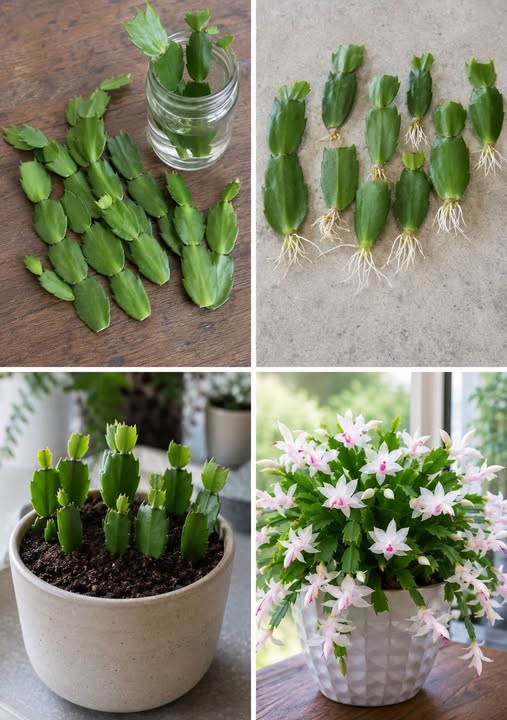
A Christmas cactus (Schlumbergera) is one of the most beloved houseplants thanks to its colorful winter flowers and easy-care nature. Unlike desert cacti, this tropical plant naturally grows in the humid rainforests of Brazil, where it clings to trees and rocks rather than growing in dry sand. With the right care, a Christmas cactus can live for decades and reward you with spectacular blooms every year.
Many gardeners believe these plants flower only once during the holiday season, but that’s not entirely true. By understanding the plant’s natural growth cycle and giving it proper care throughout the year, you can encourage healthier growth, stronger roots, and even multiple blooming periods.
This guide explains everything you need to know to help your Christmas cactus thrive naturally.
Understanding the Christmas Cactus
Unlike traditional cacti, Christmas cacti prefer:
- Bright indirect light
- Moderate watering
- Higher humidity
- Well-draining soil
- Cooler temperatures before blooming
Their flat green stems store water, making them more drought-tolerant than many tropical plants, but they still appreciate consistent care.
Choose the Right Location
Location plays one of the biggest roles in flower production.
The ideal spot provides:
- Bright but indirect sunlight
- Morning sun
- Afternoon shade
- Good air circulation
- Stable temperatures
Too much direct sunlight may scorch the leaves, while too little light often results in poor flowering.
Water Properly
One of the most common mistakes is overwatering.
Instead:
- Water thoroughly.
- Allow the top inch of soil to dry.
- Empty excess water from the saucer.
- Never let roots sit in standing water.
During winter flowering, slightly reduce watering but don’t allow the soil to become completely dry.
Use Well-Draining Soil
Christmas cactus roots dislike soggy soil.
A suitable homemade mix includes:
- 2 parts potting soil
- 1 part perlite
- 1 part orchid bark
- A small amount of compost
This combination provides moisture while allowing excess water to drain away quickly.
Feed Your Plant Naturally
Healthy plants bloom more generously.
Natural fertilizers include:
Compost Tea
Rich in beneficial nutrients.
Worm Castings
Provide slow-release nutrition without burning roots.
Fish Emulsion
Supplies nitrogen and trace minerals.
Banana Peel Tea
Contains potassium, which supports flower development.
To make it:
- Soak one banana peel in water for 24 hours.
- Remove the peel.
- Water the plant once every month during active growth.
Avoid over-fertilizing because excess nitrogen encourages leaves rather than flowers.
Increase Humidity
Since Christmas cactus is native to tropical forests, humidity helps keep stems healthy.
Simple ways include:
- Pebble tray filled with water
- Room humidifier
- Grouping plants together
- Occasional light misting
Aim for humidity levels around 50–60%.
Encourage More Blooms
Flower buds develop when the plant experiences:
- Cooler nights
- Longer periods of darkness
- Slightly reduced watering
For about six to eight weeks before the desired bloom period:
- Keep nighttime temperatures around 50–55°F (10–13°C).
- Provide 12–14 hours of uninterrupted darkness each night.
- Water less frequently while avoiding severe dryness.
Once buds appear, move the plant back to its normal location.
Avoid Moving the Plant
Once flower buds begin developing, avoid rotating or relocating the pot.
Sudden changes in:
- Light
- Temperature
- Humidity
can cause buds to drop before opening.
Repot Only When Necessary
Christmas cactus actually blooms better when slightly root-bound.
Repot only every 2–4 years or when:
- Roots circle the pot
- Water drains too quickly
- Soil becomes compacted
Choose a pot only one size larger than the previous one.
Prune After Flowering
Light pruning encourages branching.
More branches mean:
- Fuller growth
- More flowering tips
- Healthier shape
Simply twist off one or two stem segments after blooming.
The removed pieces can also be rooted to grow new plants.
Propagate Naturally
Propagation is simple.
- Remove a cutting with 2–4 stem segments.
- Allow it to dry for one day.
- Plant in moist potting mix.
- Keep warm and lightly moist.
Roots usually form within several weeks.
Common Problems and Solutions
Bud Drop
Possible causes:
- Moving the plant
- Temperature changes
- Overwatering
- Dry indoor air
Yellow Leaves
Usually caused by:
- Poor drainage
- Too much water
- Root rot
Wrinkled Stems
Often indicate:
- Underwatering
- Root damage
- Extremely dry air
No Flowers
Possible reasons include:
- Too much fertilizer
- Not enough darkness
- Warm nighttime temperatures
- Insufficient light
Seasonal Care Guide
Spring
- Resume regular watering.
- Begin monthly feeding.
- Repot if needed.
Summer
- Bright indirect light.
- Water consistently.
- Increase humidity during hot weather.
Autumn
- Reduce watering slightly.
- Begin cool-night treatment.
- Provide long periods of darkness.
Winter
- Enjoy the blooms.
- Water moderately.
- Avoid moving the plant.
Natural Care Tips
Many gardeners use gentle, natural methods to keep Christmas cacti healthy.
Popular options include:
- Compost
- Worm castings
- Diluted fish emulsion
- Banana peel tea
- Crushed eggshells (used sparingly in compost, not directly as a cure-all)
While these can provide nutrients, remember that healthy blooming depends primarily on proper light, watering, temperature, and humidity rather than any single homemade remedy.
Frequently Asked Questions
How long can a Christmas cactus live?
With proper care, many plants live 20–50 years, and some have been passed down through generations.
Can it bloom more than once a year?
Yes. If it receives the correct combination of cool temperatures and long nights, some plants produce a second flush of flowers.
Should I mist my Christmas cactus?
Occasional misting can help in very dry homes, but maintaining overall humidity is generally more effective.
Why are my flower buds falling off?
Sudden environmental changes—such as moving the plant, drafts, temperature swings, or inconsistent watering—are common causes.
Final Thoughts
The secret to a thriving Christmas cactus isn’t a miracle fertilizer—it’s understanding its tropical origins. Bright indirect light, well-draining soil, moderate watering, and a period of cool nights with extended darkness before blooming are the key ingredients for abundant flowers. With consistent care, your Christmas cactus can remain lush, healthy, and bloom beautifully for many holiday seasons to come.
SEO Title: Double the Blooms: How to Make Your Christmas Cactus Thrive Year-Round Naturally
Meta Description: Learn how to care for your Christmas cactus with natural growing tips, proper watering, humidity, feeding, and blooming secrets to enjoy healthier plants and beautiful flowers year after year.