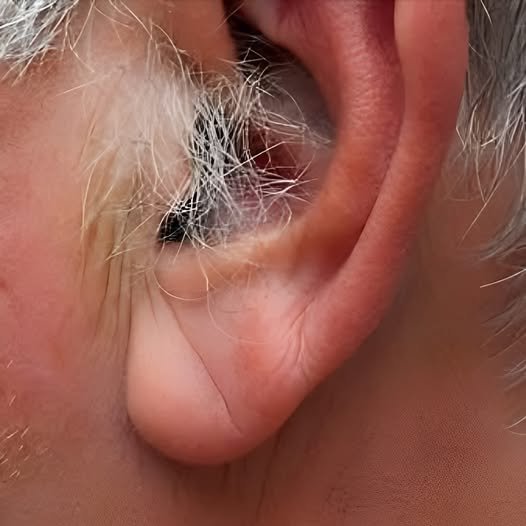
Many people notice new hair appearing in unusual places as they get older—especially around the ears. A few strands on the outer ear or near the ear canal may seem surprising, but this change is actually a common part of ageing.
So, why does ear hair become more noticeable after 40? Is it a sign of a health problem, or is it simply a natural change in the body?
The answer is mostly related to hormones, genetics, and the normal ageing process.
Why Does Ear Hair Increase After 40?
As men and women age, changes occur in hormone levels and the way hair follicles respond to those hormones.
One important factor is androgens, a group of hormones that includes testosterone. Even when hormone levels gradually change with age, certain hair follicles can become more sensitive to these hormones.
This may lead to:
- Longer hairs around the ears.
- Thicker or darker ear hair.
- More noticeable hair growth on the face, nose, or other areas.
For many people, these changes become more visible after the age of 40 or 50.
Is Ear Hair a Sign of Ageing?
In most cases, yes. Ear hair growth is simply one of the many physical changes associated with getting older.
Similar changes may include:
- Grey hair.
- Changes in skin texture.
- Slower hair growth on the scalp.
- Increased facial or body hair in some areas.
Ageing affects every part of the body, including hair follicles.
Does Ear Hair Mean Higher Testosterone?
A common belief is that more ear hair means a person has unusually high testosterone. However, this is not necessarily true.
Hair growth patterns are influenced by several factors:
- Genetics.
- Hormone sensitivity.
- Age.
- Ethnicity.
- Individual biology.
Two people with similar hormone levels can have very different patterns of body hair growth.
Why Does the Body Grow Hair in the Ears?
Ear hair has a purpose. Small hairs around the ear can help protect the ear canal by:
- Trapping dust and particles.
- Preventing some debris from entering deeper into the ear.
- Supporting the ear’s natural protective barrier.
However, as we age, these hairs can sometimes become longer and more noticeable than they were earlier in life.
Is Excessive Ear Hair a Health Warning?
Usually, ear hair alone is not a sign of illness.
However, sudden or unusual changes in body hair growth—especially when combined with other symptoms—may be worth discussing with a healthcare professional.
Examples of changes that may deserve attention include:
- Sudden increase in body or facial hair.
- Major hormonal changes.
- Unexplained weight changes.
- Severe fatigue.
- Other unusual physical changes.
Most of the time, though, visible ear hair is simply a normal variation of ageing.
Does Ear Hair Affect Hearing?
The small amount of hair normally found around the ear does not affect hearing.
However, very thick hair inside the ear canal, combined with earwax buildup, may occasionally contribute to discomfort or a blocked sensation.
If you experience:
- Reduced hearing.
- Ear pain.
- Ringing sounds.
- A feeling of fullness.
it is better to have your ears checked rather than assuming hair is the cause.
Should You Remove Ear Hair?
Many people choose to remove visible ear hair for cosmetic reasons. If you do, safety matters.
Common options include:
Trimming
Using a small electric ear-hair trimmer is usually the safest method because it removes visible hair without irritating the skin.
Careful Cutting
Small scissors designed for grooming can be used carefully, but avoid inserting sharp objects deep into the ear canal.
Avoid Plucking
Pulling hairs out by the root can irritate the skin and may increase the risk of inflammation or infection.
Avoid Waxing Inside the Ear
The skin inside the ear canal is delicate and can be easily damaged.
Why These Small Changes Matter
Ageing often happens through small changes that we notice gradually—a few more grey hairs, different skin texture, or new hair growth patterns.
These changes are reminders that the body is constantly adapting over time.
Rather than seeing ear hair as something strange, it can be viewed as another example of how genetics, hormones, and ageing interact.
Final Thoughts
Ear hair after 40 is usually not random and is rarely something to worry about. It is a natural result of how hair follicles respond to ageing and hormonal changes.
While it may not be everyone’s favourite sign of getting older, it is simply one of the many ways the body changes throughout life.
If the change is sudden, extreme, or accompanied by other unusual symptoms, a healthcare professional can help determine whether anything else is going on. Otherwise, a little extra ear hair is just another normal part of ageing.