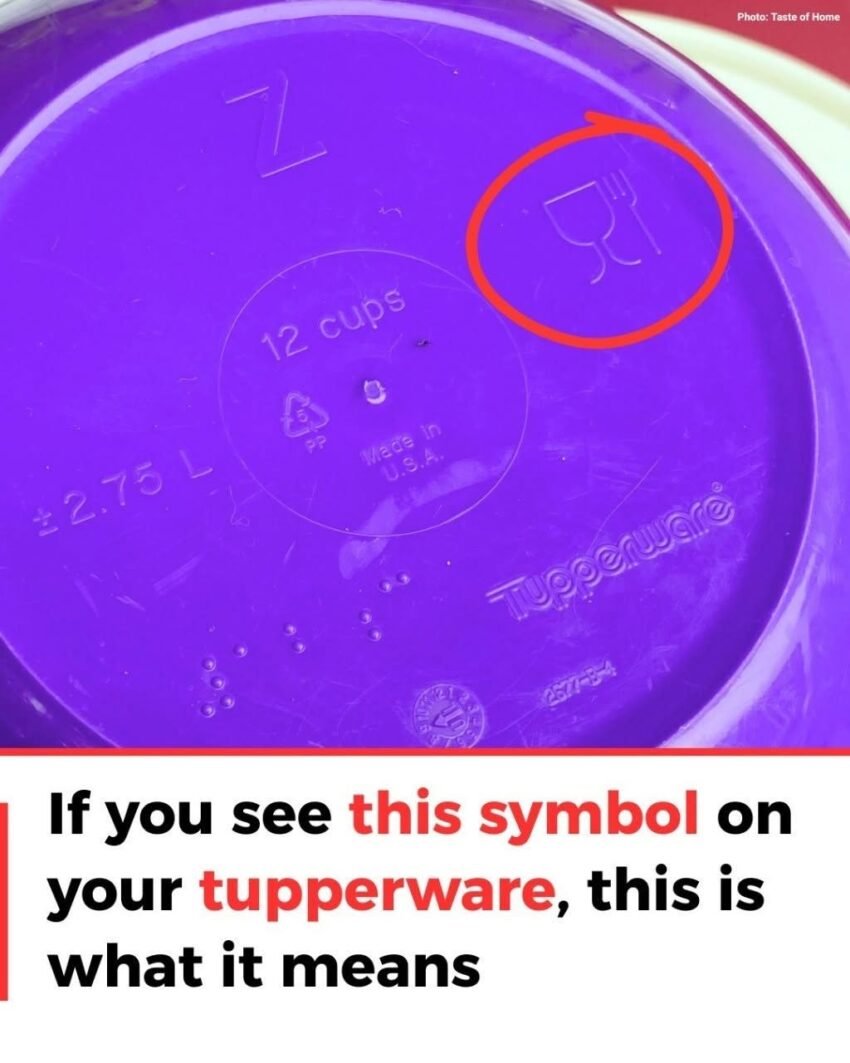
Ever Wondered What Those Symbols on Your Tupperware Actually Mean?
You’ve probably seen them a hundred times.
Flip over a plastic container, and there they are—tiny triangles, numbers, little cups, forks, snowflakes, microwave icons… and most people just ignore them.
But those symbols actually tell you something important about how safe (or unsafe) your container is for different uses.
And once you understand them, you stop guessing and start using your containers the right way.
Let’s break it down.
1. The Recycling Triangle (The Number Inside Matters Most)
That little triangle made of arrows is the recycling symbol. Inside it, there’s usually a number from 1 to 7.
That number tells you what type of plastic the container is made from.
The most common ones:
#1 – PET or PETE
- Used for: disposable bottles, some food containers
- Safe for single use
- Not meant for repeated heating
#2 – HDPE
- Strong, durable plastic
- Often used for milk jugs and detergent bottles
- Generally considered food-safe and stable
#4 – LDPE
- Flexible plastic (like squeeze bottles or wraps)
- Low chemical risk
- Not typically used for rigid containers
#5 – PP (Polypropylene) ← very important
- Common in reusable food containers (including many Tupperware items)
- Heat resistant
- Microwave-safe in many cases
👉 If your container is reusable and microwave-friendly, it’s often #5.
#6 – PS (Polystyrene)
- Think foam containers or disposable trays
- Not great for heat or reuse
#7 – “Other”
- Mixed plastics or specialty materials
- Safety varies—this is the “check carefully” category
2. The Fork and Cup Symbol (Food Safe)
If you see a fork and glass icon, that’s actually a good sign.
It means:
- The plastic is food-safe
- It’s approved for contact with food
No symbol = no guarantee it’s meant for food storage.
3. Microwave-Safe Symbol
This usually looks like:
- A microwave icon
- Or wavy heat lines
If you see it:
- The container is designed to handle microwave heat
- Still, it may have limits (like no high-fat foods or no long heating)
If it’s missing:
- Don’t assume it’s safe—heat can warp plastic or release chemicals
4. Dishwasher-Safe Symbol
Often shown as:
- Plates with water droplets
- Or a dishwasher icon
Meaning:
- It can withstand dishwasher temperatures
- Usually safe on the top rack
Without it:
- Hand washing is safer for the container’s lifespan
5. Freezer-Safe Symbol
Looks like:
- A snowflake ❄️
Meaning:
- The plastic won’t crack or become brittle in freezing temperatures
- Good for meal prep and long storage
6. The Little “Plastic Cup with Number” on Tupperware
On many Tupperware products, you’ll often see:
- A number (like 5 or 7)
- Sometimes combined with small icons
This is basically the manufacturer telling you:
“Here’s what this container can safely handle.”
But here’s the catch:
Even if a container is durable, heat + fat + time can still affect plastic over the long run.
7. What Most People Get Wrong
A few common mistakes:
❌ “If it’s plastic, it’s all the same”
Not true—plastic types behave very differently.
❌ “Microwave-safe means unlimited heating”
Nope. It usually means limited, controlled heating.
❌ “Old containers are still fine forever”
Plastic degrades over time, especially with scratches or cloudiness.
Bottom Line
Those tiny symbols aren’t decoration—they’re instructions.
Once you understand them, you can:
- Heat food more safely
- Store leftovers smarter
- Avoid using the wrong container for the wrong job
So next time you flip over a container, you won’t ignore those markings—you’ll actually know what they’re trying to tell you.
If you want, I can also make this into:
- a super simple “cheat sheet” image-style guide
- a viral TikTok script
- or a breakdown of “which plastics to avoid completely”