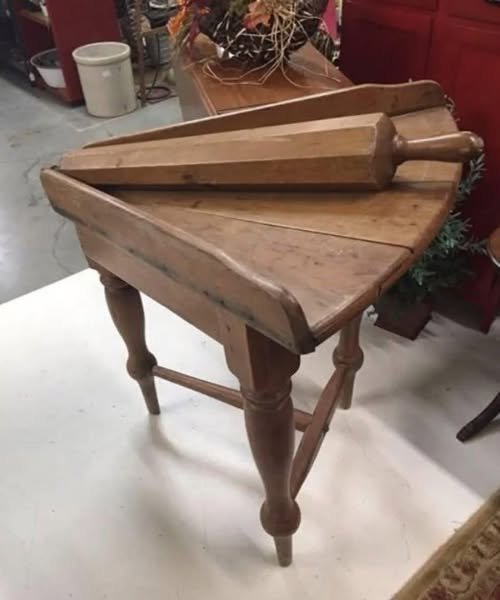
At first glance, this unusual wooden piece may look like a rustic bench or an oddly shaped table. In reality, it’s a charming piece of kitchen history—a traditional wooden dough trough, often paired with a large wooden rolling pin, used for making bread, pastries, noodles, and pie crusts long before modern countertops and electric mixers became common.
A Closer Look at the Image
The photograph shows two antique kitchen tools:
- The wooden trough (bottom): A sturdy stand with raised sides designed to hold flour and dough securely while mixing and kneading.
- The oversized rolling pin (top): A long, solid hardwood roller used to flatten large batches of dough for breads, biscuits, and pastries.
Together, these tools formed the heart of many farmhouse kitchens throughout the 18th, 19th, and early 20th centuries.
What Was a Dough Trough Used For?
Before stainless-steel bowls and stand mixers existed, families baked bread from scratch several times a week.
The dough trough served multiple purposes:
- Holding large quantities of flour.
- Mixing ingredients without spilling.
- Kneading heavy bread dough.
- Allowing dough to rest and rise.
- Keeping the work area clean.
The raised sides prevented flour from scattering, making it easier to handle large batches.
Why Is the Rolling Pin So Large?
Unlike today’s lightweight rolling pins, antique versions were often much longer and heavier.
The extra size made it easier to:
- Roll dough evenly.
- Prepare large family-sized pies.
- Flatten pastry sheets.
- Make noodles and biscuits.
- Work with dense bread dough.
Many were handcrafted from maple, oak, or other durable hardwoods that could withstand decades of daily use.
Built to Last Generations
One reason antique kitchen furniture remains popular is its exceptional craftsmanship.
These pieces were typically:
- Hand-built by skilled carpenters.
- Made from solid hardwood.
- Joined with traditional woodworking techniques.
- Designed to survive decades of heavy use.
Many examples are still sturdy enough to be used today, even after more than 100 years.
More Than a Kitchen Tool
In many households, baking bread was a family activity.
Children learned recipes from parents and grandparents while gathered around the dough trough. Fresh bread was often baked several times each week, making this piece one of the most frequently used items in the home.
Because of these memories, antique dough troughs are treasured as family heirlooms.
Popular Today as Rustic Décor
Although few people still use them for baking, antique dough troughs have found new life in home decorating.
Collectors and homeowners often repurpose them as:
- Entryway tables
- Coffee tables
- Plant displays
- Kitchen islands
- Blanket or magazine holders
- Farmhouse-style decorative pieces
Their warm wood tones and handcrafted appearance fit beautifully with rustic, country, and vintage-inspired interiors.
Are They Valuable?
The value depends on several factors, including:
- Age
- Wood type
- Original condition
- Craftsmanship
- Provenance
- Regional rarity
Authentic examples in good condition can range from modestly priced decorative pieces to highly collectible antiques, especially if they retain their original finish and show evidence of traditional hand construction.
Final Thoughts
This beautiful wooden piece is much more than an old kitchen tool—it’s a reminder of a time when bread was baked by hand, families gathered around the kitchen table, and household items were built to last for generations. Whether displayed as rustic décor or preserved as a collectible antique, a traditional dough trough and rolling pin represent the craftsmanship, practicality, and warmth of historic home life.