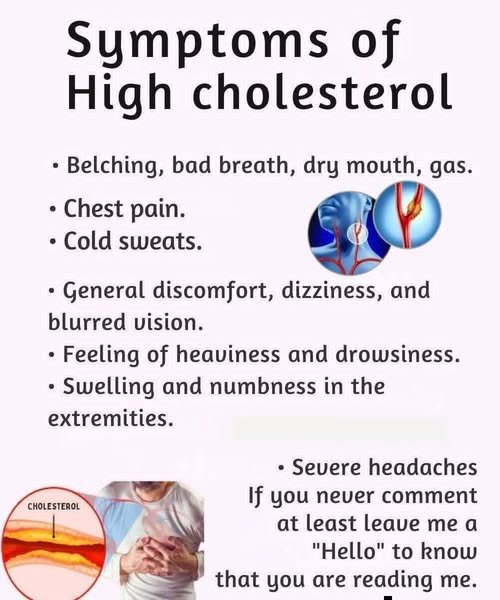
High cholesterol often earns the nickname “silent killer” for a simple reason: it usually builds up in your body without obvious symptoms—until it contributes to something serious like a heart attack or stroke. Most people feel completely fine while their arteries are slowly narrowing.
So how can you recognize it? The honest answer is: you usually can’t feel it directly, but your body may show warning signs when complications begin. Let’s break it down clearly.
What is high cholesterol?
High cholesterol (medically known as Hypercholesterolemia) means there is too much cholesterol circulating in your blood. Cholesterol itself isn’t “bad”—your body needs it to build cells and hormones—but excess LDL (“bad cholesterol”) can stick to artery walls.
Over time, this leads to plaque buildup, narrowing blood vessels and reducing blood flow.
Why it’s called a silent killer
Unlike infections or pain-related conditions, high cholesterol does not usually cause:
- Pain
- Fever
- Visible external changes
Instead, it quietly damages arteries over years. That’s why many people discover it only after a routine blood test—or after a major cardiac event.
Early warning signs (usually indirect)
While high cholesterol itself has no clear symptoms, it can show clues when it has already started affecting the body:
1. Chest discomfort or tightness
This may happen when arteries supplying the heart are narrowed. It often appears during physical activity or stress.
2. Shortness of breath
Reduced blood flow to the heart can make even mild activity feel tiring.
3. Numbness or weakness
Poor circulation in limbs can sometimes cause tingling sensations.
4. Yellowish fatty deposits on skin
In some cases, you may notice:
- Small yellow bumps around eyes or joints
These are called xanthomas and can indicate long-term high cholesterol.
5. Sudden serious events (first sign in many people)
Unfortunately, for many, the first “symptom” is:
- Heart attack
- Stroke
That’s why prevention and screening are critical.
Who is at higher risk?
You should be extra cautious if you have:
- Family history of heart disease
- Poor diet high in fried or processed foods
- Lack of physical activity
- Smoking habit
- Diabetes or high blood pressure
- Excess body weight
Even young people can develop high cholesterol today due to lifestyle patterns.
How it is detected (the only reliable way)
Because symptoms are unreliable, the only way to know your cholesterol level is through a blood test called a lipid profile, which measures:
- LDL (bad cholesterol)
- HDL (good cholesterol)
- Triglycerides
- Total cholesterol
Why early detection matters
Unchecked high cholesterol can lead to:
- Blocked arteries (atherosclerosis)
- Coronary artery disease
- Heart attack
- Stroke
The damage is slow but progressive—like rust forming inside pipes.
Simple ways to protect yourself
You don’t always need medication immediately. Many cases improve with lifestyle changes:
Eat smarter
- Reduce fried and fast foods
- Avoid trans fats
- Increase fiber (fruits, vegetables, oats)
Move more
- At least 30 minutes of walking daily helps significantly
Quit smoking
Smoking damages blood vessels and worsens cholesterol effects
Maintain healthy weight
Even small weight loss can improve cholesterol levels
Regular checkups
Especially after age 25–30 or earlier if you have risk factors
Final thought
High cholesterol does not shout for attention—it whispers for years. The danger is not in how it feels today, but in what it silently builds toward.
A simple blood test can reveal what your body cannot feel, and that small step can prevent life-changing emergencies later.
If you want, I can turn this into a social media post, infographic script, or a shorter awareness caption.