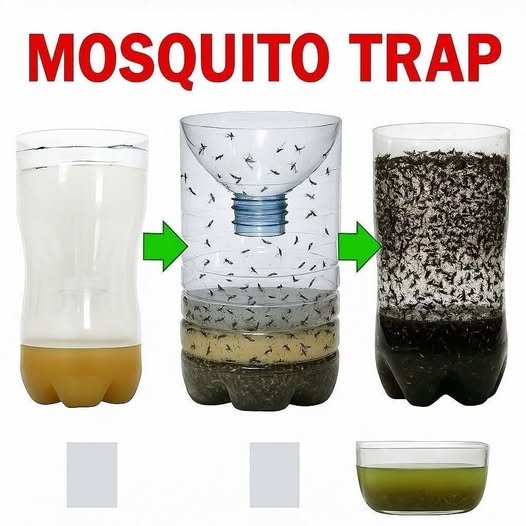
Mosquitoes can quickly turn a relaxing evening into an itchy nightmare. While no homemade trap can eliminate all mosquitoes, certain DIY traps may help reduce their numbers in small areas. For the best results, combine traps with other mosquito-control measures, such as removing standing water and using window screens.
Does a Homemade Mosquito Trap Really Work?
Some DIY mosquito traps work by attracting mosquitoes with carbon dioxide (CO₂), which is produced when yeast ferments sugar. Female mosquitoes use CO₂ to locate people and animals.
Keep in mind that these traps are not as effective as commercial mosquito traps and won’t eliminate an entire mosquito population.
Homemade Yeast and Sugar Mosquito Trap
Ingredients
- 1 empty 2-liter plastic bottle
- 1 cup (240 ml) warm water
- 1/4 cup (50 g) brown or white sugar
- 1 teaspoon active dry yeast
- Black paper or a dark cloth
- Tape or rubber band
Instructions
- Cut the plastic bottle in half.
- Pour the warm water into the bottom half.
- Stir in the sugar until dissolved.
- Let the mixture cool to room temperature.
- Add the yeast (do not stir—it will activate on its own).
- Turn the top half of the bottle upside down to form a funnel and place it into the bottom half.
- Secure it with tape if needed.
- Wrap the bottle with black paper or a dark cloth, leaving the opening uncovered.
How It Works
The yeast ferments the sugar and slowly releases carbon dioxide. Mosquitoes are attracted to the CO₂, enter through the funnel, and may have difficulty escaping.
Where to Place the Trap
For best results:
- Place it in shaded outdoor areas.
- Keep it away from strong winds.
- Position it near patios, balconies, or gardens.
- Keep it out of reach of children and pets.
Replace the mixture every 1–2 weeks or when fermentation stops.
Other Natural Ways to Reduce Mosquitoes
Eliminate Standing Water
Mosquitoes lay eggs in stagnant water. Empty or clean:
- Buckets
- Flowerpot saucers
- Birdbaths
- Gutters
- Old tires
- Pet water bowls
Use Mosquito-Repelling Plants
Some plants may help deter mosquitoes, including:
- Citronella
- Lavender
- Basil
- Lemongrass
- Peppermint
- Rosemary
- Marigolds
While these plants alone won’t eliminate mosquitoes, they can be part of a broader mosquito-control strategy.
Install Window Screens
Repair damaged screens to prevent mosquitoes from entering your home.
Use Fans Outdoors
Mosquitoes are weak fliers. A fan on a porch or patio can make it harder for them to land on you.
What Doesn’t Work Well
Many viral claims suggest that certain scents or homemade mixtures will completely eliminate mosquitoes. However, there is little scientific evidence that methods such as placing bowls of vinegar, using essential oils alone, or homemade sugar traps can eradicate mosquito populations.
Safety Tips
- Keep homemade traps away from children and pets.
- Replace the solution regularly to prevent mold growth.
- Do not allow the trap to become a breeding site by leaving it unattended for long periods.
- If mosquitoes are abundant or carry disease in your area, use EPA-registered insect repellents and follow local public health guidance.
The Bottom Line
A homemade yeast-and-sugar mosquito trap is an inexpensive project that may help reduce some mosquitoes, but it is not a complete solution. The most effective way to control mosquitoes is to eliminate standing water, use physical barriers like screens, and use proven repellents when needed. Combining several methods offers the best protection for your home and family.