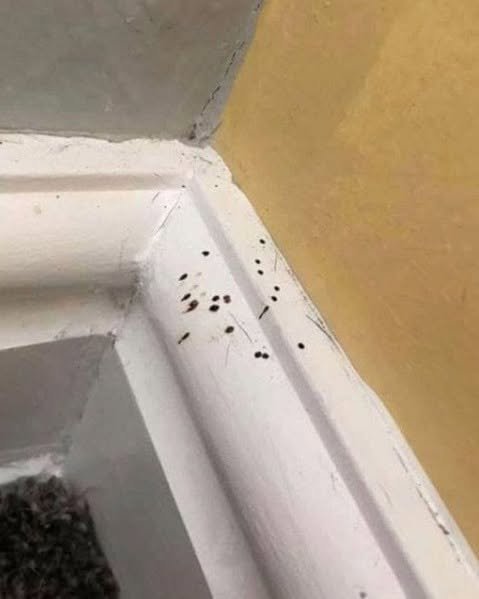
While small black dots aren’t always cause for alarm, they shouldn’t be ignored. Identifying what they are can help you address the problem before it gets worse.
Important: Small black specks can have many causes. Identifying the location, size, shape, and texture can help determine whether they’re from pests or simply household debris.
1. Cockroach Droppings
One of the most common explanations for tiny black dots in the kitchen is cockroach droppings.
What They Look Like
- Tiny black or dark brown specks
- Similar in appearance to ground black pepper or coffee grounds
- May leave small smears on surfaces
Where They’re Found
Cockroach droppings are often found:
- Under the sink
- Inside kitchen cabinets
- Behind appliances
- Along baseboards
- In pantry corners
- Near garbage bins
Cockroaches prefer warm, dark, and moist places where food and water are readily available.
2. Mouse Droppings
If the black dots are slightly larger and shaped like tiny grains of rice with pointed ends, they may be from mice.
Common Hiding Places
Look around:
- Behind the refrigerator
- Inside cupboards
- Under the stove
- Near food storage areas
- In garages or basements connected to the kitchen
Mouse droppings should be handled carefully because they can carry disease-causing germs.
3. Drywood Termite Frass
Drywood termites push their droppings out of tiny holes in wood.
Unlike mouse or cockroach droppings, termite frass often appears as:
- Tiny hard pellets
- Uniform in size
- Small piles beneath wooden cabinets or trim
- Colors ranging from tan to dark brown or black
If you notice repeated piles beneath wood surfaces, it’s worth having the area inspected.
4. Fly Specks
Houseflies often leave dark spots on:
- Window frames
- Walls
- Light fixtures
- Cabinet doors
These spots are usually:
- Very small
- Slightly smeared
- Found where flies frequently rest
Regular cleaning and reducing fly access can help prevent them.
5. Burned Food or Dirt
Sometimes the explanation is much simpler.
Black specks may be:
- Burned crumbs from cooking
- Coffee grounds
- Pepper
- Charcoal dust
- Dirt tracked in from outside
If the spots don’t reappear after cleaning, they’re less likely to indicate a pest problem.
What Should You Do?
If you suspect pest droppings:
Clean Safely
- Wear disposable gloves.
- Avoid sweeping or vacuuming dry droppings, which may stir particles into the air.
- Lightly dampen the area with a household disinfectant before wiping it clean.
- Dispose of cleaning materials in a sealed bag.
- Wash your hands thoroughly afterward.
Look for Other Signs
Watch for:
- Unpleasant odors
- Chewed food packaging
- Grease marks along walls
- Nesting materials
- Live insects or rodents
- Scratching noises at night
The more signs you notice, the more likely an infestation is.
How to Prevent Kitchen Pests
Simple preventive measures include:
- Store food in airtight containers.
- Wipe up crumbs and spills promptly.
- Take out the trash regularly.
- Repair leaking pipes and eliminate standing water.
- Seal cracks around doors, windows, and utility pipes.
- Keep clutter to a minimum under sinks and inside cabinets.
These steps make your kitchen less attractive to pests.
When Should You Call a Professional?
Consider contacting a licensed pest control professional if:
- The black dots return soon after cleaning.
- You find droppings in multiple rooms.
- You see live cockroaches, mice, or termites.
- You notice structural damage to wood.
- The infestation appears to be growing.
Early treatment is often easier and more effective than waiting until the problem becomes severe.
Final Thoughts
Tiny black dots in your kitchen may be harmless debris—or they could be an early warning sign of pests such as cockroaches, mice, termites, or flies. The key is to look closely at their appearance and where they’re found.
If the spots continue to reappear or are accompanied by other signs of an infestation, it’s wise to investigate further and, if needed, seek professional pest control assistance. Acting early can help protect your home and keep your kitchen clean and safe.