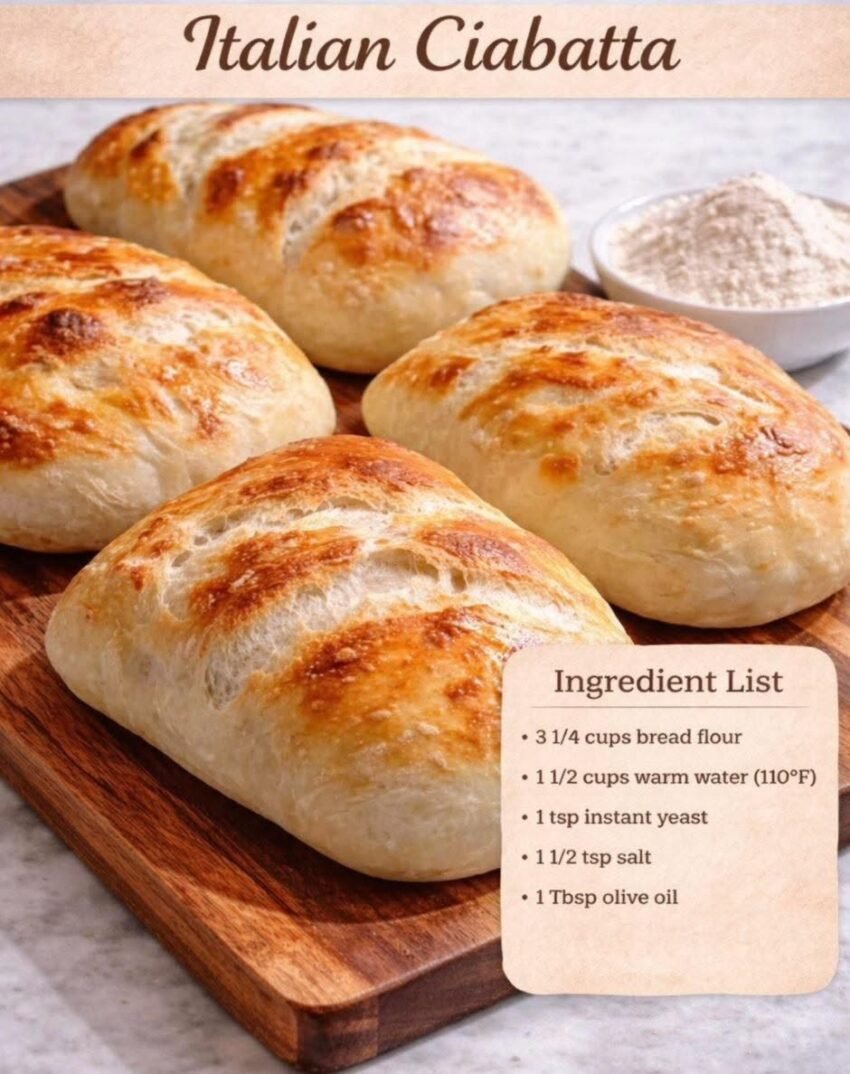
Learn how to make authentic Italian Ciabatta bread from scratch with this detailed step-by-step recipe. This rustic loaf features a crisp golden crust, an airy open crumb, and delicious flavor, making it perfect for sandwiches, soups, and dipping in olive oil.
Authentic Italian Ciabatta Bread
Ciabatta, which means “slipper” in Italian because of its flat, elongated shape, is one of Italy’s most beloved artisan breads. Known for its crisp, chewy crust and light, airy interior filled with irregular holes, ciabatta is ideal for sandwiches, bruschetta, panini, or simply served with olive oil and balsamic vinegar.
Although ciabatta dough is wetter than many other bread doughs, the result is a beautifully textured loaf with incredible flavor. With a little patience and proper folding techniques, you can bake bakery-quality ciabatta right in your own kitchen.
Why You’ll Love This Recipe
- Crispy artisan-style crust
- Soft, airy interior with large holes
- Perfect for sandwiches and toast
- Made with simple pantry ingredients
- No special equipment required
- Freezes well for later use
Preparation Time
- Prep Time: 30 minutes
- First Rise: 2 hours
- Second Rise: 45 minutes
- Bake Time: 25 to 30 minutes
- Total Time: About 4 hours
- Servings: 2 medium loaves
Ingredients
For the Dough
- 4 cups (500 g) bread flour
- 1¾ cups (420 ml) warm water (about 100–105°F / 38–40°C)
- 2 teaspoons instant yeast
- 2 teaspoons salt
- 1 tablespoon olive oil
For Dusting
- Bread flour or semolina flour
Kitchen Equipment
- Large mixing bowl
- Dough scraper
- Measuring cups or kitchen scale
- Baking sheet or pizza stone
- Parchment paper
- Clean kitchen towel
- Wire cooling rack
Step-by-Step Directions
Step 1: Mix the Dough
In a large bowl, combine the warm water and instant yeast. Let it stand for about 5 minutes if using active dry yeast. Instant yeast can be mixed directly with the flour.
Add the bread flour and olive oil.
Mix until a shaggy dough forms.
Add the salt and continue mixing until no dry flour remains.
The dough will be sticky and loose. This is normal for ciabatta.
Step 2: First Rise
Cover the bowl with plastic wrap or a damp kitchen towel.
Let the dough rise in a warm place for about 2 hours, or until doubled in size.
Step 3: Stretch and Fold
With wet hands, gently lift one side of the dough and fold it over toward the center.
Rotate the bowl and repeat this process on all four sides.
Perform 3 to 4 rounds of stretch-and-folds, spacing them about 20 minutes apart during the first rise if possible. This develops gluten without kneading.
Step 4: Shape the Dough
Generously flour your work surface.
Carefully turn the dough out onto the floured surface without pressing out the air.
Dust the top lightly with flour.
Using a dough scraper, divide the dough into two equal portions.
Gently stretch each piece into a rectangle about 10 inches long. Handle the dough carefully to preserve the air bubbles.
Step 5: Second Rise
Transfer the shaped loaves onto a parchment-lined baking sheet dusted with flour or semolina.
Cover loosely with a clean kitchen towel.
Allow the loaves to rise for 45 minutes.
Step 6: Preheat the Oven
Preheat the oven to 450°F (230°C) at least 30 minutes before baking.
If using a pizza stone, place it in the oven while it preheats.
Place an empty metal pan on the bottom oven rack if you plan to create steam.
Step 7: Create Steam
Just before placing the bread in the oven, carefully pour about 1 cup of hot water into the empty pan.
The steam helps develop a crisp, crackly crust.
Take care to avoid the escaping steam.
Step 8: Bake the Ciabatta
Bake the loaves for 25 to 30 minutes.
The bread should be deeply golden brown with a crisp crust.
The internal temperature should reach about 205–210°F (96–99°C).
Step 9: Cool
Transfer the loaves to a wire rack.
Allow them to cool completely before slicing to preserve the airy crumb and prevent a gummy texture.
Serving Suggestions
Fresh ciabatta is delicious served with:
- Extra virgin olive oil and balsamic vinegar
- Butter or herb butter
- Bruschetta
- Caprese sandwiches
- Grilled panini
- Soups and stews
- Pasta dishes
- Charcuterie boards
Tips for Success
- Use bread flour for the best chewy texture.
- Resist adding extra flour, even though the dough is sticky.
- Handle the dough gently to preserve the air pockets.
- Create steam during the first part of baking for a crisp crust.
- Let the bread cool completely before slicing.
Recipe Variations
Herb Ciabatta
Add 1 tablespoon chopped fresh rosemary or thyme to the dough.
Garlic Ciabatta
Mix 2 teaspoons roasted garlic paste into the dough before the first rise.
Olive Ciabatta
Fold in ¾ cup chopped Kalamata or green olives during the final stretch-and-fold.
Cheese Ciabatta
Add 1 cup grated Parmesan or Asiago cheese to the dough.
Whole Wheat Ciabatta
Replace up to 25% of the bread flour with whole wheat flour for a heartier loaf while maintaining a light texture.
Storage Instructions
Room Temperature: Store in a paper bag or bread box for up to 2 days. Avoid refrigerating, as it can cause the bread to dry out more quickly.
Freezer: Wrap the cooled loaves tightly in plastic wrap and then aluminum foil or place them in a freezer-safe bag. Freeze for up to 3 months. Thaw at room temperature and refresh in a 350°F (175°C) oven for 5 to 10 minutes before serving.
Frequently Asked Questions
Why is ciabatta dough so sticky?
Ciabatta has a high hydration level, which creates its signature open, airy crumb. Sticky dough is completely normal and should not be heavily floured.
Can I make the dough the night before?
Yes. After the first rise, refrigerate the dough overnight. Let it sit at room temperature for about 30 to 45 minutes before shaping.
Do I need a stand mixer?
No. Ciabatta develops its structure through stretch-and-fold techniques, making it easy to prepare by hand.
Why doesn’t my ciabatta have large holes?
Large air pockets develop from proper hydration, gentle handling, and avoiding excessive kneading or pressing during shaping.
Can I use all-purpose flour?
Yes, but bread flour is recommended because its higher protein content produces a chewier texture and better structure.
Final Thoughts
Authentic Italian Ciabatta is a wonderfully rustic bread with a crisp crust, chewy bite, and airy interior that makes it perfect for countless meals. While its wet dough may seem unusual at first, the simple stretch-and-fold method creates an artisan-style loaf with minimal effort. Whether used for sandwiches, toasted with olive oil, or served alongside your favorite pasta, homemade ciabatta brings the taste of an Italian bakery straight to your table.