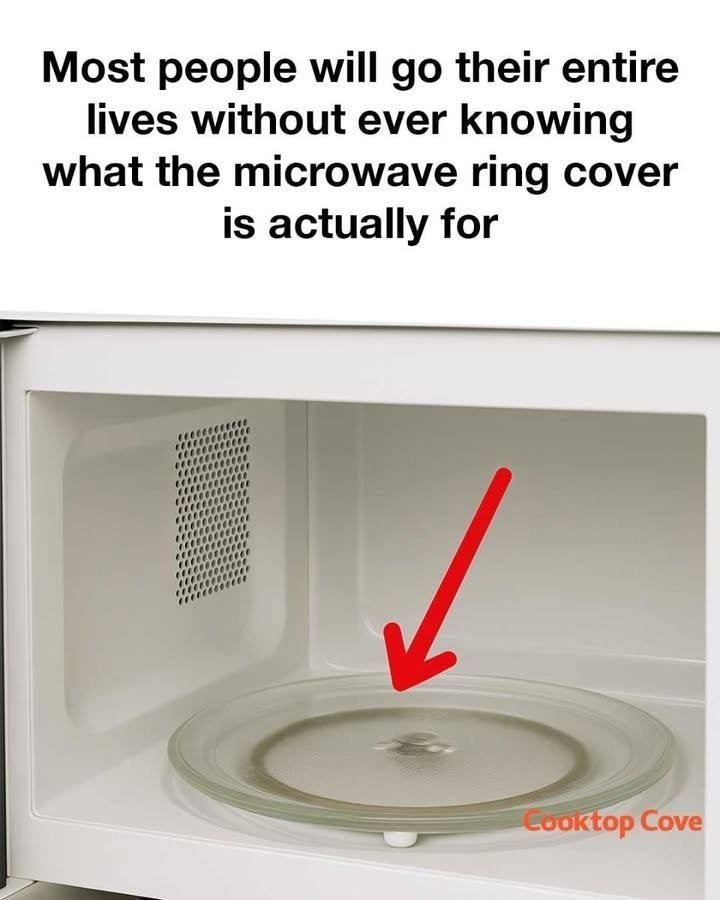
Take a look inside your microwave. Beneath the glass turntable, you’ll find a small plastic ring fitted with tiny wheels. It’s one of the most overlooked parts of the appliance, and many people never give it a second thought.
But this humble component is far more important than it looks. Without it, your microwave’s turntable wouldn’t rotate properly, and your food might heat unevenly. So, what exactly is this mysterious ring, and why is it essential?
Let’s uncover the surprising purpose of this everyday kitchen item.
What Is the Microwave Ring?
The plastic ring under the glass plate is known as the turntable support ring, roller ring, or turntable coupler ring.
It sits directly beneath the microwave’s glass tray and contains several small wheels that allow the tray to rotate smoothly while your food cooks.
Although it looks like a simple piece of plastic, it plays a vital role in ensuring your microwave works as intended.
Why Does the Glass Plate Rotate?
You may have noticed that most microwave ovens slowly spin your food while it’s heating. This isn’t just for show.
Microwaves heat food by sending electromagnetic waves into the cooking chamber. These waves don’t distribute heat perfectly evenly, which means certain spots inside the microwave receive more energy than others.
The rotating glass plate helps solve this problem by moving your food through different areas of the microwave, allowing it to absorb heat more evenly.
Without rotation, you might end up with a meal that’s:
- Scorching hot on one side
- Cold in the center
- Unevenly cooked
- Less enjoyable to eat
The Roller Ring Makes This Rotation Possible
The roller ring works together with a small motor located beneath the microwave floor.
Here’s how the process works:
- The microwave motor begins turning.
- The drive coupling underneath the glass tray rotates.
- The roller ring supports the heavy glass plate.
- The tiny wheels allow the plate to glide smoothly.
- Your food rotates evenly throughout the heating cycle.
It’s a simple but clever design that has been used in millions of microwave ovens for decades.
What Happens If the Ring Is Missing?
If the roller ring is damaged, missing, or installed incorrectly, you’ll probably notice problems right away.
Common issues include:
- The glass plate stops turning.
- Food heats unevenly.
- The tray wobbles or slips.
- Grinding or clicking noises occur.
- The tray may jump off its track.
Fortunately, replacing a damaged roller ring is usually inexpensive and easy.
Can You Use the Microwave Without It?
Technically, yes—but it’s generally not recommended.
Without the roller ring:
- The glass tray may not rotate.
- Food may cook unevenly.
- Hot and cold spots become more noticeable.
- The glass plate may become unstable.
If your roller ring breaks, it’s best to replace it with one designed for your microwave model.
Does the Ring Produce Microwave Energy?
This is one of the biggest misconceptions.
The roller ring does not generate or distribute microwave energy.
That job belongs to the microwave’s magnetron, which creates the electromagnetic waves that heat your food.
The roller ring has only one purpose: supporting and guiding the rotating glass turntable.
Why You Should Clean It Regularly
Food spills often drip underneath the glass tray, allowing crumbs, grease, and dried sauces to collect around the roller ring.
Over time, this buildup can make the wheels stick and interfere with smooth rotation.
To clean it:
- Remove the glass tray.
- Lift out the roller ring.
- Wash both with warm water and mild dish soap.
- Dry thoroughly.
- Wipe the microwave floor before putting everything back together.
Cleaning this area every few weeks helps your microwave continue operating smoothly.
Do All Microwaves Have One?
No.
While most traditional microwave ovens use a rotating glass tray and roller ring, some newer models use flatbed technology.
Flatbed microwaves distribute microwave energy differently and don’t require a rotating turntable. These designs provide more usable cooking space and make cleaning easier.
However, the majority of home microwaves still rely on the familiar glass plate and roller ring system.
Common Mistakes People Make
Many people accidentally create problems by:
- Placing the roller ring upside down.
- Forgetting to reinstall it after cleaning.
- Using a cracked or warped glass tray.
- Ignoring food debris trapped under the wheels.
- Replacing it with the wrong size.
These small mistakes can affect how well your microwave heats food.
The Bottom Line
The plastic ring beneath your microwave’s glass plate may seem insignificant, but it’s one of the appliance’s hardest-working components. By supporting the turntable and allowing it to rotate smoothly, the roller ring helps ensure your food heats more evenly and efficiently.
So, the next time you clean your microwave, take a moment to appreciate this simple piece of engineering. It may not look impressive, but without it, your microwave wouldn’t perform nearly as well.