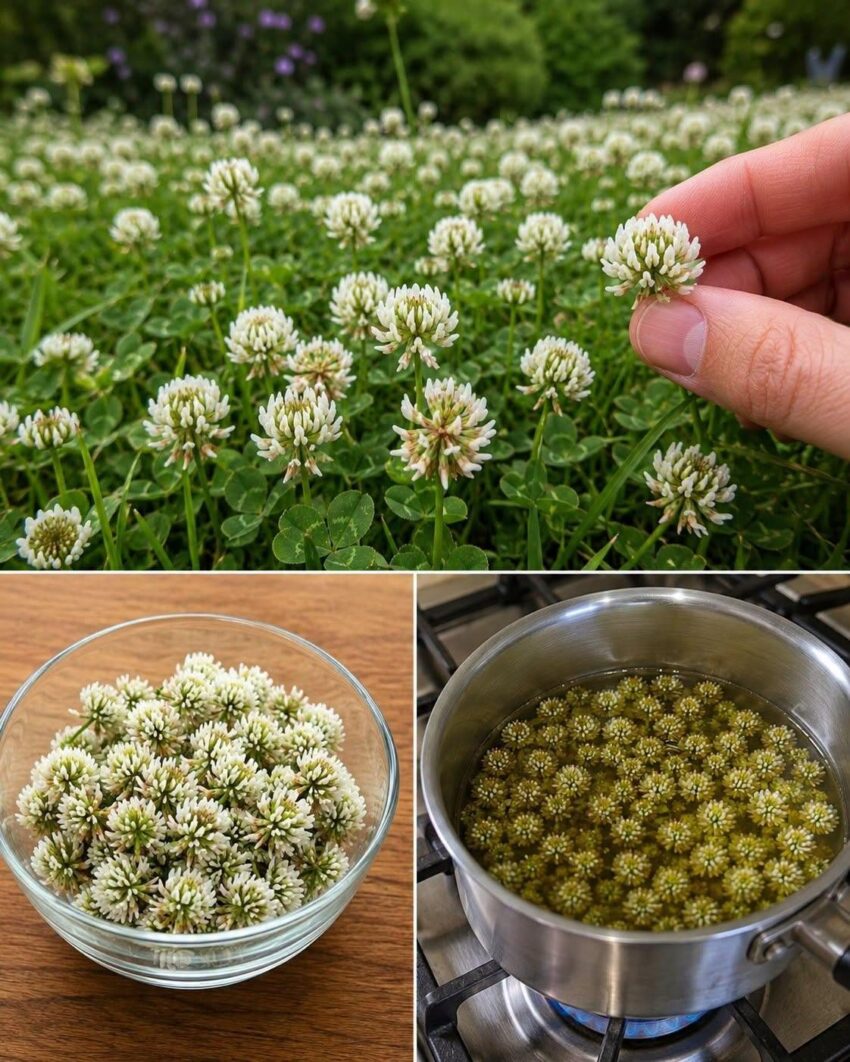
But what many don’t realize is that these small plants—often white clover (Trifolium repens) or similar lawn wildflowers—can actually play an important role in your garden ecosystem and even offer some surprising uses.
Before you rush to remove them, here’s what they might be doing for your soil, your bees, and even your kitchen.
What Are These Tiny White Flowers?
In most lawns, these little blooms are commonly:
- White clover
- Sometimes mixed with other small lawn flowers like daisies or chickweed
White clover is one of the most widespread “lawn volunteers” in the world. It spreads low to the ground, produces small round white blossoms, and thrives in areas where grass is thin.
To many gardeners, it’s considered a weed. But ecologically, it’s far more interesting than it looks.
The Hidden Superpower: Natural Soil Enrichment
One of the most important benefits of white clover is something you can’t even see.
White clover is a nitrogen-fixing plant, which means it works with soil bacteria to pull nitrogen from the air and convert it into a form plants can use.
In simple terms:
It naturally improves soil fertility without chemical fertilizers.
This is why clover was once intentionally included in lawn seed mixes—it helps keep grass greener and healthier over time.
A Lifeline for Bees and Pollinators
Those tiny white flowers aren’t just decorative—they’re a valuable food source.
White clover blooms are rich in nectar and attract:
- Bees
- Butterflies
- Other beneficial pollinators
In fact, in many urban and suburban areas, clover lawns provide one of the most reliable nectar sources during warm months.
So when clover is removed, it can unintentionally reduce food availability for pollinators already under pressure from habitat loss.
Is It Edible? Surprisingly, Yes (With Care)
White clover has historically been used as a wild edible plant in some cultures.
Both the leaves and flowers can be eaten in small amounts:
- Flowers can be dried for herbal tea
- Young leaves can be added to salads (mild flavor)
- Sometimes used as emergency foraging greens
However, there are important cautions:
- Only consume plants from untreated, pesticide-free lawns
- Avoid large quantities (wild plants are not nutritionally complete foods)
- Proper identification is essential before eating any wild plant
Benefits for Your Lawn (Yes, Really)
While many people try to eliminate clover, it actually offers some practical lawn advantages:
- Helps reduce the need for synthetic fertilizers
- Stays green even in dry conditions
- Competes with some invasive weeds
- Requires less mowing than grass alone
Modern “eco-lawns” are even reintroducing clover on purpose because of these benefits.
Why It Gets Pulled So Often
Despite its benefits, clover is still frequently removed because:
- It looks different from uniform grass lawns
- It spreads quickly
- Traditional lawn culture considers it a “weed”
- Homeowners prefer a perfectly even green surface
But attitudes are slowly changing as more people embrace low-maintenance and wildlife-friendly gardening.
Should You Keep It or Remove It?
There’s no single right answer—it depends on your goals.
You might keep white clover if you want:
- A more eco-friendly lawn
- Less fertilizer use
- More pollinator activity
- Lower maintenance grass areas
You might remove it if you prefer:
- A uniform turf appearance
- Strict lawn design aesthetics
Many homeowners now choose a middle ground: a “natural lawn” that blends grass and clover.
Final Thoughts
Those tiny white flowers you see in your lawn aren’t just random weeds. Plants like white clover are quietly working behind the scenes—improving soil, feeding pollinators, and even offering minor edible uses.
Instead of instantly pulling them out, it may be worth taking a closer look at what they’re contributing to your yard’s ecosystem.
Sometimes, what looks like a weed is actually nature doing useful work right under your feet.