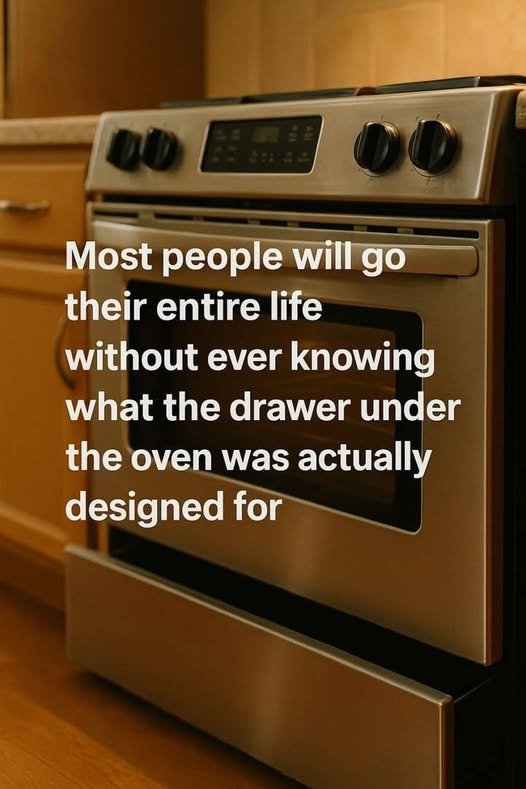
If you’ve always used the drawer beneath your oven to stash baking trays, muffin tins, or frying pans, you’re far from alone. For many households, this hidden compartment has become little more than extra kitchen storage. But depending on your oven model, that drawer may have been designed for a completely different purpose.
Here’s what it’s really for—and how to tell whether you’ve been using it correctly.
The Truth About the Oven Drawer
The drawer beneath a standard oven can serve one of three main functions:
- A warming drawer
- A storage drawer
- A broiler drawer (on some gas ovens)
The exact purpose depends on the manufacturer and model, so it’s always worth checking your owner’s manual before putting it to use.
1. Warming Drawer
Many modern electric and premium ovens include a warming drawer.
Instead of storing cookware, this compartment is designed to keep cooked food warm without continuing to cook it. It maintains a gentle temperature that helps preserve the texture and flavour of dishes until you’re ready to serve.
A warming drawer is ideal for:
- Keeping dinner hot while guests arrive
- Warming dinner plates before serving
- Holding baked goods until mealtime
- Keeping side dishes warm while the main course finishes cooking
It is not intended for reheating cold food or cooking raw ingredients.
2. Storage Drawer
The most common type is simply a storage drawer.
Manufacturers design it as a convenient place to keep oven-safe cookware, such as:
- Baking trays
- Roasting pans
- Pizza stones
- Metal cooling racks
- Cast-iron skillets
However, avoid storing anything that could melt or become damaged by heat, including:
- Plastic containers
- Paper products
- Kitchen towels
- Wooden utensils
- Non-stick cookware that isn’t rated for high temperatures
Even storage drawers can become quite warm whenever the oven is in use.
3. Broiler Drawer
Some gas ovens feature a broiler in the bottom drawer instead.
This compartment reaches extremely high temperatures and is perfect for:
- Browning the tops of casseroles
- Melting cheese
- Toasting bread
- Giving steaks or chops a crisp finish
Because it gets so hot, it should never be used for storage.
How to Tell Which Type You Have
If you’re unsure, here are a few clues:
- Look for temperature controls labelled “Warm” or “Warming Drawer.”
- If you see a heating element inside the drawer, it’s likely a warming or broiler drawer.
- Check your oven’s model number and owner’s manual for confirmation.
When in doubt, assume the drawer becomes hot during oven use and avoid storing heat-sensitive items.
Common Mistakes
Many homeowners unknowingly:
- Store plastic containers underneath a broiler drawer.
- Keep paper baking liners where they can become overheated.
- Miss out on the convenience of a warming drawer because they assume it’s just storage.
Using the drawer as intended can improve kitchen safety and even make entertaining easier.
Final Thoughts
The mysterious drawer beneath your oven isn’t just wasted space—it may be one of the most useful features in your kitchen. Whether it’s designed to keep meals warm, provide convenient storage, or act as a broiler, understanding its purpose can help you cook more efficiently and avoid potential safety hazards.
The next time you open that bottom drawer, you might discover it’s capable of much more than simply holding your baking pans.