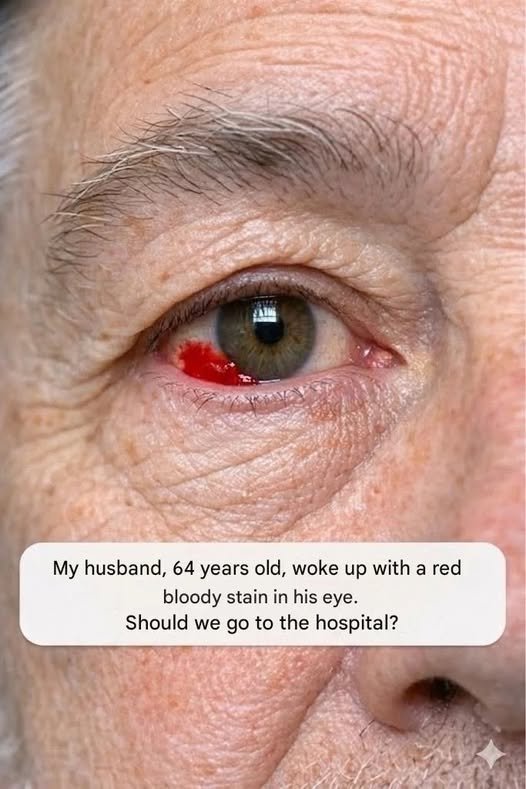
Waking up to find a bright red patch in your eye can be frightening. Many people immediately worry about serious conditions such as internal bleeding, vision loss, or even a stroke. Fortunately, a red, blood-like spot on the white part of the eye is often caused by a harmless condition called a subconjunctival hemorrhage.
While this condition usually looks much worse than it actually is, it’s still important to know when it’s safe to monitor at home and when it requires immediate medical attention.
What Is a Subconjunctival Hemorrhage?
A subconjunctival hemorrhage occurs when one of the tiny blood vessels beneath the clear surface of the eye (the conjunctiva) breaks. Blood becomes trapped under this thin layer, creating a bright red or dark red patch on the white of the eye.
Unlike bleeding from a cut, the blood remains beneath the surface and usually doesn’t leak out. Although the appearance can be dramatic, it is often painless and doesn’t affect vision.
Why Does It Happen?
Sometimes there is no obvious cause, and the blood vessel simply breaks on its own. However, several common factors can increase the likelihood of this happening.
These include:
- High blood pressure
- Diabetes
- Aging blood vessels
- Heavy coughing or sneezing
- Vomiting
- Straining during bowel movements
- Lifting heavy objects
- Rubbing the eyes vigorously
- Minor eye injuries
- Wearing contact lenses
- Blood-thinning medications such as warfarin or apixaban
Older adults are generally more likely to experience subconjunctival hemorrhages because blood vessels become more fragile with age.
Is It Dangerous?
In most cases, a subconjunctival hemorrhage is not dangerous and does not threaten eyesight.
The blood is gradually absorbed by the body over one to two weeks, much like a bruise on the skin changes color before disappearing.
Most people notice:
- A bright red patch on the white of the eye
- No pain
- No vision changes
- Mild irritation or a scratchy feeling, if any
If these are the only symptoms, the condition often resolves without treatment.
When Should You Go to the Hospital?
Although many cases are harmless, some symptoms should never be ignored.
Seek emergency medical care immediately if the red eye is accompanied by:
- Sudden loss of vision
- Blurred or double vision
- Severe eye pain
- Blood inside the colored part of the eye (iris)
- Significant eye injury
- A chemical splash in the eye
- Difficulty moving the eye
- Severe headache with neurological symptoms such as weakness or difficulty speaking
These symptoms may indicate a more serious eye injury or another medical emergency that requires prompt treatment.
When Should You See a Doctor Soon?
Even if there is no emergency, it’s a good idea to schedule an appointment with your healthcare provider if:
- The bleeding keeps coming back.
- Both eyes become affected.
- The red area continues to grow.
- You bruise or bleed easily elsewhere on your body.
- You’re taking blood-thinning medication.
- You have uncontrolled high blood pressure.
- The redness hasn’t improved after two weeks.
Your doctor may check your blood pressure, review your medications, or recommend further evaluation if necessary.
Can It Be Treated at Home?
Most subconjunctival hemorrhages require no specific treatment.
You can help keep the eye comfortable by:
- Using preservative-free artificial tears if the eye feels dry or irritated.
- Avoiding rubbing the eye.
- Resting if you’ve recently experienced heavy coughing or straining.
- Following your doctor’s advice if you take blood-thinning medication. Never stop prescribed medication without medical guidance.
The blood will slowly fade on its own over several days to two weeks.
How Can You Reduce the Risk?
While it’s not always possible to prevent a subconjunctival hemorrhage, these habits may lower your risk:
- Keep blood pressure under control.
- Manage diabetes if you have it.
- Protect your eyes during sports or yard work.
- Avoid rubbing your eyes forcefully.
- Lift heavy objects carefully.
- Attend regular eye examinations, especially after age 60.
Final Thoughts
A bright red patch on the white of the eye may look alarming, but in many cases, it is simply a subconjunctival hemorrhage—a minor broken blood vessel that usually heals without treatment. If your 64-year-old husband has no pain, no vision changes, and no history of significant eye injury, the condition is often not an emergency.
However, because older adults may have underlying conditions such as high blood pressure or take medications that affect blood clotting, it’s wise to contact a healthcare provider for advice. And if the redness is accompanied by severe pain, vision changes, or trauma to the eye, seek emergency medical care immediately.
When in doubt, it’s always better to have a healthcare professional evaluate the eye and provide reassurance or treatment if needed.