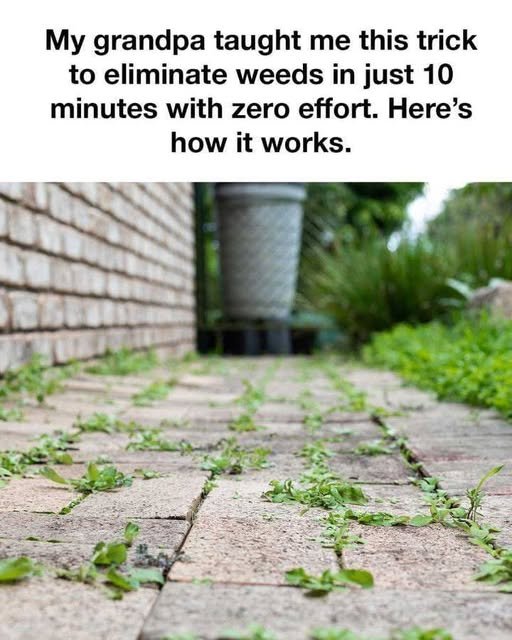
If you’ve ever spent an afternoon pulling weeds only to find them popping back up a week later, you’re not alone. Weeds are one of the biggest frustrations for gardeners, stealing water, nutrients, and sunlight from flowers, vegetables, and lawns.
Growing up, my grandpa had a simple philosophy: “Work smarter, not harder.” Instead of reaching for harsh chemicals every time weeds appeared, he relied on a few practical techniques that made garden maintenance easier while protecting the plants he wanted to keep.
One of his favourite methods took just a few minutes to set up and required very little effort.
The Secret Wasn’t a Magic Spray—It Was Timing
Grandpa always tackled weeds right after a rainfall or after watering the garden.
Why?
When the soil is moist, weed roots loosen naturally. Instead of snapping off at the surface, many weeds can be pulled out completely, roots and all.
This small timing trick makes weeding dramatically easier and reduces the chance of weeds growing back from leftover roots.
A 10-Minute Garden Routine
Rather than waiting until weeds took over the entire garden, Grandpa spent just 10 minutes every few days walking through his flower beds.
During those few minutes, he would:
- Pull young weeds before they flowered.
- Remove weeds by the root whenever possible.
- Check around vegetable plants where weeds compete most for nutrients.
- Toss weeds into the compost only if they hadn’t produced seeds.
Because he stayed consistent, weeds rarely had a chance to spread.
Mulch: The Real Weed Fighter
If Grandpa had one gardening “secret weapon,” it was mulch.
After clearing weeds, he spread a layer of organic mulch around plants.
Good mulch options include:
- Wood chips
- Bark mulch
- Straw
- Shredded leaves
- Pine needles
- Compost
A layer about 2–3 inches (5–7 cm) thick helps:
- Block sunlight from reaching weed seeds.
- Keep soil moist.
- Reduce watering.
- Improve soil quality as organic mulch breaks down.
Many gardeners find that mulching is one of the most effective long-term ways to reduce weeds with minimal effort.
Don’t Let Weeds Go to Seed
One weed can produce hundreds—or even thousands—of seeds.
Grandpa never ignored flowering weeds.
If pulling wasn’t possible immediately, he’d simply cut off the flower heads first to prevent new seeds from spreading throughout the garden.
Stopping weeds before they produce seeds can make next year’s gardening much easier.
Use the Right Tool for the Job
Some deep-rooted weeds are difficult to remove by hand.
Simple tools such as:
- A hand weeder
- A dandelion puller
- A garden fork
- A hoe
can help lift stubborn roots without disturbing nearby plants.
Removing as much of the root system as possible reduces regrowth.
Skip the Salt
Many internet tips recommend pouring salt directly onto weeds.
While salt may kill unwanted plants, it can also:
- Damage surrounding flowers and vegetables.
- Harm beneficial soil organisms.
- Remain in the soil, making it harder for future plants to grow.
For that reason, most gardening experts advise avoiding salt in garden beds except in very limited situations, such as weeds growing in cracks between paving stones where no other plants are intended to grow.
Vinegar Works Best in Certain Situations
Household vinegar is another popular weed remedy.
It can burn the leaves of young weeds growing in driveways, patios, or between paving stones. However, it often doesn’t kill deep roots, meaning many perennial weeds grow back.
If you choose to use vinegar:
- Apply it carefully to avoid desirable plants.
- Spray on a dry, sunny day.
- Remember that repeated applications may be needed.
Avoid treating large garden beds with vinegar, as it can also harm nearby plants.
Keep Your Lawn Healthy
A thick, healthy lawn naturally crowds out many weeds.
To encourage dense grass:
- Mow at the recommended height for your grass type.
- Water deeply but less frequently.
- Fertilise appropriately if needed.
- Repair bare patches promptly.
Healthy turf leaves fewer opportunities for weed seeds to establish.
Prevention Is Easier Than Cure
Grandpa always believed preventing weeds required far less effort than removing an established infestation.
Simple habits like mulching, pulling weeds while they’re small, and inspecting the garden for a few minutes each week can save hours of work later in the season.
Frequently Asked Questions
What is the easiest way to remove weeds?
Pulling weeds after rain or watering, when the soil is soft, is one of the easiest and most effective methods because the roots come out more easily.
Does mulch really stop weeds?
Mulch won’t eliminate every weed, but it significantly reduces weed growth by blocking sunlight and making it harder for seeds to germinate.
Is vinegar a permanent weed killer?
No. Vinegar usually damages the leaves of young weeds but may not destroy the entire root system, especially for perennial weeds.
Can I compost weeds?
Yes, provided they haven’t produced seeds and aren’t invasive species that may survive composting.
The Bottom Line
There isn’t a magical trick that eliminates every weed in just 10 minutes, but a few smart habits can make weed control much easier. Pulling weeds when the soil is moist, using mulch to suppress new growth, and spending a few minutes each week maintaining your garden are simple, effective strategies that require far less effort than tackling an overgrown garden all at once.
Sometimes, the best gardening advice isn’t a secret formula—it’s the practical wisdom that’s been passed down through generations.