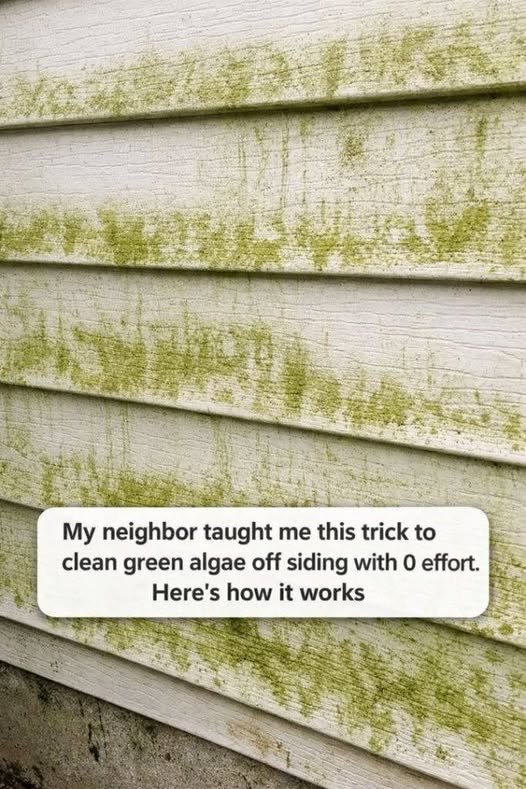
Note: There isn’t a truly “zero-effort” method. Most cleaners need a few minutes to work, and some light rinsing or gentle brushing may still be necessary.
What Causes Green Algae on Siding?
Algae thrive in damp, shaded areas where moisture lingers. Common causes include:
- High humidity
- Frequent rain
- Poor drainage
- Trees or shrubs blocking sunlight
- North-facing walls
- Dirt and organic debris on the siding
Although algae are usually harmless to vinyl siding, they can make your home look neglected and may encourage mold or mildew growth if left untreated.
What You’ll Need
- 1 gallon (3.8 liters) of warm water
- 1 cup white vinegar or a siding cleaner labeled for algae and mildew
- Soft-bristle brush or long-handled cleaning brush
- Garden hose
- Bucket
- Rubber gloves
- Safety glasses (recommended)
For Tough Algae
Some homeowners use a diluted bleach solution for stubborn growth. If you choose this method:
- Mix 1 part household bleach with 3 parts water.
- Never mix bleach with vinegar, ammonia, or other cleaners, as this can create dangerous gases.
- Protect nearby plants by wetting them with plain water before and after cleaning.
Step-by-Step Cleaning Method
Step 1: Rinse the Siding
Use a garden hose to remove loose dirt, cobwebs, and debris.
Step 2: Apply the Cleaning Solution
Spray or sponge the vinegar solution (or a commercial siding cleaner) onto the algae-covered areas.
Allow it to sit for 10–15 minutes to loosen the algae.
Step 3: Gently Scrub
If algae remain, lightly scrub with a soft-bristle brush. Avoid using wire brushes or abrasive pads that could damage the siding.
Step 4: Rinse Thoroughly
Rinse the siding from top to bottom with clean water until all residue is gone.
Can You Use a Pressure Washer?
Pressure washers can clean siding quickly, but they must be used carefully.
- Use a low-pressure setting.
- Keep the nozzle at a safe distance.
- Spray downward, not upward, to avoid forcing water behind the siding.
- Follow the siding manufacturer’s recommendations.
How to Prevent Algae from Returning
To reduce future algae growth:
- Trim trees and shrubs to increase sunlight and airflow.
- Clean gutters regularly.
- Keep sprinklers from spraying the siding.
- Wash the siding once or twice a year.
- Remove leaves and debris that trap moisture.
Safety Tips
- Wear gloves and eye protection when using cleaning solutions.
- Test any cleaner on a small, hidden area first.
- Avoid cleaning on very hot, sunny days, as cleaners may dry too quickly and leave streaks.
- Keep children and pets away until the area is rinsed and dry.
The Bottom Line
Green algae on siding can usually be removed with a vinegar-and-water solution or a commercial siding cleaner, followed by a gentle rinse and, if needed, light scrubbing. For stubborn growth, a diluted bleach solution may be effective, but it should be used carefully and never mixed with vinegar or other household cleaners. Regular maintenance and reducing moisture around your home can help keep your siding looking clean year-round.