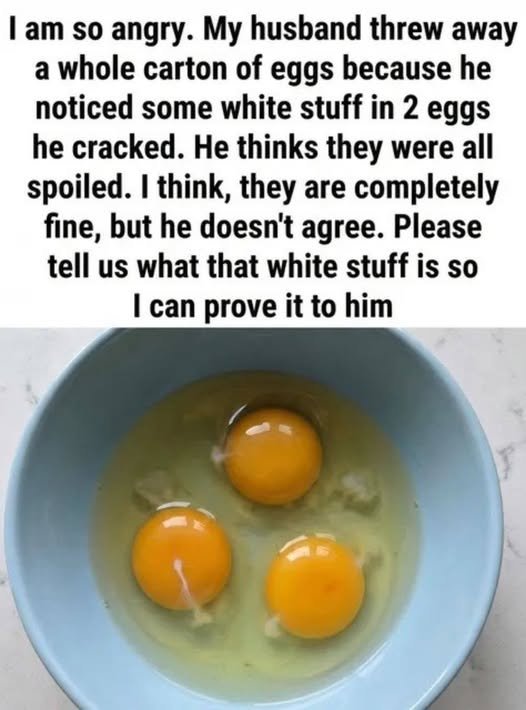
Have you ever cracked open an egg and noticed a strange white string-like piece attached to the yolk? For many people, this unusual-looking strand can raise concerns. Is the egg spoiled? Is it unsafe to eat? Has something gone wrong inside the egg?
The good news is that this white strand is usually completely normal. It is called the chalaza (pronounced kuh-LAY-zuh), and it is actually a sign that your egg is fresh.
What Is the White String Inside an Egg?
The white rope-like structure you see in a freshly cracked egg is the chalaza. Every egg naturally contains two chalazae—one attached to the top of the yolk and one attached to the bottom.
Their job is simple but important: they act like tiny anchors that hold the yolk in the centre of the egg. This helps protect the developing embryo in fertilised eggs and keeps the yolk positioned properly inside the egg white.
When you crack an egg, the chalaza may appear as:
- A thick white string beside the yolk
- A cloudy white patch floating in the egg white
- A twisted thread-like strand attached to the yolk
All of these appearances are normal.
Why Does the Chalaza Look Strange?
Many people mistake the chalaza for something abnormal because it has a different texture from the rest of the egg white. While normal egg white is mostly smooth and liquid, the chalaza is thicker and more twisted.
The fresher the egg, the more noticeable the chalaza tends to be. As eggs age, the egg white becomes thinner and the chalaza gradually becomes less visible.
So, ironically, seeing a strong white strand can actually mean you have a fresh egg, not a spoiled one.
Is the White Strand Safe to Eat?
Yes. The chalaza is completely edible.
You do not need to remove it before cooking unless you simply prefer a smoother appearance. When eggs are scrambled, baked, or cooked in recipes, the chalaza blends in and becomes unnoticeable.
Professional cooks and bakers often leave it in because it does not affect taste, texture, or safety.
Why Do Some People Think It Means the Egg Is Bad?
There are a few reasons this misunderstanding happens:
1. It Looks Unusual
Most people expect an egg to contain only a yolk and a smooth egg white. A string-like structure can look suspicious if you have never seen it before.
2. Confusion With Spoilage
Spoiled eggs can have unusual appearances, but the chalaza itself is not one of the warning signs.
3. Myths About Fertilised Eggs
Some people believe the white strand is related to a baby chick developing inside the egg. This is incorrect. The chalaza exists in both fertilised and unfertilised eggs.
How Can You Tell If an Egg Is Actually Spoiled?
Instead of judging an egg by the chalaza, look for real signs of spoilage.
A Bad Smell
The most reliable sign is a strong rotten or sulphur-like smell after cracking the egg. A fresh egg should have little to no smell.
Strange Colours
Discard eggs if you notice unusual colours such as:
- Pink
- Green
- Black spots
- Iridescent or oily-looking discolouration
Damaged Shells
Eggs with cracked shells, leaks, mould, or contamination should be treated carefully and discarded.
The Egg Float Test: Is It Reliable?
Some people use the water float test to check eggs:
- Fresh eggs usually sink and lie flat.
- Older eggs may stand upright or float.
This test can indicate age, but it does not reliably prove whether an egg is safe. A floating egg is not automatically spoiled, and a sinking egg is not a guarantee of safety.
Smell and appearance after cracking are better indicators.
What About the Eggs in the Picture?
The white strands visible around the yolks in the image appear consistent with normal chalazae. They do not indicate that the eggs are rotten or unsafe. Throwing away an entire carton because of these strands would usually mean discarding perfectly usable eggs.
Final Thoughts
The next time you crack an egg and see a strange white string attached to the yolk, there is no need to panic. That little strand is the egg’s natural support system—a built-in feature designed to keep the yolk in place.
Far from being a sign of spoilage, the chalaza is often a reminder that you are looking at a fresh, normal egg. So the mysterious white strand does not belong in the bin—it belongs in your breakfast, baking, or favourite recipe.