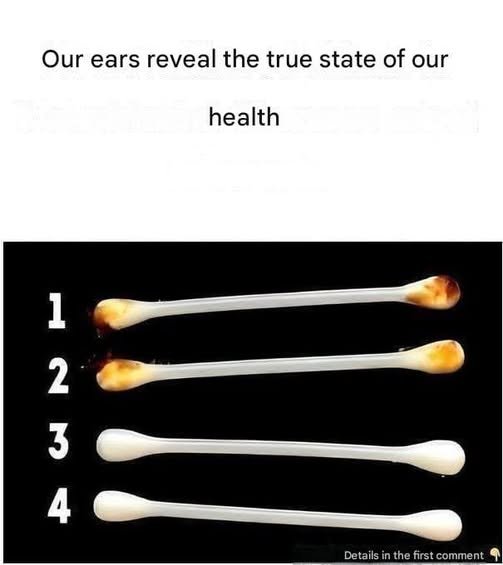
Your ears do much more than help you hear. They play an important role in balance, communication, and how we experience the world around us. Because they contain delicate skin, nerves, blood vessels, and structures connected to the inner ear, changes in your ears can sometimes provide clues about your overall health.
However, it is important to understand that ears do not reveal every health problem, and most ear changes are not signs of serious disease. They can offer warning signals or clues that may deserve attention.
1. Earwax: More Than Just “Dirt”
Many people think earwax is something that should always be removed, but it actually protects your ears.
Earwax helps:
- Trap dust and small particles
- Prevent dryness and irritation
- Protect against some bacteria and fungi
What changes may mean:
Excessive earwax buildup
- Feeling of blocked ears
- Reduced hearing
- Ear pressure
- Ringing sounds
This is usually a local ear issue rather than a sign of poor health elsewhere in the body.
Very dry or flaky earwax
Some people naturally produce drier earwax due to genetics, skin type, or environment.
2. Ringing in the Ears (Tinnitus)
A persistent ringing, buzzing, humming, or clicking sound in the ears is called tinnitus.
It may be linked to:
- Exposure to loud noises
- Age-related hearing changes
- Earwax blockage
- Certain medications
- Ear infections
- Jaw joint problems
- Stress or sleep problems
Occasional ringing after loud music is common, but tinnitus that is:
- Constant,
- Only in one ear,
- Associated with dizziness or hearing loss,
should be evaluated by a healthcare professional.
3. Changes in Hearing Can Be an Early Clue
Gradual hearing loss is common as people age, but it can sometimes be overlooked.
Possible signs include:
- Frequently asking people to repeat themselves
- Increasing television volume
- Difficulty understanding conversations in noisy places
- Feeling that people “mumble”
Hearing health is connected with quality of life, communication, and social wellbeing. Addressing hearing changes early can help people stay engaged and independent.
4. Ear Pain: A Signal That Something Needs Attention
Ear pain can come from many causes, including:
- Ear infections
- Sinus problems
- Dental issues
- Jaw problems
- Skin irritation
- Injury
Pain that is severe, persistent, or accompanied by fever, fluid discharge, or swelling should be checked.
5. The Outer Ear and Skin Health
The skin of the ear can show common skin conditions such as:
Eczema
Signs may include:
- Dryness
- Itching
- Flaking
- Redness
Psoriasis
May cause:
- Thick, scaly patches
- Irritation around the ear
Allergic reactions
Possible triggers include:
- Earrings
- Hair products
- Cosmetics
- Certain metals
These conditions affect the skin rather than indicating a problem with internal organs.
6. Earlobe Creases and Heart Health: A Popular Claim
You may have heard that a diagonal crease in the earlobe is linked to heart disease.
Some studies have explored a possible association, but the evidence is not strong enough to use an earlobe crease as a reliable health test. Many healthy people have earlobe creases, and many people with heart disease do not.
Heart health is better assessed through established factors such as:
- Blood pressure
- Cholesterol levels
- Smoking status
- Physical activity
- Family history
- Medical check-ups
7. Dizziness and Balance: The Inner Ear Connection
The inner ear contains the vestibular system, which helps control balance.
Problems in this area may cause:
- Dizziness
- Spinning sensations (vertigo)
- Feeling unsteady
- Nausea
Common causes include:
- Inner ear infections
- Benign positional vertigo
- Ménière’s disease
- Other balance disorders
Because balance involves the brain, eyes, nerves, and inner ear, dizziness can have many possible causes.
8. Ear Appearance and General Health Myths
There are many online claims that specific ear shapes, colours, or features can diagnose illnesses. Most of these claims are not scientifically proven.
For example:
- Ear shape does not determine personality or health.
- A certain ear appearance does not automatically indicate a disease.
- A single visible feature rarely provides a diagnosis.
Healthcare professionals look at symptoms, medical history, examinations, and tests—not just appearance.
When Should You Get Your Ears Checked?
Consider seeking medical advice if you experience:
✅ Sudden hearing loss
✅ Persistent ear pain
✅ Fluid, blood, or pus from the ear
✅ Severe dizziness or balance problems
✅ New or worsening tinnitus
✅ A feeling of blockage that does not improve
✅ Hearing difficulties affecting daily life
Protecting Your Ear Health
Simple habits can help preserve hearing:
- Keep headphone volume at a safe level.
- Wear hearing protection around loud machinery or concerts.
- Avoid putting cotton buds deep into the ear canal.
- Treat ear infections promptly.
- Have hearing checked if you notice changes.
Final Thoughts
Your ears can provide valuable clues about your wellbeing, especially when it comes to hearing, balance, infections, and skin conditions. But they are not a complete health report card. A change in your ears does not necessarily mean something serious is wrong—it is simply information your body may be giving you.
Pay attention to persistent changes, protect your hearing, and seek professional advice when symptoms do not improve. Healthy ears are an important part of overall health.