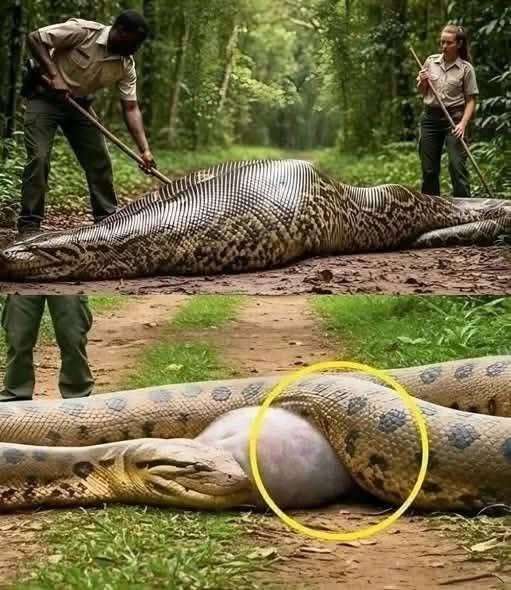
The phrase “Park rangers cut open the anaconda’s belly and…” is often used in viral videos and sensational headlines. These stories usually claim that something shocking was discovered inside the snake. Some versions are real animal encounters, while others are misleading or unverified.
Here is the detailed explanation:
Why Would Someone Cut Open an Anaconda’s Belly?
A dead or severely injured snake with an unusually swollen abdomen can attract attention. People may cut it open to find out:
- What it had eaten
- Why it died
- Whether it swallowed something unusual
- Whether there was a medical or environmental cause
In the wild, large snakes often have visible body bulges after eating because they consume prey whole and digest it slowly.
What Do Anacondas Usually Eat?
Green anacondas are among the largest snakes in the world and are powerful constrictors.
Their diet may include:
- Fish
- Birds
- Turtles
- Rodents
- Capybaras
- Caimans (small crocodilian relatives)
- Other reptiles
They do not chew their food. Instead, they swallow prey whole and rely on powerful digestive processes to break it down.
Viral Story: “They Found Another Anaconda Inside”
One widely shared story claimed that villagers cut open a dead anaconda and discovered another anaconda inside its stomach. Reports circulated with dramatic captions suggesting a shocking discovery. However, such viral stories often lack reliable documentation, and the exact circumstances are difficult to verify. (India Today)
A snake eating another snake is biologically possible. Many snakes are opportunistic predators, and some species do practice cannibalism. However, viral posts frequently exaggerate details to attract views.
Could an Anaconda Really Swallow Something Huge?
Yes. Anacondas have:
- Flexible jaws connected by stretchy ligaments.
- Expandable skin.
- Powerful digestive systems.
They can swallow animals much wider than their own head.
After feeding:
- Their metabolism increases dramatically.
- Their organs temporarily enlarge.
- They may become slower and more vulnerable while digesting.
Do Anacondas Eat Humans?
Stories about giant snakes swallowing people are common, but confirmed cases involving humans and green anacondas are extremely rare.
A famous media event involved wildlife filmmaker Paul Rosolie and a Discovery Channel program called “Eaten Alive,” which promoted an encounter with an anaconda. The snake did not actually swallow him; the attempt was stopped when the snake began constricting him. (Global News)
What Happens Inside a Snake After It Eats?
After swallowing prey:
1. Digestion Begins
The snake increases production of:
- Stomach acid
- Digestive enzymes
2. Organs Change Temporarily
The digestive system becomes more active, and organs can enlarge to handle the meal.
3. The Snake Becomes Less Active
A full snake often rests for days or weeks.
Why These Videos Spread So Easily
They combine several things people find fascinating:
- A huge animal
- A mystery inside its body
- A dramatic “discovery”
- A shocking thumbnail or headline
Many online posts use phrases like:
- “You won’t believe what they found”
- “Rangers were shocked”
- “The whole forest went silent”
These phrases are often designed for clicks rather than accuracy.
If Rangers Really Find a Dead Anaconda
Wildlife professionals would normally:
- Examine the animal externally.
- Document the location.
- Look for injuries or disease.
- Perform a proper necropsy (animal autopsy) if needed.
They would not usually cut open a protected wildlife species casually.
Bottom Line
The story “park rangers cut open the anaconda’s belly and found something unbelievable” is usually a viral exaggeration. Anacondas can swallow very large prey, and unusual stomach contents do occur, but many dramatic claims online are not scientifically verified. (India Today)
If you have the exact video title, image, or full headline, I can help identify whether that specific anaconda story is real or fake.