“Ramuan Cinta” Herbal Product Ad — A Closer, More Realistic Look (Blog Style)
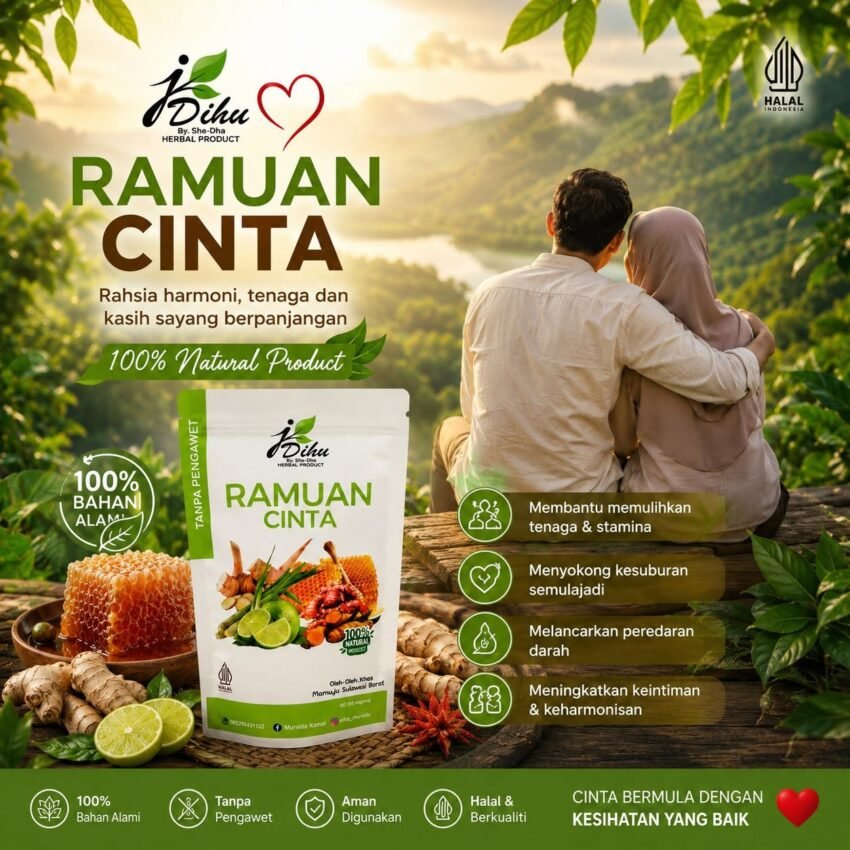
At first glance, this image looks like a peaceful, romantic wellness advertisement. A couple sits overlooking a green valley at sunset, with warm tones, nature imagery, and soft branding. The product, labeled “Ramuan Cinta”, is presented as a “100% natural herbal product” with promises related to energy, intimacy, fertility, and overall harmony.
But when we move past the visuals and emotional storytelling, it’s worth asking a more grounded question: what exactly is being claimed here—and how much of it is supported by evidence?
🌿 What the advertisement is trying to sell
The product is marketed with several strong wellness and lifestyle promises:
- Restoring energy and stamina
- Supporting fertility
- Improving blood circulation
- Enhancing intimacy and harmony in relationships
- “100% natural” formulation
- “No preservatives” and “safe to use” messaging
- A halal certification badge is also shown
The branding heavily leans on nature, romance, and traditional herbal appeal, which is a common strategy in supplement marketing.
🧠 The psychology behind the marketing
This kind of advertisement is not just selling a product—it’s selling an idea:
- Love and intimacy (the couple imagery)
- Natural healing (herbs, honeycomb, ginger, lime)
- Emotional well-being (warm sunset, calm scenery)
- Trust signals (halal logo, “100% natural” claims)
These elements are carefully designed to make the product feel:
safe, traditional, effective, and emotionally meaningful
Even before reading the fine print, the viewer is already influenced by the mood of the image.
⚠️ Important reality check: “natural” does not mean “proven”
One of the biggest marketing phrases here is “100% natural.”
However, in health and science terms:
- “Natural” ≠ automatically safe
- “Herbal” ≠ clinically effective
- “Traditional use” ≠ proven medical benefit
Many herbal supplements may contain bioactive compounds, but:
- dosages are often unclear
- clinical trials may be limited or absent
- effects can vary widely between individuals
- interactions with medications are possible
So while the product may sound gentle and harmless, its actual effects depend entirely on formulation, dosage, and evidence—which are not shown in the ad.
🧪 Claims like “improves fertility” and “enhances intimacy”
These are high-impact health claims, and they require strong scientific backing in medical contexts.
In general:
- Fertility is influenced by hormones, health conditions, age, and reproductive biology
- “Libido” or stamina claims are complex and rarely solved by a single supplement
- Circulation improvements usually require measurable clinical data
Without published studies, these remain marketing claims, not confirmed medical outcomes.
🏷️ The role of trust signals (like halal certification)
The halal logo adds cultural and religious trust. This is important for consumers who prioritize halal compliance, but it is also worth noting:
- Halal certification relates to ingredient permissibility and processing standards
- It does not automatically guarantee medical effectiveness
- It does not validate health performance claims
So it builds trust in ingredients, not necessarily proof of results.
🌱 Why products like this are so popular
Products like “Ramuan Cinta” often appeal because they target universal human desires:
- Better relationships
- More energy
- Improved confidence
- Natural health solutions without “chemicals”
This makes them emotionally attractive, especially when combined with calming nature imagery.
🧾 Final balanced takeaway
This advertisement is a strong example of lifestyle-based wellness marketing, where emotional storytelling and natural imagery are used to promote a supplement with broad health claims.
However, from a critical standpoint:
- There is no visible clinical evidence shown in the ad
- The health claims are broad and not medically detailed
- The “natural” positioning should not be confused with guaranteed effectiveness
Bottom line:
It may be a traditional herbal supplement, but the claims shown in the advertisement should be viewed as marketing statements rather than medically verified outcomes.
If you want, I can also break down:
- whether herbal “male vitality” supplements actually work in general
- or how to spot scam vs legit supplement marketing quickly