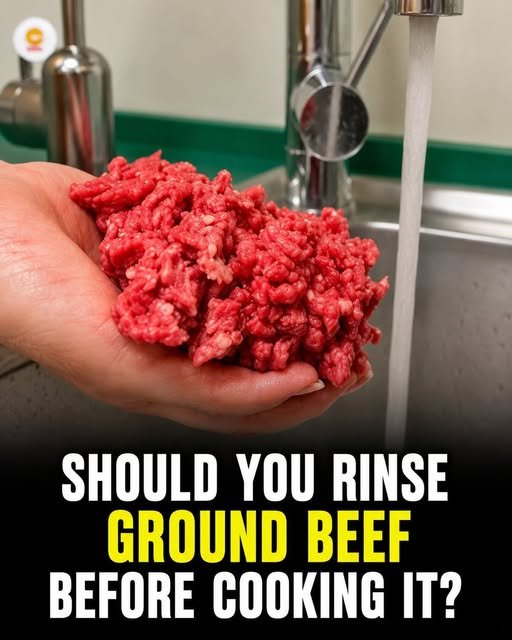
Many home cooks rinse fruits, vegetables, and even poultry before cooking, believing it removes dirt or bacteria. But what about ground beef? If you’ve ever wondered whether washing ground beef makes it cleaner or safer, you’re not alone.
The short answer is no—you should not wash ground beef before cooking. In fact, rinsing raw beef can do more harm than good.
Here’s why food safety experts strongly advise against it and what you should do instead.
Why People Think Washing Ground Beef Is a Good Idea
Some people wash ground beef because they want to:
- Remove bacteria.
- Rinse away excess blood.
- Reduce fat.
- Freshen the meat before cooking.
While these reasons seem sensible, washing doesn’t accomplish any of them safely.
Washing Doesn’t Remove Harmful Bacteria
Raw ground beef can contain bacteria such as:
- Escherichia coli (E. coli)
- Salmonella
- Campylobacter
These microorganisms aren’t just sitting on the surface—they can be mixed throughout the meat during the grinding process.
Running the meat under water does not kill or remove these bacteria.
The only reliable way to eliminate harmful bacteria is to cook ground beef thoroughly to a safe internal temperature.
The Biggest Risk: Cross-Contamination
When water hits raw ground beef, tiny droplets can splash onto nearby surfaces.
These contaminated droplets may land on:
- Kitchen countertops
- Cutting boards
- Sinks
- Faucets
- Dishes
- Fresh produce
- Cooking utensils
- Your clothing
Even if the splashes are invisible, bacteria can spread several feet around the sink.
This is why food safety organisations discourage washing raw meat.
What About the Red Liquid?
Many people mistake the red liquid in beef packaging for blood.
In reality, it’s mostly:
- Water
- A protein called myoglobin
Myoglobin gives meat its red colour and is completely normal.
If the package contains excess liquid, simply blot the meat gently with paper towels if desired, then discard the towels immediately and wash your hands.
Does Washing Remove Fat?
Some people rinse cooked ground beef to reduce grease, but rinsing raw ground beef won’t significantly lower its fat content.
If you want leaner meals, consider:
- Buying lean or extra-lean ground beef.
- Draining fat after browning.
- Blotting cooked meat with paper towels.
These methods are much more effective.
How to Handle Ground Beef Safely
Following a few simple food safety practices is more important than washing.
Keep It Cold
Store ground beef in the refrigerator at or below 4°C (40°F).
Use it within one to two days or freeze it.
Prevent Cross-Contamination
Keep raw beef separate from:
- Fruits
- Vegetables
- Ready-to-eat foods
- Cooked meals
Use separate cutting boards whenever possible.
Wash Your Hands
After touching raw beef, wash your hands with soap and warm water for at least 20 seconds.
Clean Kitchen Surfaces
Wash:
- Knives
- Cutting boards
- Countertops
- Sink areas
Use hot, soapy water after preparing raw meat.
Cook Ground Beef Thoroughly
Unlike steaks, ground beef should always be cooked completely because bacteria may be mixed throughout the meat.
Use a food thermometer to ensure the thickest part reaches:
71°C (160°F)
The meat should no longer be pink, but temperature—not colour—is the safest way to determine doneness.
Can You Wash Cooked Ground Beef?
Some people rinse cooked ground beef after browning to reduce grease.
While this can remove some fat, it also washes away flavour and may affect texture.
A better option is simply to:
- Drain the grease.
- Pat the cooked meat with paper towels if desired.
Common Myths
Myth: Washing makes meat cleaner.
Reality: It spreads bacteria instead of removing it.
Myth: Water kills germs.
Reality: Cold or warm tap water cannot kill harmful bacteria.
Myth: Vinegar or lemon juice disinfects raw meat.
Reality: While acidic ingredients can affect flavour, they do not reliably eliminate dangerous bacteria in raw ground beef.
Myth: Everyone should wash meat because previous generations did.
Reality: Modern food safety guidance has changed as researchers have learned more about how bacteria spread in kitchens.
Frequently Asked Questions
Should I rinse ground beef before cooking tacos?
No. Brown the meat directly in the pan and cook it thoroughly.
Should I wash frozen ground beef after thawing?
No. Thaw it safely in the refrigerator, microwave, or cold water, then cook without rinsing.
Is it safe to touch raw ground beef?
Yes, provided you wash your hands immediately afterwards and clean any surfaces the meat contacted.
Can I soak ground beef in water?
This is not recommended. Soaking doesn’t improve safety and may negatively affect texture while increasing the risk of cross-contamination.
Final Thoughts
Although washing ground beef may seem like a sensible extra step, it doesn’t make the meat safer. Instead, it can spread harmful bacteria around your kitchen, increasing the risk of foodborne illness.
The safest approach is simple: keep raw ground beef cold, avoid cross-contamination, clean your hands and kitchen thoroughly, and cook the meat to an internal temperature of 71°C (160°F). By following these basic food safety practices, you can prepare delicious meals while protecting yourself and your family.
SEO Meta Description
Should you wash ground beef before cooking? Learn why food safety experts say no, the risks of cross-contamination, and the safest way to prepare ground beef for healthy meals.