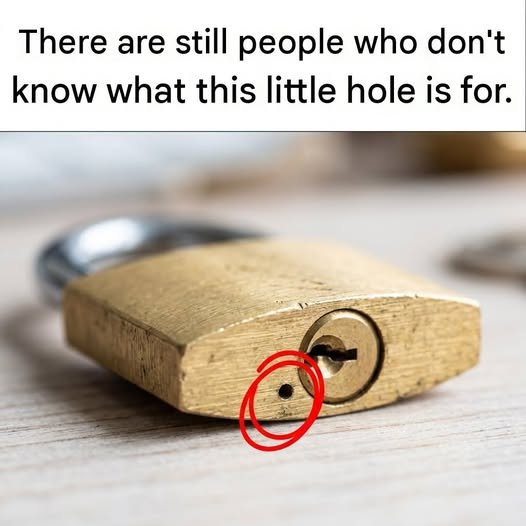
Have you ever looked closely at a padlock and noticed a tiny hole at the bottom? Many people assume it is a manufacturing mistake, a random opening, or something decorative. But that small hole actually has a very practical job that helps your lock work better and last longer.
1. It Lets Water Drain Out
The most common purpose of the tiny hole is drainage. Padlocks are often used outdoors on gates, sheds, bicycles, lockers, and storage boxes. Rainwater, humidity, or condensation can enter through the keyhole and collect inside the lock.
Without a drainage hole, trapped water could cause:
- Rust on internal metal parts
- Corrosion of the locking mechanism
- Difficulty turning the key
- A completely stuck lock over time
The small hole allows water to escape instead of staying trapped inside.
2. It Helps You Lubricate the Lock
That little opening can also make maintenance easier. A few drops of proper lock lubricant can sometimes be applied through the hole to reach internal components.
Keeping the mechanism lubricated helps:
- The key turn smoothly
- The shackle move freely
- Reduce wear on internal parts
(Always use a lubricant designed for locks; heavy oils can attract dirt and make the mechanism worse.)
3. It Helps Prevent Freezing
In colder climates, water trapped inside a padlock can freeze and stop it from working. The drainage hole reduces the chance of water buildup, helping the lock function in winter conditions.
4. It Can Help During Maintenance and Cleaning
Some padlocks are designed with this hole so debris, dust, and small particles have a way to escape. It is especially useful for locks exposed to outdoor environments.
A Small Feature With a Big Job
That tiny hole may seem insignificant, but it is a smart design feature created to protect the lock from damage. The next time you see one, remember: it is there to help your padlock survive rain, dirt, moisture, and years of use.
A tiny hole — but an important purpose.