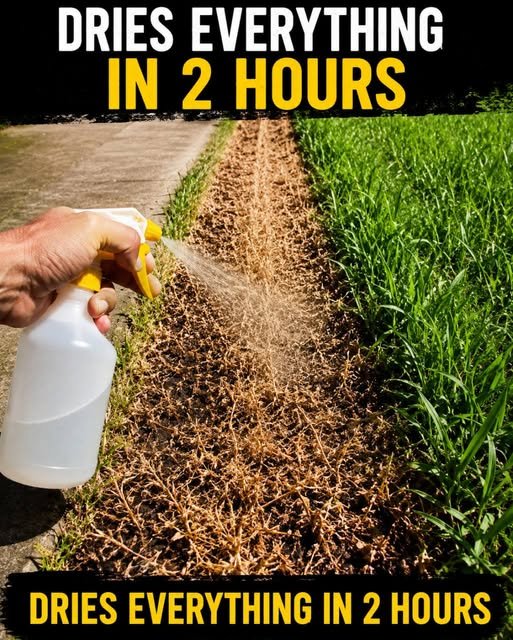
Many commercial weed killers work quickly, but some people prefer to avoid strong chemicals around their homes, pets, and gardens. A popular alternative is a homemade weed-killing spray made with simple household ingredients.
While these natural methods may help dry out and weaken unwanted plants, it is important to understand that they are not always selective — meaning they can also damage plants you want to keep.
A Simple Homemade Weed Killer Recipe
Ingredients:
- 1 liter of white vinegar
- 2–3 tablespoons of salt
- A few drops of dish soap
How It Works
Each ingredient has a role:
White Vinegar
Vinegar contains acetic acid, which can remove moisture from plant leaves and cause them to dry out. Stronger vinegar products designed for gardening may work faster than regular kitchen vinegar.
Salt
Salt can interfere with a plant’s ability to absorb water. However, it should be used carefully because too much salt can damage soil and prevent future plant growth.
Dish Soap
A small amount of dish soap helps the mixture stick to the leaves instead of simply running off.
How to Apply the Spray
- Choose a dry, sunny day.
- Spray directly onto the leaves of unwanted weeds.
- Avoid spraying nearby flowers, vegetables, grass, or other plants you want to protect.
- Allow time for the mixture to work.
You may notice leaves becoming dry or damaged within hours, but some weeds with deep roots may grow back and require repeated treatment.
Where This Homemade Weed Killer Works Best
This type of spray is most suitable for areas such as:
✅ Cracks in driveways
✅ Sidewalk edges
✅ Gravel paths
✅ Areas where you do not want plants growing
It is usually not recommended for garden beds where you want healthy soil and other plants to survive.
Natural Ways to Prevent Weeds
Besides spraying, these methods can reduce weed growth:
1. Mulching
Adding mulch around plants blocks sunlight and makes it harder for weeds to grow.
2. Pulling Weeds After Rain
Wet soil makes it easier to remove weeds with their roots.
3. Covering Bare Soil
Empty spaces invite weeds. Ground covers or dense planting can help.
4. Regular Maintenance
Removing small weeds before they spread seeds saves time later.
Important Safety Tips
Even natural ingredients should be used carefully:
- Avoid spraying on windy days.
- Keep mixtures away from children and pets until dry.
- Do not use excessive salt in soil areas.
- Avoid spraying near edible plants unless you are certain it is safe.
Final Thoughts
A homemade weed killer can be a useful option for controlling unwanted growth in certain areas without relying on traditional chemical herbicides. Ingredients like vinegar, salt, and soap may help dry out weeds, especially young plants growing in cracks and unwanted spaces.
However, the best long-term weed control usually comes from a combination of methods: removing existing weeds, protecting the soil, and preventing new growth.
A healthier garden is not only about removing weeds — it is about creating an environment where the plants you love can thrive.