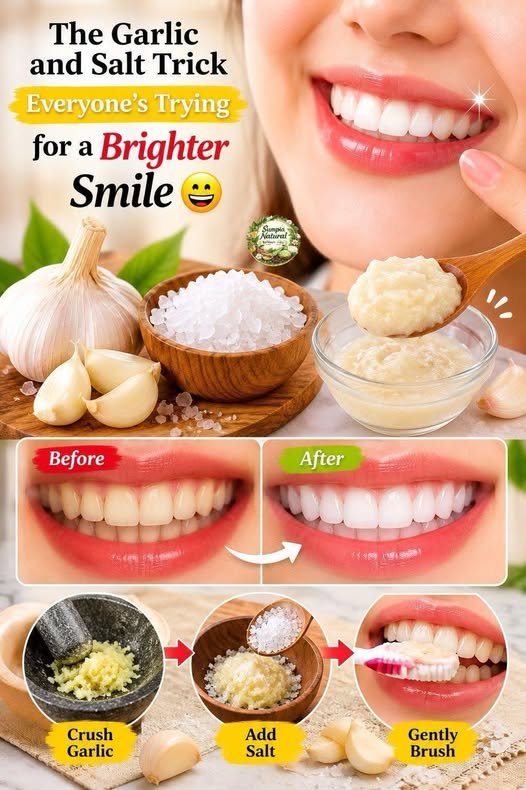
Many viral home remedies promise a brighter smile using simple kitchen ingredients, and one of the latest trends involves rubbing a mixture of garlic and salt on your teeth. Supporters claim it can whiten teeth, remove stains, and even improve oral health.
But does this popular trick actually work? Let’s take a closer look at what science says—and why dentists recommend approaching this trend with caution.
Why Garlic Is Thought to Help
Garlic has been valued for centuries for its natural medicinal properties. It contains a sulfur compound called allicin, which has antibacterial and antifungal effects.
In the mouth, garlic may help reduce some bacteria that contribute to:
- Bad breath
- Plaque buildup
- Gum inflammation
However, antibacterial properties do not automatically translate into whiter teeth.
What About Salt?
Salt is often used in homemade oral care because it has mild abrasive properties and can help clean the surface of teeth.
Some people believe salt can:
- Remove surface debris
- Freshen the mouth
- Help reduce bacteria when used as a saltwater rinse
While salt may help clean the mouth to a limited extent, it cannot change the natural color of tooth enamel or remove deep stains.
Can Garlic and Salt Whiten Teeth?
There is no reliable scientific evidence showing that rubbing garlic and salt on your teeth will whiten them.
Tooth discoloration can occur for many reasons, including:
- Coffee and tea
- Red wine
- Tobacco use
- Aging
- Certain medications
- Natural enamel thinning
A garlic-and-salt mixture cannot safely bleach teeth or reverse these causes of discoloration.
Potential Risks of This DIY Remedy
Although both ingredients are common in the kitchen, using them directly on your teeth may have drawbacks.
1. Enamel Wear
Salt crystals can be abrasive. Frequent scrubbing may gradually wear down tooth enamel, making teeth more sensitive and potentially increasing the risk of staining over time.
2. Gum Irritation
Fresh garlic contains compounds that may irritate the delicate tissues inside the mouth, especially if rubbed directly onto the gums.
Some people may experience:
- Burning sensations
- Redness
- Mouth irritation
3. Strong Odor
Garlic is well known for leaving a lingering odor that brushing alone may not completely eliminate.
Better Ways to Keep Your Smile Bright
For healthier, brighter-looking teeth, consider these evidence-based habits:
- Brush twice a day with a fluoride toothpaste.
- Floss daily to remove plaque between teeth.
- Limit foods and drinks that stain teeth, such as coffee, tea, and red wine.
- Drink water after consuming dark-colored beverages.
- Visit your dentist regularly for professional cleanings.
- If you’re interested in whitening, ask your dentist about products that have been tested for safety and effectiveness.
Natural Foods That Support Oral Health
While they won’t dramatically whiten teeth, some foods may help keep your mouth healthy:
- Crunchy apples
- Carrots
- Celery
- Cheese
- Plain yogurt
- Leafy greens
These foods can stimulate saliva production or provide nutrients that support healthy teeth and gums.
When to See a Dentist
If your teeth suddenly become discolored, you have persistent sensitivity, bleeding gums, or pain, it’s best to schedule a dental examination. Some changes in tooth color can be linked to underlying dental problems that require professional treatment.
The Bottom Line
The garlic and salt trick may sound appealing because it uses everyday ingredients, but there is no strong scientific evidence that it whitens teeth. In fact, rubbing garlic and coarse salt directly on your teeth could irritate your gums or gradually wear down enamel if done repeatedly.
For a brighter smile, the safest approach is good daily oral hygiene, regular dental checkups, and professionally recommended whitening methods when appropriate. Your teeth will thank you in the long run.