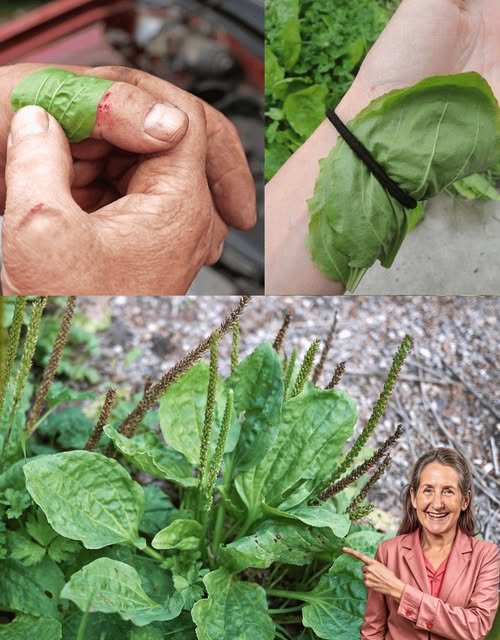
When people think of medicinal plants, herbs like aloe vera, chamomile, or lavender often come to mind. Yet one of nature’s most remarkable healing plants is probably growing unnoticed in backyards, gardens, sidewalks, and fields around the world. Plantago major, commonly known as broadleaf plantain, has been valued for centuries in traditional medicine for its soothing and healing properties.
Although often dismissed as a common weed, this resilient plant is packed with beneficial compounds that have earned it a place in herbal medicine across many cultures. Here’s what makes Plantago major such an extraordinary natural remedy—and what modern research says about its potential benefits.
What Is Plantago major?
Plantago major is a low-growing perennial plant with broad, oval-shaped leaves and long flower spikes. Native to Europe and parts of Asia, it now grows naturally on nearly every continent.
For generations, traditional healers have used its leaves, seeds, and roots to help soothe minor wounds, insect bites, digestive discomfort, and skin irritation.
Nutrients and Beneficial Compounds
Broadleaf plantain contains a variety of naturally occurring compounds, including:
- Vitamins A, C, and K
- Calcium and potassium
- Flavonoids
- Tannins
- Mucilage (a soothing plant fiber)
- Phenolic compounds
- Antioxidants
These substances contribute to many of the plant’s traditional medicinal uses.
Potential Health Benefits
1. May Help Soothe Minor Wounds
One of the best-known traditional uses of Plantago major is as a natural poultice for minor cuts, scrapes, and insect bites.
Its leaves contain compounds that may help soothe irritated skin while supporting the body’s normal healing process. However, it should never replace proper medical care for deep wounds or infections.
2. Supports Healthy Skin
Plantain leaf has long been used in homemade salves and creams to calm dry, itchy, or irritated skin.
Some preliminary research suggests it may have anti-inflammatory and antimicrobial properties, although more human studies are needed to confirm these effects.
3. Rich in Antioxidants
Antioxidants help protect cells from damage caused by free radicals, which are linked to aging and many chronic diseases.
Eating a diet rich in antioxidant-containing plants may contribute to overall health.
4. May Aid Digestive Comfort
The mucilage found in plantain leaves forms a soothing gel when mixed with water. Traditionally, herbal practitioners have used it to ease mild digestive irritation and support healthy bowel function.
Scientific evidence remains limited, and more research is needed.
5. Traditional Respiratory Support
In traditional herbal medicine, teas made from Plantago major leaves have been used to soothe sore throats and occasional coughs.
While some laboratory studies show promising properties, these remedies should not replace medical treatment for persistent respiratory symptoms.
6. May Have Mild Anti-Inflammatory Properties
Researchers have identified several plant compounds that may help regulate inflammatory responses in laboratory settings.
Although encouraging, these findings do not prove that plantain effectively treats inflammatory diseases in humans.
How Is It Traditionally Used?
People have traditionally prepared Plantago major in several ways:
- Fresh leaves applied as a poultice
- Herbal teas
- Infused oils
- Homemade salves
- Dried leaf powders
- Herbal extracts
If you choose to forage wild plants, make sure they are correctly identified and collected from areas free of pesticides, pollution, and animal contamination.
Safety Considerations
Although Plantago major is generally considered safe for most people when used appropriately, keep these precautions in mind:
- Some individuals may experience allergic reactions.
- Avoid using plants collected from roadsides or chemically treated lawns.
- Herbal remedies should not replace prescribed medical treatments.
- Pregnant or breastfeeding individuals and people taking medications should consult a healthcare professional before using herbal supplements.
- Always clean fresh leaves thoroughly before use.
What Does the Science Say?
Modern research has confirmed that Plantago major contains biologically active compounds with antioxidant, antimicrobial, and anti-inflammatory activity in laboratory studies. However, many of its traditional uses have not yet been supported by large, high-quality clinical trials in humans.
While the plant shows promise, scientists agree that more research is needed to determine its effectiveness for specific medical conditions.
The Bottom Line
Plantago major may not look impressive, but this humble wild plant has earned centuries of respect in traditional herbal medicine. Its nutrient-rich leaves and naturally occurring plant compounds make it an interesting subject of modern scientific research.
Although it is not a miracle cure, broadleaf plantain may offer gentle support for healthy skin, minor wounds, and overall wellness when used responsibly. As with any herbal remedy, it’s best viewed as a complement to—not a replacement for—evidence-based medical care.
Sometimes, the most remarkable treasures in nature are growing quietly beneath our feet.