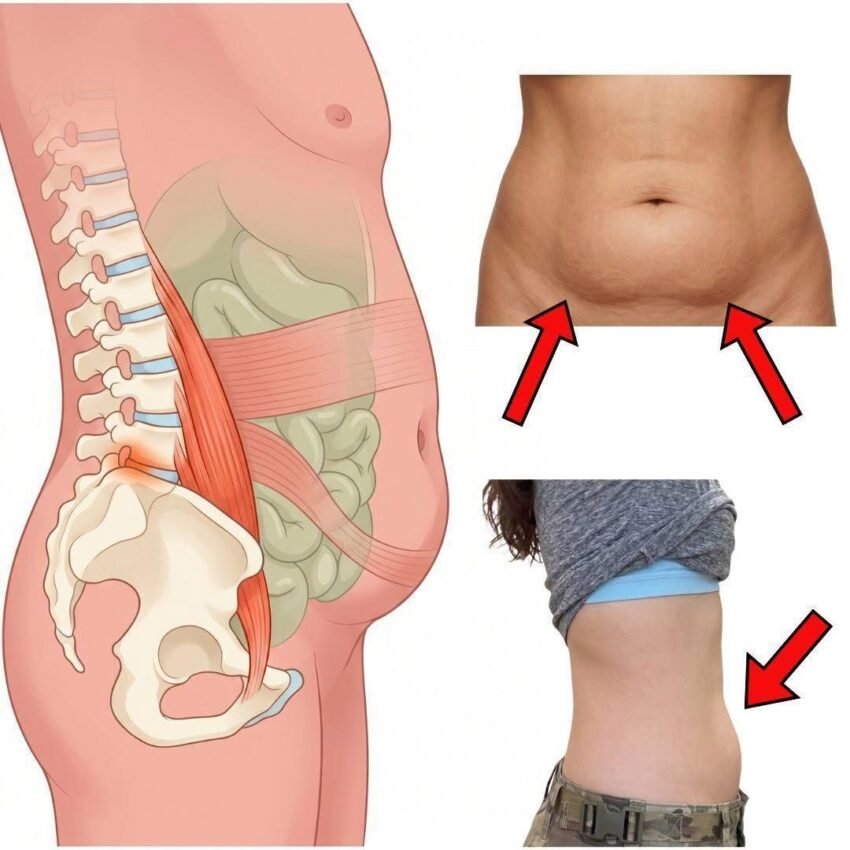
A lower belly that sticks out and lower back pain often have a common cause, but it’s usually not just one thing. The most frequent reasons are poor posture, weak core muscles, excess abdominal fat, and tight hip muscles. These factors can work together.
1. Anterior pelvic tilt (one of the most common causes)
Imagine your pelvis as a bowl of water. If the bowl tips forward:
- Your lower back arches more than normal.
- Your stomach appears to stick out.
- Your buttocks stick out more.
- The muscles in your lower back become tight and overworked.
- The deep abdominal muscles become less effective.
This is called anterior pelvic tilt.
What causes it?
- Sitting for many hours every day.
- Weak abdominal muscles.
- Weak glute (buttock) muscles.
- Tight hip flexors.
- Tight lower back muscles.
How to improve it
- Stretch your hip flexors daily.
- Strengthen your glutes (glute bridges, squats).
- Strengthen your deep core (planks, dead bugs, bird dogs).
- Stand up and move every 30–60 minutes if you sit for long periods.
2. Weak core muscles
Your core acts like a natural belt supporting your spine.
If it’s weak:
- Your abdomen may protrude.
- Your back has to do more work.
- Lower back pain becomes more likely.
Helpful exercises
- Front plank.
- Side plank.
- Dead bug.
- Bird dog.
- Abdominal bracing.
Aim for 3–4 sessions per week.
3. Tight hip flexors
The hip flexors connect your thighs to your pelvis.
When they’re tight:
- They pull the pelvis forward.
- The lower back arches more.
- Lower back pain can worsen.
What helps
- Hip flexor stretch: hold 30–60 seconds per side, repeat 2–3 times daily.
- Walking.
- Standing breaks if you have a desk job.
4. Excess abdominal fat
Extra fat in the abdomen:
- Pushes the belly outward.
- Shifts your center of gravity forward.
- Increases the load on your lower back.
How to reduce it
- Eat a balanced diet with enough protein and fiber.
- Maintain a modest calorie deficit if weight loss is your goal.
- Do strength training 2–3 times per week.
- Aim for at least 150 minutes of moderate exercise each week.
You can’t specifically burn fat from the lower belly; fat loss happens throughout the body.
5. Bloating
Sometimes the issue isn’t fat—it’s bloating.
Common triggers include:
- Constipation.
- Eating too quickly.
- Carbonated drinks.
- Certain foods that don’t agree with you.
- Large, high-salt meals.
To reduce bloating
- Drink enough water.
- Eat slowly.
- Increase fiber gradually.
- Walk for 10–15 minutes after meals.
- Identify foods that consistently trigger symptoms.
6. Poor posture
If you:
- Slouch while sitting.
- Lean forward often.
- Stand with your hips pushed forward.
Your lower back and abdominal muscles don’t work as efficiently.
Improve posture
- Keep your ears over your shoulders.
- Relax your shoulders.
- Engage your core gently while standing.
- Keep both feet evenly on the floor.
A simple daily routine (15–20 minutes)
- Hip flexor stretch – 1 minute per side.
- Cat-cow stretch – 10 repetitions.
- Glute bridges – 3 sets of 12.
- Dead bugs – 3 sets of 10 per side.
- Bird dogs – 3 sets of 10 per side.
- Front plank – hold for 20–60 seconds, 3 times.
- Walk for 20–30 minutes.
Doing this consistently for 6–8 weeks often improves posture, core strength, and back discomfort.
When to see a doctor
You should seek medical evaluation if:
- The pain lasts more than a few weeks despite self-care.
- You have pain shooting down your leg, numbness, or weakness.
- You have problems controlling your bladder or bowels (seek urgent care).
- You have fever, unexplained weight loss, or severe pain after an injury.
- The belly bulge is new, painful, or feels like a lump that doesn’t go away.
Bottom line
For many people, the combination of a protruding lower belly and lower back pain is due to poor posture (especially anterior pelvic tilt), weak core muscles, tight hip flexors, and prolonged sitting. Improving posture, strengthening the core and glutes, stretching the hips, staying active, and maintaining a healthy body weight can make a noticeable difference over time. If symptoms are severe, persistent, or accompanied by neurological signs, it’s important to be assessed by a healthcare professional.