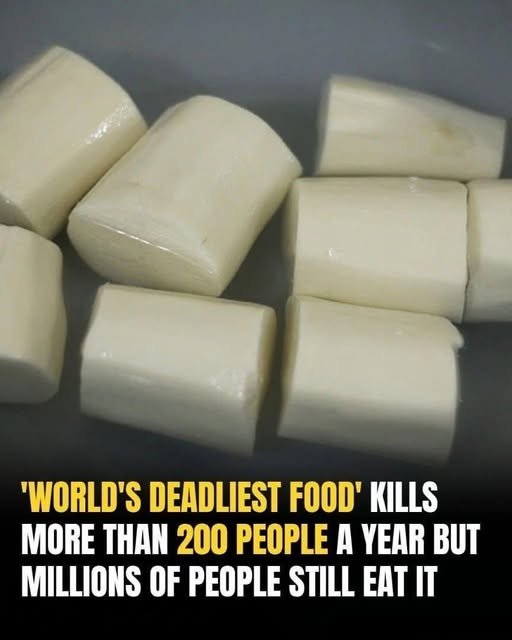
Food is meant to nourish and bring people together, but some traditional foods around the world can become dangerous if they are not prepared correctly. One food often described as one of the world’s deadliest is cassava (also called manioc or yuca) — a staple food eaten by hundreds of millions of people worldwide.The danger is not the plant itself, but the way it is processed.
Why Can Cassava Be Dangerous?
Cassava naturally contains compounds called cyanogenic glycosides, which can release hydrogen cyanide when the plant is damaged or improperly prepared.
If toxic compounds are not removed through proper processing, eating large amounts of poorly prepared cassava can lead to cyanide poisoning.
Symptoms of Cassava Poisoning
Exposure to high levels of cyanide can cause symptoms such as:
- Headache
- Dizziness
- Nausea and vomiting
- Weakness
- Difficulty breathing
- Confusion
- Seizures
- In severe cases, death
Long-term exposure to improperly processed cassava has also been linked to certain neurological conditions.
Why Do People Still Eat Cassava?
Despite the risks, cassava remains an important food source because it is:
- Affordable
- Drought-resistant
- Easy to grow in tropical climates
- A major source of carbohydrates and calories
For many communities, cassava provides essential nutrition and food security.
How Is Cassava Made Safe?
Traditional preparation methods help reduce toxins, including:
- Peeling the cassava
- Soaking it in water
- Fermenting it
- Drying it
- Cooking it thoroughly
Proper processing can greatly lower the amount of harmful compounds.
Other Foods That Require Careful Preparation
Cassava is not the only food that can become dangerous if handled incorrectly. Examples include:
- Certain wild mushrooms
- Raw or improperly prepared seafood
- Some traditional plant foods
- Foods containing natural toxins
The key lesson is that preparation matters.
Final Thoughts
Calling cassava the “world’s deadliest food” can sound frightening, but the reality is more balanced. Millions of people safely eat cassava every day because they use proper preparation methods. The danger comes from consuming cassava that has not been processed correctly.
Food safety is not only about what we eat — it is also about how we prepare it.