This is a common viral claim, but there’s no evidence that wrapping a door handle in aluminum foil is an effective home security measure.
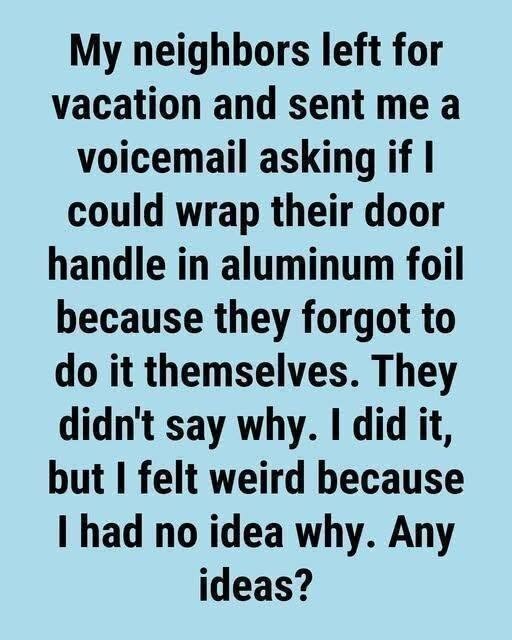
The image says:
“My neighbors left for vacation and sent me a voicemail asking if I could wrap their door handle in aluminum foil because they forgot to do it themselves.”
Here are the most likely explanations:
1. It’s a Viral Internet Myth (Most Likely)
Posts like this circulate on social media claiming that foil can:
- Stop burglars from entering.
- Prevent lock picking.
- Alert homeowners if someone touched the handle.
These claims are not supported by security experts. A determined intruder wouldn’t be stopped by a layer of household foil.
2. It May Protect the Handle During Painting
One legitimate reason people wrap a door handle in aluminum foil is to protect it from paint when painting a door or frame. However, that clearly doesn’t fit the vacation scenario described.
3. It Could Be a Personal Habit or Joke
Your neighbors may have their own reason—perhaps a prank, superstition, or misunderstanding based on advice they saw online.
Does Aluminum Foil Improve Home Security?
No. Foil does not:
- Prevent break-ins.
- Block lock picking.
- Make your home significantly safer.
If someone attempts to open the door, the foil will simply tear or crumple.
Better Ways to Protect a Home While on Vacation
If you’re leaving home for several days, these measures are much more effective:
- Lock all doors and windows securely.
- Use outdoor motion-sensor lighting.
- Install a video doorbell or security camera.
- Put interior lights on timers.
- Ask a trusted neighbour to collect mail and packages.
- Avoid announcing your vacation on social media until you return.
The Bottom Line
The aluminum foil trick is largely an internet myth rather than a proven security technique. While wrapping a door handle won’t usually hurt anything, it shouldn’t be relied upon to protect a home. Real security comes from strong locks, good lighting, alarm systems, cameras, and having trusted neighbours keep an eye on the property.