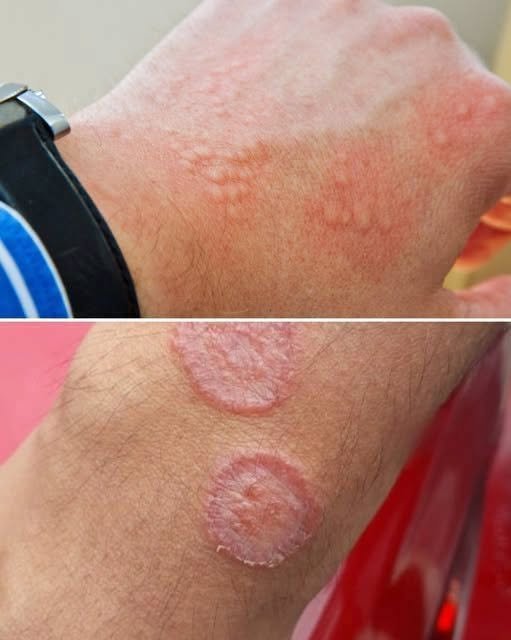
The image appears to show circular, red, scaly patches with a clearer center, which are features commonly seen with ringworm (tinea corporis). However, it’s not possible to confirm a diagnosis from an image alone, as other skin conditions—such as eczema, psoriasis, or granuloma annulare—can look similar. A healthcare professional can make an accurate diagnosis, sometimes with a simple skin examination or test.
What Is Ringworm?
Despite its name, ringworm is not caused by a worm. It is a fungal infection of the skin caused by a group of fungi called dermatophytes. It can affect the body, scalp, feet (athlete’s foot), groin (jock itch), and nails.
Common Signs and Symptoms
The symptoms can vary depending on the affected area, but common signs include:
- Round or ring-shaped rash
- Raised, red border
- Clearer or less inflamed center
- Scaly or flaky skin
- Itching, which can range from mild to severe
- Slowly expanding patches
- Sometimes multiple rings that overlap
In darker skin tones, the rash may appear brown, gray, or darker than the surrounding skin instead of bright red.
How Do You Get Ringworm?
Ringworm spreads through direct contact with fungal spores. Common sources include:
- Skin-to-skin contact with an infected person
- Contact with infected pets (especially cats and dogs)
- Shared towels, clothing, or bedding
- Locker rooms, gyms, and public showers
- Contaminated surfaces or objects
Warm, humid environments increase the likelihood of fungal growth.
Who Is More Likely to Get It?
Your risk may be higher if you:
- Sweat heavily
- Wear tight or damp clothing
- Play contact sports
- Use shared gym equipment
- Have frequent contact with pets
- Have a weakened immune system
Treatment
Most cases of ringworm on the body can be treated with over-the-counter antifungal creams, sprays, or powders containing ingredients such as:
- Clotrimazole
- Terbinafine
- Miconazole
- Butenafine
Treatment is usually continued for 2–4 weeks, or as directed on the product label, even if the rash starts to improve sooner.
More extensive infections, scalp ringworm, or nail infections often require prescription oral antifungal medication from a healthcare professional.
Tips to Prevent Spreading
To reduce the chance of spreading the infection:
- Wash your hands after touching the affected area.
- Keep the rash clean and dry.
- Avoid sharing towels, clothing, hats, or bedding.
- Wash clothing and linens regularly.
- Wear sandals in public showers and locker rooms.
- Have pets checked by a veterinarian if they show signs of skin disease.
When to See a Doctor
Seek medical care if:
- The rash does not improve after about 2 weeks of appropriate antifungal treatment.
- It spreads rapidly or becomes widespread.
- It affects the scalp, beard, or nails.
- There are signs of a bacterial infection, such as increasing pain, pus, warmth, or fever.
- You have diabetes or a weakened immune system.
Final Thoughts
Ringworm is a common and usually treatable fungal skin infection. While the rash in your image has features that could be consistent with ringworm, it isn’t possible to make a definite diagnosis from a photo alone. If you’re unsure of the cause or the rash isn’t improving with appropriate treatment, consult a healthcare professional for an accurate diagnosis and the right treatment plan.
Disclaimer: This article is for educational purposes only and should not replace professional medical advice, diagnosis, or treatment.