Orchids are among the most beautiful flowering plants, but many owners struggle to keep them blooming. While healthy leaves and roots are important, the secret to long-lasting flowers often comes down to proper fertilization. Surprisingly, the biggest mistake isn’t using too little fertilizer—it’s using too much or applying it incorrectly.
If you’ve been wondering why your orchid refuses to bloom while others seem covered in flowers, this simple fertilization method could make all the difference.
Why Orchids Need Special Feeding
Unlike many houseplants, orchids naturally grow on trees in tropical forests rather than in ordinary soil. Their roots absorb small amounts of nutrients from rainwater, decaying leaves, and organic matter. This means they prefer light, consistent feeding instead of heavy doses of fertilizer.
Excess fertilizer can burn delicate roots, leading to weak growth and fewer flowers.
The Secret: Feed Weakly but Regularly
Experienced orchid growers follow one simple rule:
“Weakly, weekly.”
Instead of giving a strong fertilizer once a month, use a balanced orchid fertilizer diluted to one-quarter or one-half of the recommended strength every one to two weeks during active growth.
This gentle approach supplies nutrients steadily without overwhelming the plant.
Choose the Right Fertilizer
A balanced fertilizer such as 20-20-20 or a fertilizer specifically formulated for orchids works well for most varieties.
Look for one that contains:
- Nitrogen for healthy leaves
- Phosphorus for strong roots and flower production
- Potassium for overall plant health and longer-lasting blooms
- Essential micronutrients like magnesium, calcium, and iron
Flush the Pot Monthly
One of the most overlooked steps is flushing the potting mix.
Over time, fertilizer salts build up around the roots and can damage them.
Once every month:
- Place the orchid in the sink.
- Run room-temperature water through the pot for 1–2 minutes.
- Allow it to drain completely.
This washes away excess salts while keeping the roots healthy.
Water Before Fertilizing
Never apply fertilizer to dry orchid roots.
Instead:
- Water the orchid first.
- Let excess water drain.
- Apply the diluted fertilizer.
Moist roots absorb nutrients more safely and are less likely to suffer fertilizer burn.
Don’t Feed During Dormancy
Many orchids naturally slow their growth after flowering.
During this resting period:
- Reduce watering.
- Fertilize only occasionally or stop temporarily.
- Resume regular feeding once new leaves or roots begin to appear.
Natural Alternatives
If you prefer natural gardening methods, a few gentle options may provide trace nutrients:
- Compost tea (well diluted)
- Seaweed extract
- Fish emulsion (used sparingly due to its strong smell)
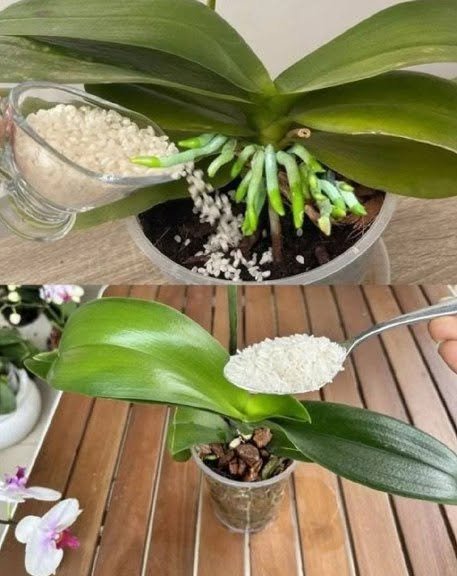
Avoid popular internet remedies such as milk, rice water, coffee grounds, or banana peels unless properly composted, as they can encourage mould, pests, or bacterial growth indoors.
Other Factors That Trigger Blooming
Fertilizer alone won’t guarantee flowers. Orchids also need:
- Bright, indirect sunlight
- Good air circulation
- Proper watering with well-draining orchid bark
- Moderate humidity (40–70%)
- Slightly cooler night temperatures for many varieties, especially Phalaenopsis
When these conditions are combined with correct feeding, orchids often produce stronger flower spikes and blooms that last for several months.
Common Fertilizing Mistakes
Avoid these frequent errors:
- Using full-strength fertilizer every watering
- Fertilizing dry roots
- Letting fertilizer salts accumulate
- Feeding during dormancy
- Using garden soil fertilizers designed for outdoor plants
Final Thoughts
The real secret behind spectacular orchids isn’t an expensive product or a miracle homemade recipe—it’s consistent, diluted feeding paired with proper care. By fertilizing lightly, flushing the pot regularly, and providing the right growing conditions, you give your orchid the best chance to produce vibrant blooms that can last for months.
Remember, healthy roots grow beautiful flowers. Treat the roots gently, avoid overfeeding, and your orchid is far more likely to reward you with an impressive display season after season.