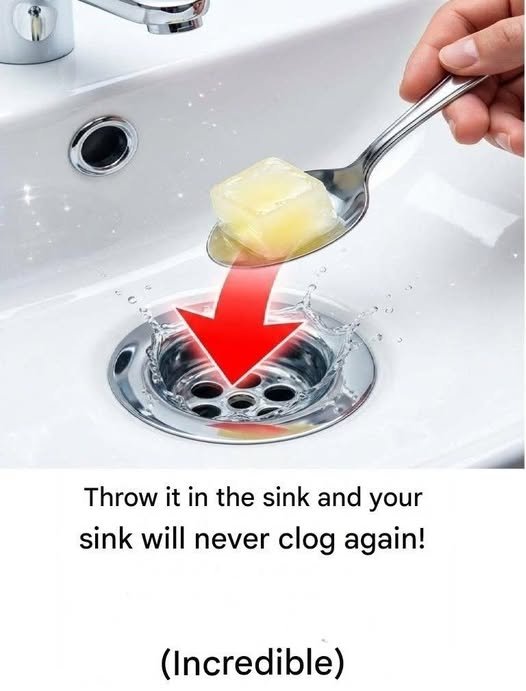
The phrase “Throw it down the sink and the drain will never clog again!” is usually used in viral cleaning advice, but it is often an exaggeration. A drain cannot be made permanently clog-proof with one substance. Clogs happen because materials gradually build up inside pipes, and prevention requires reducing what enters the drain and cleaning buildup regularly.
Here are the details:
Why drains clog
1. Grease and oils
Cooking fats may look harmless when poured down the sink, but they cool and harden inside pipes. Over time they trap food particles and create a thick blockage.
Avoid putting down the drain:
- Cooking oil
- Butter or animal fat
- Greasy sauces
- Frying residue
Better: wipe greasy pans with paper towels before washing.
2. Hair and soap buildup
Bathroom sinks and showers often clog because hair combines with soap residue, shampoo ingredients, and minerals from water.
Prevention:
- Install a drain catcher.
- Remove trapped hair weekly.
- Clean the stopper regularly.
3. Food particles
Kitchen sinks can clog from:
- Rice and pasta (they expand with water)
- Coffee grounds
- Eggshell pieces
- Vegetable peels
- Flour and dough
Even garbage disposals cannot handle everything.
Common “miracle” drain hacks — do they work?
Baking soda + vinegar
This is a popular home remedy. It can help loosen light residue and remove odors, but it usually will not dissolve a serious clog.
How people use it:
- Pour about ½ cup baking soda into the drain.
- Add about 1 cup vinegar.
- Let it fizz for 10–15 minutes.
- Flush with hot water.
It works mainly through bubbling action and mild cleaning, not because it “eats” through blockages.
Bleach
Bleach is not a drain cleaner. It may disinfect surfaces, but it does not remove grease, hair, or hardened buildup effectively. Never mix bleach with other cleaners because dangerous gases can form.
Chemical drain cleaners
Many contain strong chemicals designed to break down organic material. They may help with some clogs, but frequent use can:
- Damage older pipes
- Harm plumbing seals
- Create hazards if someone later uses a plunger or opens the pipe
Follow product instructions carefully if using them.
The closest thing to a “never clog” routine
Weekly
- Run hot water for a minute after use.
- Remove visible debris from drains.
Monthly
- Clean sink strainers and stoppers.
- Flush with hot water and a mild cleaner if appropriate.
Every few months
- Inspect and clean the drain trap (the curved pipe under the sink).
A simple prevention mixture
For routine maintenance (not major clogs):
- ½ cup baking soda
- ½ cup salt
- Pour into drain
- Leave for several hours or overnight
- Flush with hot water
This may reduce odors and minor buildup, but it will not make a drain permanently clog-free.
The best “secret” is not a liquid—it is stopping grease, hair, and debris from entering the pipe in the first place.