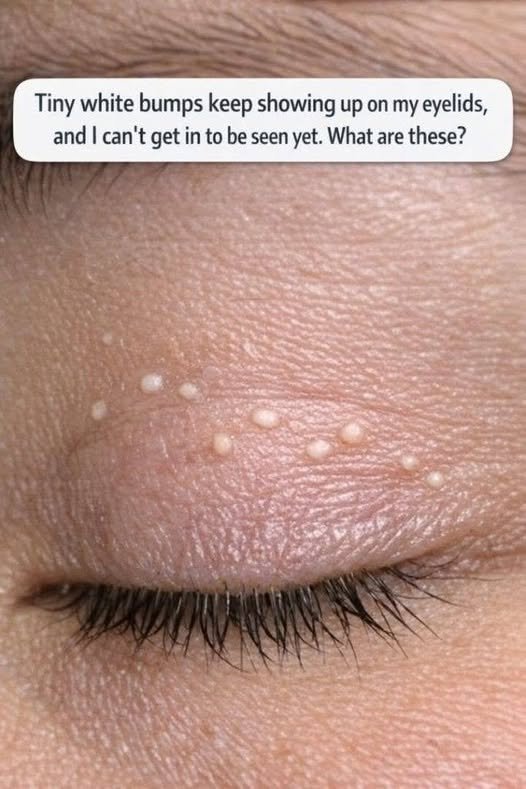
Noticing tiny white bumps on your eyelids can be concerning, especially if you can’t see a healthcare provider right away. While many eyelid bumps are harmless, it’s important to know what they might be and when they need medical attention.
Important: It’s not possible to diagnose a skin condition without an examination. The information below covers common possibilities, but if the bumps change, become painful, or affect your vision, you should seek medical care promptly.
1. Milia (The Most Common Cause)
One of the most common causes of small white bumps on the eyelids is milia.
Milia are tiny cysts filled with keratin, a protein found in the skin. They usually appear as:
- Small, white or yellowish bumps
- Firm to the touch
- About 1–2 mm in size
- Painless
- Not itchy
They often develop when dead skin cells become trapped beneath the skin’s surface.
Should You Pop Them?
No. Trying to squeeze or pick at milia can damage the delicate skin around the eyes and increase the risk of infection or scarring. They often disappear on their own, though some persist and may need to be removed by a healthcare professional.
2. Stye (Hordeolum)
A stye is an infection of an oil gland or eyelash follicle.
Symptoms include:
- A tender, red bump
- Swelling
- Pain
- Sometimes a visible white or yellow center
Warm compresses for 10–15 minutes, several times a day, may help it drain naturally.
3. Chalazion
A chalazion forms when an oil gland in the eyelid becomes blocked.
Unlike a stye, it is usually:
- Firm
- Painless (after the initial inflammation settles)
- Larger than milia
- Slow to develop
Warm compresses may help it resolve over time.
4. Blocked Oil Glands (Meibomian Gland Dysfunction)
Tiny white or yellow plugs along the eyelid margin can occur when the meibomian glands become clogged. This may be associated with dry eyes, irritation, or blepharitis (eyelid inflammation).
5. Xanthelasma
Flat, yellowish patches near the inner corners of the eyelids may be xanthelasma, which can be associated with high cholesterol, although many people with xanthelasma have normal cholesterol levels.
What You Can Do While Waiting for an Appointment
- Keep your eyelids clean with warm water or a gentle eyelid cleanser.
- Apply a warm compress for 5–10 minutes if the bumps are associated with a blocked gland or stye.
- Avoid rubbing or squeezing the bumps.
- Remove eye makeup before bed and avoid sharing cosmetics.
- If you wear contact lenses, follow good lens hygiene and avoid wearing them if your eye becomes irritated.
When to Seek Urgent Medical Care
Seek prompt medical attention if you have:
- Severe eyelid swelling
- Increasing redness or warmth spreading around the eye
- Fever
- Significant pain
- Vision changes or blurred vision
- Difficulty moving the eye
- A bump that bleeds, grows rapidly, or doesn’t improve over several weeks
The Bottom Line
Tiny white bumps on the eyelids are most commonly milia, which are harmless keratin-filled cysts. Other possibilities include styes, chalazia, or blocked oil glands. Most are not emergencies, but you should avoid trying to remove them yourself. If the bumps become painful, affect your vision, or continue to grow, arrange an evaluation with an eye care professional or healthcare provider.