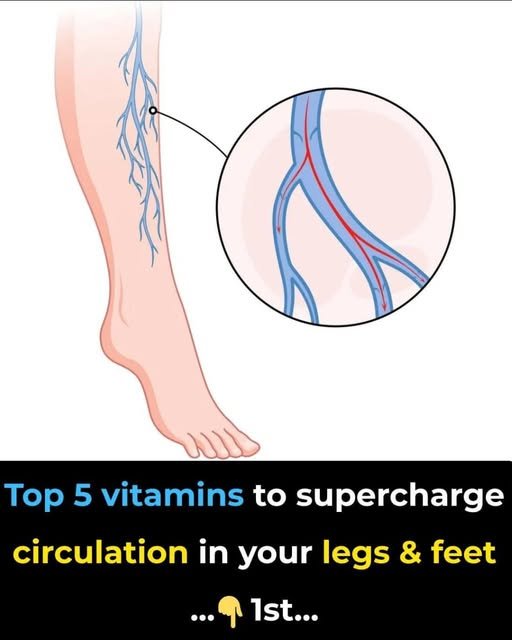
Healthy circulation helps deliver oxygen and nutrients throughout your body, including your legs and feet. While no vitamin can “supercharge” blood flow instantly, certain vitamins and nutrients play important roles in blood vessel health, nerve function, and normal circulation.
1. Vitamin B12 — Supports Healthy Nerves and Blood Cells
Vitamin B12 is essential for:
- Making healthy red blood cells that carry oxygen
- Maintaining nerve function in the feet and legs
- Supporting normal energy metabolism
A deficiency can contribute to symptoms such as:
- Tingling or numbness in the feet
- Weakness
- Poor balance
Food sources:
- Fish
- Eggs
- Meat
- Dairy products
- Fortified cereals
People who eat little or no animal products may be at higher risk of deficiency and may need to discuss supplementation with a healthcare professional.
2. Vitamin B6 — Helps Nerve and Blood Vessel Function
Vitamin B6 supports:
- Normal nerve communication
- Protein metabolism
- Formation of certain blood components
Adequate B6 levels help maintain healthy function in the nerves that control sensation in your feet.
Food sources:
- Chicken
- Tuna
- Potatoes
- Bananas
- Chickpeas
Avoid taking high-dose B6 supplements unless advised, because excessive amounts over time can cause nerve problems.
3. Vitamin C — Supports Strong Blood Vessels
Vitamin C helps the body produce collagen, a protein that supports the structure of blood vessels.
Benefits include:
- Supporting healthy vessel walls
- Helping protect cells from oxidative stress
- Improving iron absorption, which supports healthy blood production
Food sources:
- Oranges
- Strawberries
- Bell peppers
- Broccoli
- Kiwi
4. Vitamin D — Linked With Vascular Health
Vitamin D plays many roles in the body, including supporting:
- Muscle function
- Immune health
- Overall cardiovascular health
Low vitamin D levels have been associated in studies with various circulation-related concerns, although vitamin D supplements are not a guaranteed treatment for circulation problems.
Food sources:
- Sun exposure
- Fatty fish
- Egg yolks
- Fortified milk
5. Vitamin E — Helps Protect Blood Vessels
Vitamin E is an antioxidant that helps protect cells from oxidative damage.
It may support:
- Healthy blood vessel function
- Protection of cell membranes
Food sources:
- Almonds
- Sunflower seeds
- Avocados
- Spinach
- Plant oils
High-dose vitamin E supplements can interact with some medications, especially blood thinners, so caution is important.
Other Nutrients Important for Leg and Foot Circulation
Magnesium
Helps muscles and blood vessels function normally.
Sources:
- Nuts
- Seeds
- Leafy greens
- Whole grains
Omega-3 Fatty Acids
Support heart and blood vessel health.
Sources:
- Salmon
- Sardines
- Flaxseed
- Walnuts
Potassium
Helps maintain normal fluid balance and blood pressure.
Sources:
- Bananas
- Beans
- Potatoes
- Vegetables
Lifestyle Habits That Often Matter More Than Supplements
For better circulation in the legs and feet:
✅ Walk regularly
✅ Avoid sitting for long periods
✅ Keep a healthy weight
✅ Stay hydrated
✅ Elevate your legs when resting
✅ Avoid smoking
✅ Manage blood pressure, cholesterol, and blood sugar
When to Seek Medical Advice
Leg or foot circulation problems can sometimes be a sign of conditions that need medical attention. Seek advice if you notice:
- Persistent cold feet
- Leg pain while walking that improves with rest
- Swelling in one leg
- Skin color changes
- Slow-healing foot wounds
- New numbness or weakness
Vitamins can support overall health, but they do not replace evaluation or treatment for circulation disorders.