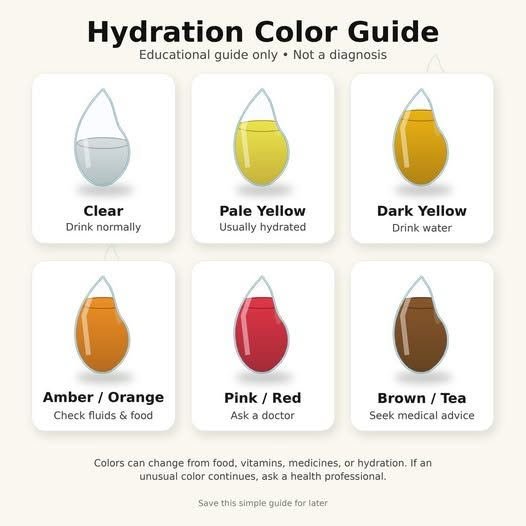
Here’s a simple urine color guide and what different shades can commonly mean. Keep in mind: hydration, diet, vitamins, and medications often affect color, not just disease.
🟡 1. Clear / Very Pale Yellow
Usually normal.
- Well hydrated (maybe even overhydrated)
- No concern unless you’re constantly urinating excessively
🟡 2. Light Yellow (Straw color)
Ideal range.
- Normal hydration
- Healthy kidney function in most cases
🟡 3. Dark Yellow / Amber
Most commonly:
- Dehydration
- First morning urine (naturally concentrated)
Try increasing fluids—if it lightens, that was likely the cause.
🟠 4. Orange
Possible causes:
- Dehydration (strong concentration)
- Certain medications (e.g., some antibiotics or laxatives)
- High intake of vitamin B supplements
- Rarely: liver or bile duct issues (especially if accompanied by yellow skin/eyes)
🔴 5. Pink or Red
Can be concerning, but not always serious:
- Beets, berries, food coloring
- Some medications
- Blood in urine (hematuria) → can be from:
- Urinary tract infection (UTI)
- Kidney stones
- Injury or inflammation
If not clearly food-related, this should be checked.
🟤 6. Brown / Cola-colored
Possible causes:
- Severe dehydration
- Liver problems (bilirubin in urine)
- Muscle breakdown (rare but serious)
- Some medications
This should be evaluated if it persists.
🟢 / 🔵 7. Blue or Green
Uncommon, usually not dangerous:
- Certain medications or dyes
- Some rare infections
- Food coloring
⚪ 8. Cloudy or Milky
Possible causes:
- Urinary tract infection (UTI)
- Kidney stones
- High phosphate levels
- Semen in urine (temporary, not dangerous)
If combined with burning, smell, or fever → likely infection.
⚠️ When to seek medical advice
Get checked if you notice:
- Blood (red/pink) without food explanation
- Brown/cola urine
- Pain, burning, fever, or back pain
- Persistent cloudy urine or foul smell
- Sudden major change lasting >1–2 days
If you want, tell me what color you’re seeing and any symptoms (pain, smell, frequency), and I can help you interpret it more specifically.