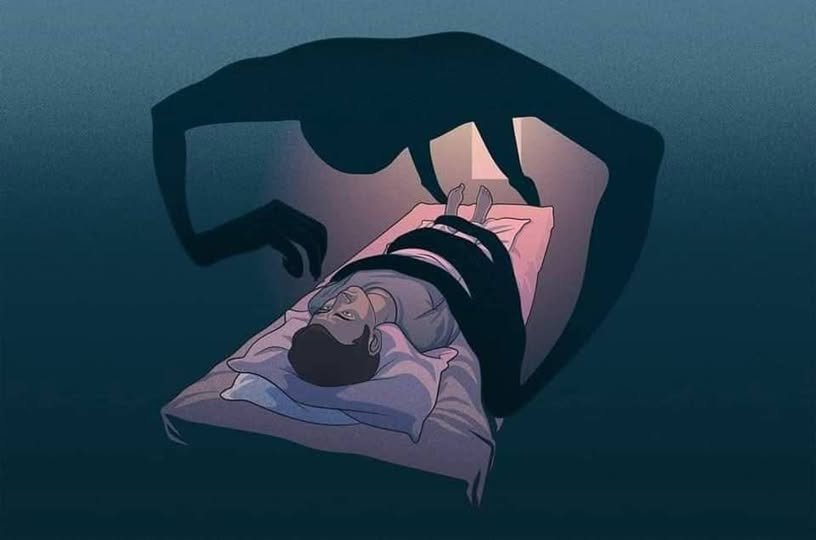
Imagine waking up in the middle of the night, fully aware of your surroundings—but unable to move or speak. For some people, the experience may also include a feeling of pressure on the chest or vivid, dream-like hallucinations. This unsettling phenomenon is known as sleep paralysis.
Although it can be frightening, sleep paralysis is generally not dangerous and often resolves on its own within a few seconds to a couple of minutes.
What Is Sleep Paralysis?
Sleep paralysis is a temporary inability to move or speak that occurs as you are falling asleep or waking up. During an episode, your mind is awake, but your body remains in a state of muscle relaxation (called REM atonia) that normally occurs during rapid eye movement (REM) sleep.
This mismatch between the brain and body can create the sensation of being “awake but frozen.”
Common Symptoms
People experiencing sleep paralysis may notice:
- Inability to move the arms, legs, or body
- Difficulty speaking or calling for help
- Feeling fully awake and aware
- A sensation of pressure on the chest
- Fear or panic
- Vivid hallucinations, such as seeing a person in the room, hearing voices, or feeling a presence nearby
Not everyone experiences hallucinations, but when they occur, they can feel very realistic because parts of the brain involved in dreaming are still active.
How Long Does It Last?
Most episodes last:
- A few seconds
- Up to 1–2 minutes
The paralysis usually ends on its own or when someone touches or speaks to the person.
What Causes Sleep Paralysis?
The exact cause isn’t always clear, but sleep paralysis is linked to disruptions in the normal sleep cycle.
Common factors include:
Sleep Deprivation
Not getting enough sleep is one of the most common triggers.
Irregular Sleep Schedule
Shift work, jet lag, or inconsistent bedtimes can increase the likelihood of episodes.
Stress and Anxiety
Emotional stress and anxiety may affect sleep quality and contribute to sleep paralysis.
Sleeping on Your Back
Some studies suggest episodes are more common when sleeping on the back, though this isn’t true for everyone.
Certain Sleep Disorders
Sleep paralysis may occur alongside conditions such as:
- Narcolepsy
- Obstructive sleep apnea
- Insomnia
Is Sleep Paralysis Dangerous?
For most people, sleep paralysis is harmless. Although it can be extremely frightening, it does not typically cause physical harm.
However, frequent episodes may interfere with sleep quality or signal an underlying sleep disorder that should be evaluated by a healthcare professional.
How Is It Diagnosed?
A doctor will usually diagnose sleep paralysis based on:
- Your symptoms
- Medical history
- Sleep habits
- Frequency of episodes
If another sleep disorder is suspected, your healthcare provider may recommend a sleep study.
How Can You Reduce Your Risk?
Improving sleep habits may help reduce episodes:
- Aim for 7–9 hours of sleep each night.
- Keep a consistent sleep schedule.
- Reduce stress through relaxation techniques.
- Limit caffeine late in the day.
- Avoid alcohol close to bedtime if it disrupts your sleep.
- Create a cool, dark, and quiet sleep environment.
- If you often sleep on your back, try sleeping on your side.
What Should You Do During an Episode?
If sleep paralysis occurs:
- Remind yourself that it is temporary.
- Try to stay calm and focus on slow breathing.
- Concentrate on moving a small muscle, such as a finger or toe, which may help end the episode.
- Remember that any hallucinations are part of the experience and will pass.
When Should You See a Doctor?
You should seek medical advice if:
- Episodes happen frequently.
- They cause significant anxiety or fear.
- You experience excessive daytime sleepiness.
- You suddenly fall asleep during the day.
- You snore loudly or stop breathing during sleep.
- Sleep paralysis is affecting your daily life.
These symptoms may indicate an underlying sleep disorder that can be treated.
Final Thoughts
Sleep paralysis is a temporary sleep phenomenon in which you wake up before your body’s normal REM muscle relaxation has ended. While the experience can be alarming—especially if accompanied by vivid hallucinations—it is usually harmless and short-lived.
Getting enough sleep, maintaining a regular sleep schedule, and managing stress can help reduce the likelihood of episodes. If sleep paralysis becomes frequent or is accompanied by other sleep-related symptoms, consult a healthcare professional for further evaluation.