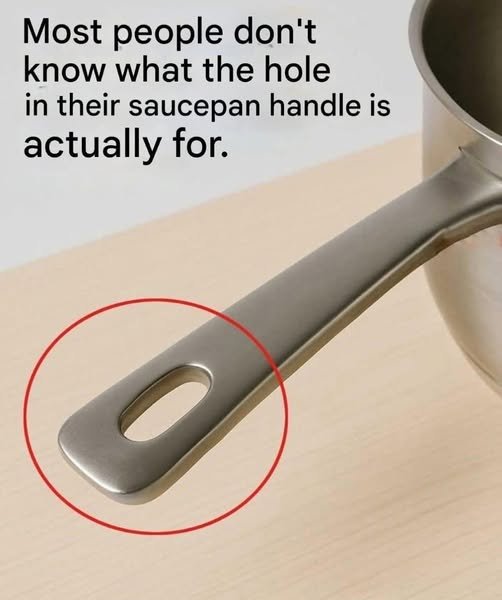
Take a look at almost any saucepan in your kitchen, and you’ll probably notice a small hole at the end of the handle. Most people assume it’s there simply so the pan can be hung on a hook, but that’s only part of the story.
As it turns out, this tiny design feature has a surprisingly practical purpose that can make cooking easier, cleaner, and more organized.
Let’s explore why that little hole exists—and how you can put it to good use.
The Most Obvious Purpose: Hanging Storage
The primary reason manufacturers include a hole in the handle is to make storage more convenient.
By hanging your saucepan on a sturdy kitchen rack or wall hook, you can:
- Free up valuable cabinet space.
- Keep frequently used cookware within easy reach.
- Reduce clutter in drawers and cupboards.
- Help pans dry more thoroughly after washing.
For smaller kitchens, hanging cookware can be an excellent way to maximize storage while adding a decorative touch.
The Hidden Kitchen Hack
Here’s the clever use many home cooks don’t know about.
While you’re stirring a simmering soup, pasta sauce, or stew, you can slide the handle of a wooden spoon or heat-resistant silicone spoon through the hole in the saucepan handle.
The spoon then rests above the pan instead of being placed on the countertop.
This simple trick helps:
- Prevent messy drips on your counters.
- Keep cooking utensils within easy reach.
- Reduce the need for a separate spoon rest.
- Keep your workspace cleaner while cooking.
It’s a small convenience that can make meal preparation much tidier.
Does It Work with Every Spoon?
Not always.
The trick works best with:
- Wooden spoons
- Silicone cooking spoons
- Narrow-handled utensils
Large or heavy utensils may not fit securely through the hole, and some saucepan handles have smaller openings than others.
Always make sure the spoon is stable before letting go.
Is It Safe?
Generally, yes—provided you use common sense.
Keep these safety tips in mind:
- Ensure the spoon is balanced and won’t slip.
- Avoid using utensils that are too heavy.
- Keep the spoon away from open flames or direct contact with heating elements.
- Remember that both the saucepan handle and the utensil may become hot during cooking.
If the spoon seems unstable, it’s better to use a dedicated spoon rest.
Why Manufacturers Include the Hole
Beyond convenience, the hole also serves practical purposes during manufacturing and retail.
It can:
- Make the pan easier to hang on display racks in stores.
- Simplify packaging and storage in warehouses.
- Allow cookware to be suspended during certain finishing or coating processes.
So while home cooks benefit from the feature, manufacturers do too.
Other Clever Uses
Some people have found additional ways to use the hole in a saucepan handle, such as:
- Hanging the pan to air-dry after washing.
- Keeping cookware organized on wall-mounted racks.
- Storing frequently used pans within easy reach.
- Pairing the pan with its favorite cooking utensil when hanging it for storage.
These simple ideas can help keep your kitchen neat and functional.
Common Misconceptions
Many people believe the hole has only one purpose, but that’s not entirely true.
Some common myths include:
“It’s only for hanging the pan.”
While hanging is its primary design purpose, many cooks also use it to hold a cooking spoon during meal preparation.
“Every saucepan handle is designed the same way.”
Not necessarily. Handle shapes, hole sizes, and materials vary by manufacturer, so not every pan will work equally well with every utensil.
Final Thoughts
The small hole at the end of your saucepan handle may seem insignificant, but it’s a clever design feature with more than one practical use. Whether you’re hanging your cookware to save space or resting a wooden spoon while stirring dinner, this tiny detail can help keep your kitchen cleaner and more organized.
The next time you’re cooking, take advantage of this built-in convenience—you might find yourself wondering how you ever overlooked it.