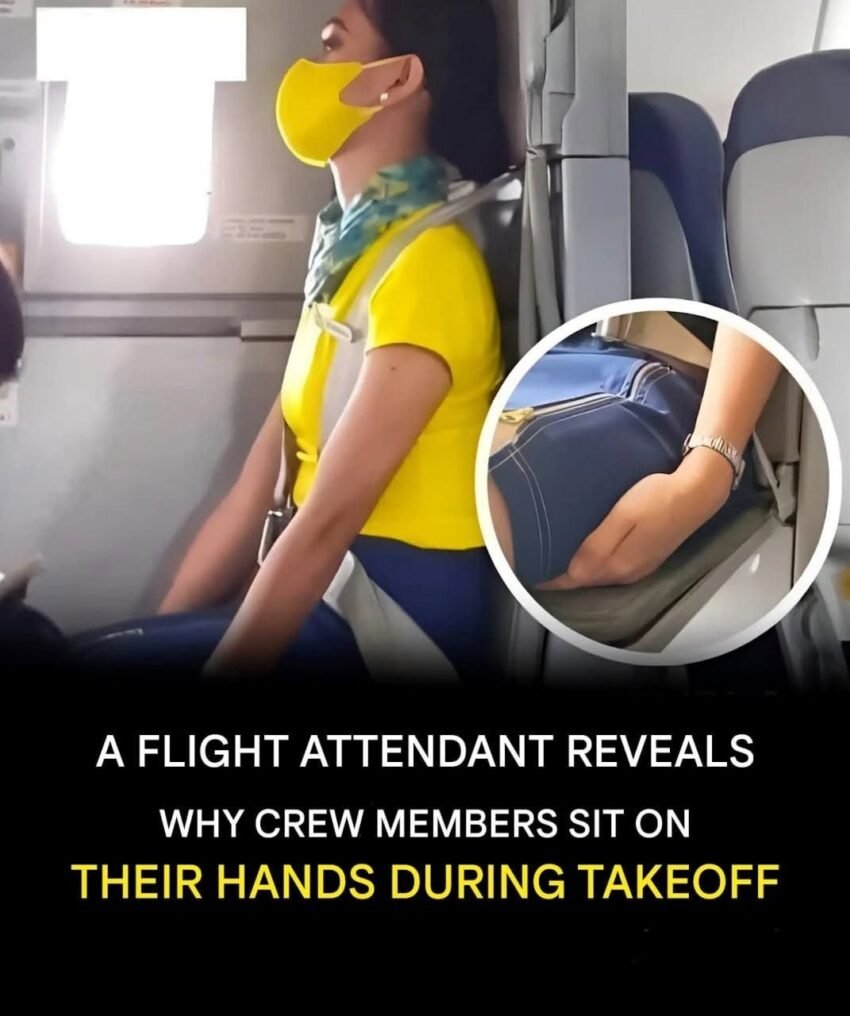
If you’ve ever watched flight attendants during takeoff or landing, you may have noticed something curious. Once the cabin is secured and the safety demonstration is complete, they sit upright in their jump seats with their backs straight, feet firmly on the floor, and their hands tucked under their thighs. To many passengers, it looks unusual—almost as if they’re trying to hide their hands.
In reality, this is a carefully taught safety procedure known as the brace position. It’s designed to help flight attendants protect themselves during the most critical phases of a flight and ensure they’re able to assist passengers if an emergency occurs.
Here’s why they do it.
Takeoff and Landing Are the Most Critical Parts of a Flight
Commercial aviation is one of the safest forms of travel, but statistics show that many aviation incidents occur during takeoff and landing. These phases involve rapid changes in speed, altitude, and aircraft configuration, making them the times when crews are most alert.
Because of this, flight attendants prepare themselves to respond immediately if something unexpected happens.
The Purpose of the Brace Position
When seated in the jump seat, flight attendants adopt a specific posture that helps reduce the risk of injury during sudden impacts or abrupt stops.
The typical brace position includes:
- Sitting upright with the back against the seat.
- Fastening the safety harness securely.
- Placing both feet flat on the floor.
- Keeping the head facing forward or in the position specified by the airline.
- Resting the hands flat under the thighs or on the lap, depending on company procedures.
While exact procedures vary between airlines and aircraft types, the goal is always the same: maximize safety and minimize injury.
Why Put Hands Under the Thighs?
Keeping the hands under the thighs serves several important purposes.
1. It Helps Prevent Uncontrolled Arm Movement
If the aircraft experiences sudden deceleration or turbulence, loose arms can swing forward unexpectedly.
Placing the hands under the thighs helps keep the arms close to the body, reducing the chance of striking nearby surfaces or sustaining injuries.
2. It Encourages a Stable Body Position
The position helps flight attendants maintain a balanced posture throughout takeoff and landing.
Remaining stable is important because they may need to react immediately after an unexpected event.
3. It Reduces the Risk of Hand Injuries
Hands are essential tools for flight attendants during an emergency.
They may need to:
- Open emergency exits.
- Operate evacuation slides.
- Assist injured passengers.
- Communicate with the flight crew.
- Help direct an evacuation.
Protecting their hands helps ensure they can perform these critical tasks if needed.
4. It Reinforces Safety Training
The brace position is part of extensive emergency preparedness training.
Flight attendants rehearse emergency scenarios repeatedly so that correct actions become automatic, even under stress.
They Also Perform a “Silent Review”
During takeoff and landing, many flight attendants quietly go through a mental checklist known as a silent review.
This may include mentally reviewing:
- The location of emergency exits.
- Operation of emergency equipment.
- Commands to use during an evacuation.
- Responsibilities in different emergency scenarios.
- Special passenger needs nearby.
This mental rehearsal helps them respond quickly and confidently if an emergency occurs.
Why Don’t Passengers Sit the Same Way?
Passengers are given different brace position instructions because their seating arrangements and responsibilities differ from those of the cabin crew.
For example, passengers may be instructed to:
- Fasten their seat belts securely.
- Sit upright.
- Place carry-on items under the seat or in overhead bins.
- Follow crew instructions.
- Adopt a brace position if directed during an emergency.
Flight attendants, on the other hand, must remain ready to assist everyone else after the aircraft comes to a stop.
Is This Required by Aviation Authorities?
Yes. Flight attendants receive extensive safety training that meets regulations established by national aviation authorities. Airlines also develop detailed procedures for their specific aircraft and operations.
The exact seating posture—including where the hands are placed—may differ slightly between airlines, but all procedures are designed to improve crew safety and readiness.
Other Things Flight Attendants Check Before Takeoff
Before taking their seats, flight attendants perform a final cabin check to ensure:
- Seat belts are fastened.
- Tray tables are stowed.
- Seat backs are upright.
- Carry-on baggage is properly stored.
- Emergency exits are unobstructed.
- Electronic devices comply with airline instructions.
- Passengers are prepared for takeoff.
These checks help create a safer environment for everyone on board.
Does This Mean Flying Is Dangerous?
Not at all.
Commercial aviation has an excellent safety record, and millions of flights operate safely every year. The procedures you see—including the brace position—are examples of the aviation industry’s strong focus on preparation and risk management.
Just as firefighters wear protective gear before entering a building, flight attendants follow standardized safety procedures even though emergencies are rare.
Final Thoughts
The next time you board a plane, you’ll know that a flight attendant placing their hands under their thighs isn’t simply sitting comfortably—it’s part of a carefully practiced safety technique. This brace position helps reduce the risk of injury, keeps the crew stable during takeoff and landing, and ensures they’re ready to assist passengers if an emergency ever occurs.
It’s one of many behind-the-scenes procedures that contribute to the remarkable safety of modern air travel, even though most passengers never notice it.
Disclaimer: Procedures may vary slightly between airlines, aircraft models, and aviation authorities. Flight attendants are trained according to their airline’s approved safety protocols and should always be followed during all phases of flight.