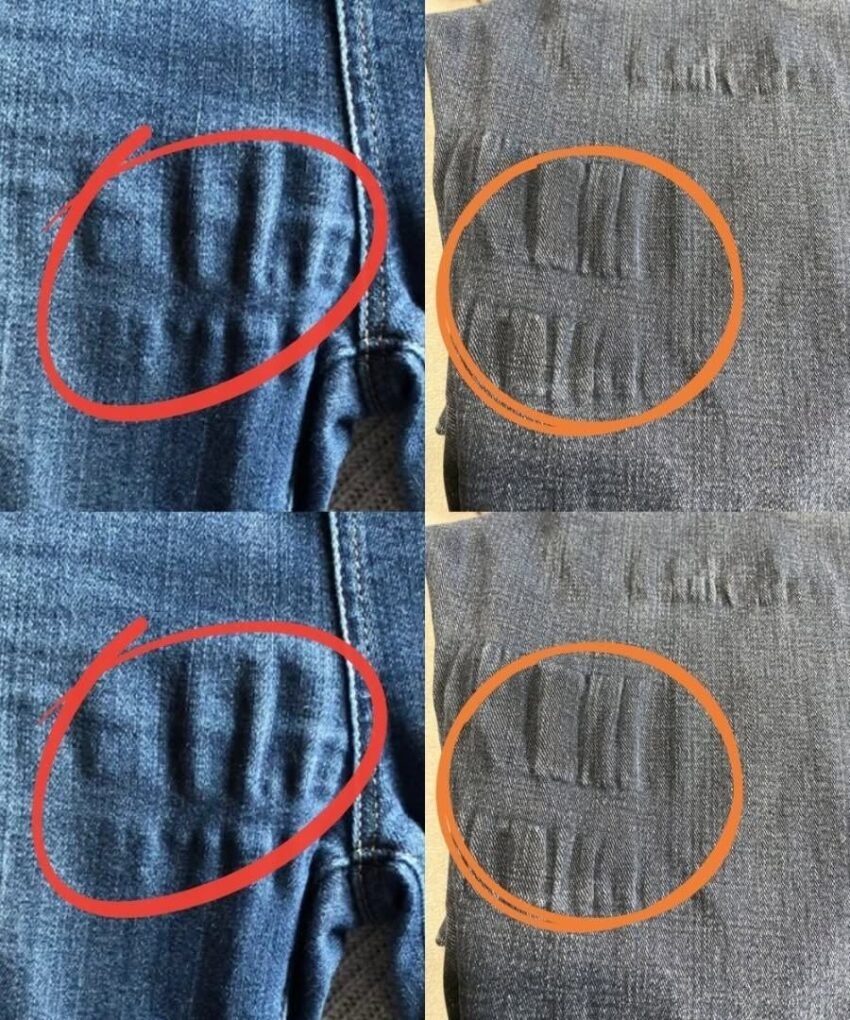
These marks can make your denim look worn or defective, even though the fabric is still in good condition. The good news is that this is a common issue in denim, and in many cases, it can be reduced or prevented.
What Are These Marks?
From the image, the vertical streaks appear to be pressure marks (crease marks) or wash lines caused by folding and compression during washing, spinning, or storage. They are more noticeable on dark-wash jeans because of the way indigo dye reflects light.
These marks are usually not fabric damage but rather a temporary or semi-permanent change in the surface appearance of the denim.
Why Does This Happen?
1. Tight Folding During Washing
When jeans are tightly folded or twisted inside the washing machine, certain areas receive more pressure than others. This pressure creates visible vertical lines after drying.
2. High-Speed Spin Cycle
A very fast spin cycle compresses the denim, especially thick fabrics. The pressure can flatten the yarns and leave noticeable marks.
3. Indigo Dye Compression
Denim is dyed with indigo, which mostly coats the outer surface of the yarn. When the fabric is pressed, the dye reflects light differently, making compressed areas appear darker or lighter.
4. Heat from the Dryer
High drying temperatures can set crease marks permanently, especially if the jeans remain folded or wrinkled during the drying process.
5. Long-Term Storage
Leaving jeans folded in the same position for weeks or months can also create pressure marks that become visible after washing.
How to Remove These Marks
Wash Again Properly
Turn the jeans inside out and wash them on a gentle cycle using cold water. Avoid overloading the washing machine so the denim can move freely.
Shake Before Drying
After washing, gently shake the jeans to release wrinkles and reshape the fabric before hanging them to dry.
Steam the Fabric
A garment steamer or the steam function on an iron can help relax the compressed fibers and reduce the appearance of the marks.
Iron with a Pressing Cloth
Place a cotton cloth over the affected area and iron using medium heat with steam. This helps restore the fabric surface without creating shiny spots.
Wear the Jeans
In many cases, simply wearing the jeans for a few hours allows the fibers to relax naturally, making the marks less noticeable.
How to Prevent It
- Wash jeans inside out.
- Use cold water and a gentle wash cycle.
- Avoid stuffing too many clothes into the washing machine.
- Choose a lower spin speed (around 600–800 RPM for most denim).
- Hang jeans immediately after washing instead of leaving them in the machine.
- Avoid excessive tumble drying.
- Store jeans hanging or loosely folded.
Is This a Manufacturing Defect?
Not necessarily.
If the marks disappear after steaming or another wash, they are usually wash or pressure marks, not a defect.
However, if the lines remain permanently after repeated washing and steaming, they may indicate:
- Uneven fabric finishing during manufacturing.
- Dye migration or inconsistent indigo application.
- Compression damage during packaging or shipping.
- Fabric defects from the weaving process.
In such cases, the jeans may qualify for replacement if they are new and still under the seller’s return or warranty policy.
Final Thoughts
The vertical marks shown in the image are most commonly caused by pressure and creasing during washing, spinning, drying, or storage. While they can look alarming, they rarely affect the strength or durability of the denim. Proper washing techniques, steaming, and careful drying can usually reduce or eliminate these marks.
By following the right denim care practices, you can keep your jeans looking fresh, smooth, and free from unwanted wash lines for much longer.