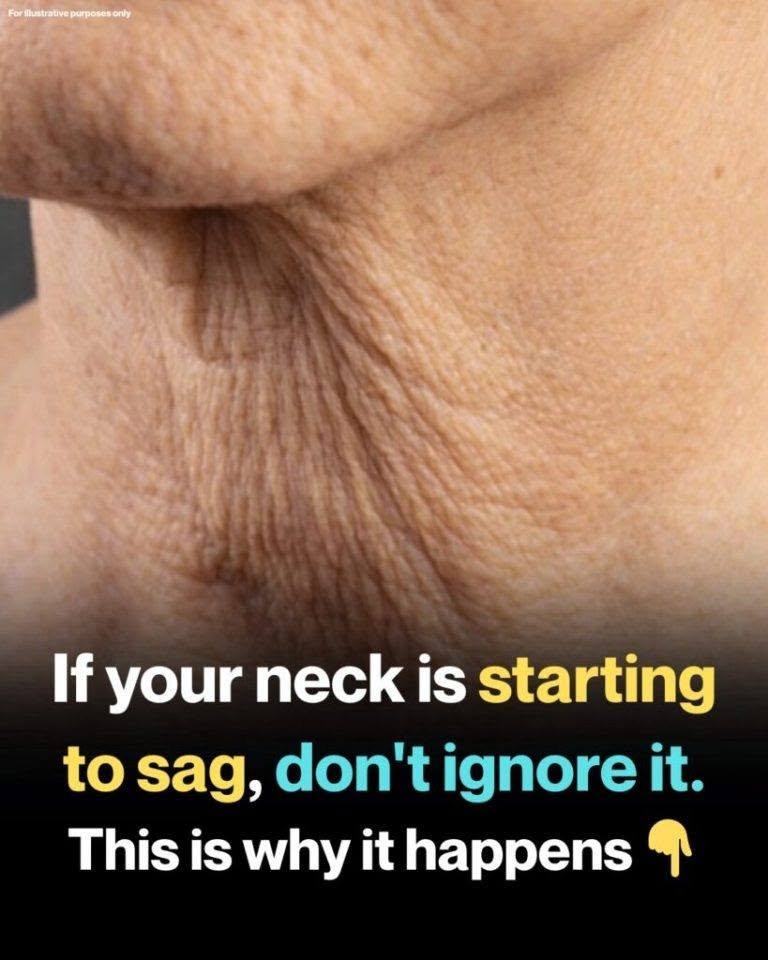
Have you ever noticed that the neck often reveals signs of aging before the face? While many people focus on skincare routines for their face, the neck is frequently overlooked. As the years pass, the skin around the neck begins to lose its firmness, leading to wrinkles, loose skin, and the appearance of vertical bands.
The good news is that neck sagging is a natural part of aging, and understanding why it happens can help you take better care of your skin.
1. Your Skin Produces Less Collagen and Elastin
Collagen and elastin are the building blocks that keep your skin firm, smooth, and flexible. As you age, your body naturally produces less of these essential proteins. This gradual decline causes the skin to become thinner and less elastic, making it more prone to sagging.
2. Gravity Never Takes a Day Off
Gravity constantly pulls on your skin throughout your lifetime. When your skin is young and rich in collagen, it easily resists this force. However, as the skin weakens with age, gravity becomes more noticeable, causing the neck to droop over time.
3. Neck Muscles Change with Age
Beneath the skin lies the platysma muscle, a thin sheet of muscle that stretches across the front of the neck. As we get older, this muscle can separate or tighten into visible vertical bands. Combined with loose skin, these bands contribute to an aged appearance.
4. Fat Distribution Changes
Aging also affects the way fat is stored beneath the skin. Some people lose the fat that once supported their skin, resulting in a thin, crepey-looking neck. Others develop excess fat beneath the chin, creating the appearance of a double chin while the surrounding skin becomes loose.
5. Years of Sun Exposure Take Their Toll
The sun is one of the biggest contributors to premature skin aging. Ultraviolet (UV) rays damage collagen and elastin fibers, accelerating the development of wrinkles and sagging. Many people diligently apply sunscreen to their face but forget their neck, allowing years of unnoticed sun damage to accumulate.
6. Genetics Play a Role
Your genes influence how quickly your skin ages. Some people naturally have thicker, more elastic skin that stays firm for longer, while others may notice neck laxity much earlier despite following a healthy lifestyle.
7. Weight Fluctuations Can Leave Loose Skin
Significant weight gain and loss can stretch the skin. As skin elasticity declines with age, it becomes harder for the neck to tighten after weight loss, often leaving behind loose or sagging skin.
Can You Slow Down Neck Sagging?
Although aging is inevitable, healthy habits can help keep your neck looking youthful for longer. Applying sunscreen daily, staying hydrated, eating a balanced diet rich in protein and antioxidants, avoiding smoking, and using skincare products containing retinoids can all support healthier skin. Professional treatments such as microneedling, radiofrequency therapy, or laser treatments may also stimulate collagen production and improve skin firmness.
Final Thoughts
Neck skin sagging is a completely natural part of the aging process, influenced by collagen loss, gravity, muscle changes, sun exposure, genetics, and lifestyle factors. While no treatment can stop aging entirely, caring for your neck as consistently as you care for your face can help delay visible signs of aging and maintain smoother, firmer skin for years to come.
Remember, your neck deserves just as much attention as your face. A simple skincare routine and healthy lifestyle choices today can make a noticeable difference tomorrow.