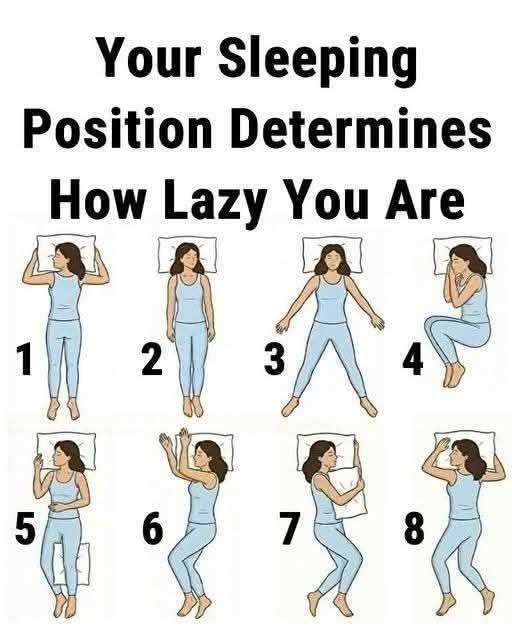
Your Sleeping Position Determines How Lazy You Are — Myth or Reality?
Scroll through social media and you’ll eventually see bold claims like: “Your sleeping position determines how lazy you are.” It sounds intriguing—almost like your personality is secretly written into how you curl up at night.
But here’s the reality: there is no scientific evidence that sleeping position determines laziness, motivation, or personality. What your sleep posture can influence is your comfort, breathing, and sleep quality—not your character or work ethic.
Let’s break it down properly, without the myths.
Where This Idea Comes From
The claim likely comes from a mix of sleep psychology misconceptions and viral “personality analysis” content online. These posts often try to connect physical habits with personality traits in a way that feels insightful but isn’t medically grounded.
In reality, sleep science focuses on:
- Breathing quality
- Spinal alignment
- Sleep cycle disruption
- Restorative sleep quality
Not personality traits like laziness.
What Sleeping Position Actually Affects
While it doesn’t define who you are, your sleeping position does influence how your body functions overnight.
1. Sleep Quality and Restfulness
The biggest impact of sleeping position is how well you sleep—not how motivated you are.
- Poor alignment can cause tossing and turning
- Restricted breathing can interrupt deep sleep
- Discomfort leads to frequent waking
If you wake up tired, you may feel unmotivated—but that’s fatigue, not laziness.
2. Breathing and Sleep Disorders
Some positions can worsen breathing issues, especially when sleeping on your back.
For example, back sleeping may increase symptoms of:
Obstructive sleep apnea
This condition can cause:
- Loud snoring
- Repeated breathing interruptions
- Low oxygen levels during sleep
- Daytime exhaustion
Someone with untreated sleep apnea may appear “lazy,” when in reality they are sleep-deprived.
3. Back, Neck, and Joint Comfort
Sleeping posture can also affect physical comfort:
- Stomach sleeping → may strain the neck and lower back
- Back sleeping → can support spine alignment but worsen snoring
- Side sleeping → often reduces pressure on the spine and improves breathing
Chronic discomfort leads to poor sleep—and poor sleep leads to low energy.
4. Digestion and Circulation
Certain positions can mildly influence digestion and circulation:
- Left-side sleeping may support digestion for some people
- Prolonged pressure on one side may cause numbness or stiffness
Again, these effects are physical—not psychological.
The Myth of “Lazy Sleep Positions”
There is no scientific classification that labels sleeping positions as:
- Lazy
- Active
- Motivated
- Unmotivated
These labels are purely social media inventions. Sleep researchers do not use personality traits to evaluate sleep posture.
What they do measure is:
- Sleep efficiency
- Oxygen levels
- REM cycles
- Musculoskeletal strain
Why People Feel “Lazy” After Poor Sleep
What people often call “laziness” is actually the brain reacting to insufficient rest.
Poor sleep can lead to:
- Reduced concentration
- Slower reaction time
- Low energy levels
- Irritability
- Reduced motivation
These are biological effects, not personality flaws.
So if someone sleeps poorly due to posture, environment, or a condition like Obstructive sleep apnea, they may feel drained the next day—but that has nothing to do with character.
What Actually Influences Energy and Motivation
If someone consistently feels “lazy,” the real causes are usually broader:
- Not getting enough sleep (7–9 hours recommended for adults)
- Poor sleep quality or frequent waking
- Stress or burnout
- Sedentary lifestyle
- Nutritional deficiencies
- Mental health factors such as depression or anxiety
- Undiagnosed sleep disorders
These factors influence energy far more than sleeping posture ever could.
Healthier Sleep Positions (Based on Science)
While no position determines personality, some are better for health:
- Side sleeping: Often recommended for breathing and spinal alignment
- Back sleeping: Good for posture if breathing is unaffected
- Stomach sleeping: Least recommended due to neck strain
The “best” position is the one that helps you sleep deeply and wake up rested.
Final Verdict
Your sleeping position does not determine how lazy you are. That idea is a myth with no scientific backing.
What your sleeping position can do is influence how well you sleep—and that directly affects how energetic, focused, and alert you feel during the day.
If motivation feels low, the cause is almost always sleep quality, health, stress, or lifestyle—not the way you happen to lie in bed at night.