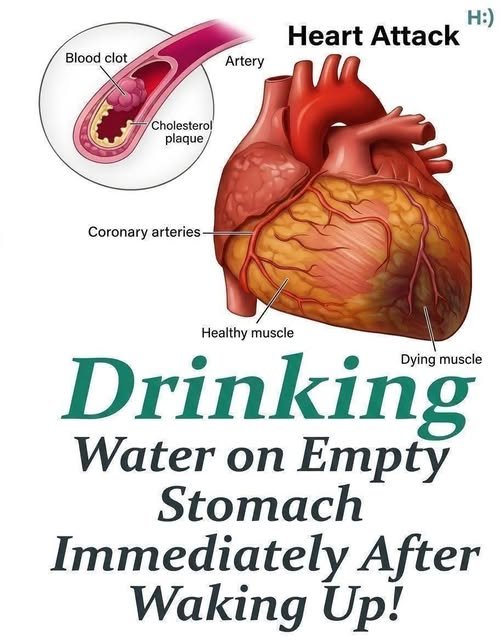
If you’re asking about the idea of drinking water on an empty stomach (usually meaning first thing in the morning before eating), there are a lot of claims around it—some useful, some exaggerated. Here’s a detailed, grounded breakdown of what actually happens and what’s myth.
What does happen in your body
When you drink water on an empty stomach:
- Rapid absorption starts quickly
With no food in the stomach, water passes into the small intestine faster, where it’s absorbed into the bloodstream. - Mild rehydration boost
After 6–8 hours of sleep, you’re naturally a bit dehydrated because you lose water through breathing and sweat. Drinking water helps restore normal fluid balance. - Temporary increase in blood volume
This can slightly support circulation and alertness, especially if you were mildly dehydrated upon waking.
Claimed benefits (what has some truth vs what’s overstated)
1. “It detoxes your body”
- Reality: Your liver and kidneys already handle detoxification continuously.
- Water helps them function properly, but it doesn’t “flush toxins” in a special morning-only way.
- So: supportive but not a detox miracle.
2. “It boosts metabolism”
- Some truth, small effect:
Drinking water can cause a short-term increase in energy expenditure (called water-induced thermogenesis). - The effect is modest—usually a few percent increase for a short time, not weight loss on its own.
3. “It helps digestion”
- Generally true in a mild sense:
Water helps soften stool and supports normal bowel movement, especially if you’re dehydrated or constipated. - But it’s not a treatment for digestive disorders.
4. “It improves skin”
- Indirectly true:
Proper hydration supports skin elasticity and function, but water alone won’t dramatically change acne, wrinkles, or complexion.
5. “It helps with weight loss”
- Partially true, but often exaggerated:
Drinking water before meals can increase fullness, which may help reduce calorie intake. - But timing alone (empty stomach vs not) isn’t a major factor compared to overall diet.
Possible downsides (usually minor)
For most healthy people, there are no real downsides, but a few exceptions exist:
- Drinking very large amounts quickly can cause stomach discomfort or nausea.
- People with kidney or heart conditions may need to monitor fluid intake carefully.
- Rare issue: water intoxication (hyponatremia) only happens with extreme overconsumption in a short time.
Bottom line
Drinking water on an empty stomach is:
- ✔ Hydrating and generally beneficial
- ✔ Helpful if you wake up dehydrated
- ✔ Neutral in timing importance (not magical, just practical)
But it is NOT:
- ❌ A detox method
- ❌ A standalone weight-loss solution
- ❌ A cure-all for digestion or skin
If you want, I can also break down the “morning water routine” trends (like warm water, lemon water, salt water) and what science actually says about each.