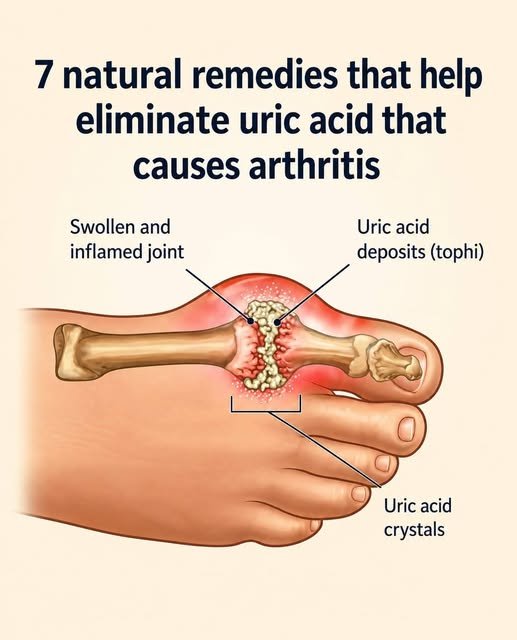
Gout is a common type of inflammatory arthritis caused by the buildup of uric acid crystals in the joints. It often develops suddenly, causing intense pain, redness, swelling, and warmth—most commonly in the big toe, but it can also affect the ankles, knees, wrists, fingers, and elbows.
If you’ve searched online for ways to “flush out uric acid naturally,” you’ve likely encountered countless home remedies promising quick cures. While some lifestyle changes may help support healthy uric acid levels and reduce the risk of future gout attacks, there is no natural remedy that can instantly remove uric acid or replace prescribed medical treatment during an acute gout flare.
The good news is that combining healthy habits with appropriate medical care can make a significant difference in managing gout over the long term.
What Is Uric Acid?
Uric acid is a waste product formed when your body breaks down substances called purines, which are naturally found in your body and in many foods.
Normally, uric acid dissolves in the blood, travels to the kidneys, and is removed through urine.
However, problems can occur if:
- Your body produces too much uric acid.
- Your kidneys don’t remove enough uric acid.
- Both happen at the same time.
When uric acid levels remain high, crystals may form inside joints, leading to painful gout attacks.
Common Symptoms of Gout
A gout flare often develops suddenly and may include:
- Severe joint pain
- Swelling
- Redness
- Warmth
- Tenderness
- Difficulty moving the affected joint
Without treatment, attacks may become more frequent over time.
1. Drink Plenty of Water
One of the simplest ways to support your body is by staying well hydrated.
Water helps the kidneys perform their normal function of filtering waste products, including uric acid.
Tips
- Drink water regularly throughout the day.
- Increase fluid intake during hot weather or exercise unless your healthcare provider has advised otherwise.
- Limit sugary drinks that may contribute to higher uric acid levels.
Hydration alone will not cure gout, but it supports overall kidney health.
2. Eat More Cherries
Cherries have been widely studied for their potential role in gout management.
Some research suggests that cherries or tart cherry juice may be associated with a lower risk of gout flare-ups, possibly because they contain anti-inflammatory compounds called anthocyanins.
However, cherries are not a substitute for prescribed gout medication.
Fresh, frozen, or unsweetened tart cherry products can be part of a balanced diet.
3. Reduce High-Purine Foods
Since purines break down into uric acid, limiting foods that are particularly high in purines may help some people manage gout.
Foods often recommended in moderation include:
- Organ meats (such as liver and kidney)
- Anchovies
- Sardines
- Mussels
- Certain game meats
Not everyone responds to foods in the same way, so discuss dietary changes with a healthcare professional if needed.
4. Choose More Plant-Based Foods
A diet rich in:
- Vegetables
- Fruits
- Whole grains
- Beans
- Nuts
- Seeds
supports overall health and may help with weight management, which is important for people living with gout.
Most vegetables—even those containing moderate amounts of purines—are not generally linked to an increased risk of gout attacks.
5. Maintain a Healthy Weight
Carrying excess body weight is associated with higher uric acid levels and an increased risk of gout.
Gradual, sustainable weight loss may help lower uric acid levels over time.
Avoid crash diets or fasting, as rapid weight loss may temporarily increase uric acid levels.
6. Limit Alcohol Intake
Alcohol, particularly beer and spirits, may increase uric acid levels and trigger gout attacks in some individuals.
If you have gout:
- Drink alcohol in moderation or avoid it if advised by your healthcare provider.
- Stay hydrated if you choose to drink alcohol.
7. Eat Low-Fat Dairy Products
Some studies suggest that low-fat dairy products may be associated with lower uric acid levels.
Good options include:
- Low-fat milk
- Plain yogurt
- Cottage cheese
These foods also provide protein and calcium.
Foods That May Support Overall Health
A balanced eating pattern may include:
Fruits
- Cherries
- Berries
- Oranges
- Apples
Vegetables
- Broccoli
- Spinach
- Bell peppers
- Carrots
Whole Grains
- Oats
- Brown rice
- Whole wheat bread
Lean Proteins
- Skinless chicken
- Fish (choose lower-purine options if advised)
- Tofu
- Beans
Lifestyle Habits That Help
In addition to diet:
- Stay physically active.
- Get enough sleep.
- Manage stress.
- Take prescribed medications as directed.
- Attend regular medical checkups.
Healthy habits work together to reduce long-term risk.
When to See a Doctor
Seek medical attention if you experience:
- Sudden severe joint pain
- Fever with joint swelling
- Repeated gout attacks
- Difficulty walking because of pain
- Symptoms that do not improve
Early treatment can reduce pain and help prevent long-term joint damage.
Frequently Asked Questions
Can lemon water flush out uric acid?
There is no strong evidence that lemon water alone removes excess uric acid or treats gout. Staying hydrated is beneficial, but no single drink cures gout.
Can apple cider vinegar cure gout?
Current scientific evidence does not support apple cider vinegar as a treatment for gout.
Is coffee good for gout?
Some research suggests moderate coffee consumption may be associated with a lower risk of gout in certain people, but coffee is not considered a treatment.
Can natural remedies replace gout medication?
No. Natural approaches may support overall health and help reduce risk factors, but they should not replace medications prescribed by a healthcare professional.
Final Thoughts
Managing gout involves more than finding a single “miracle remedy.” Staying hydrated, eating a balanced diet, maintaining a healthy weight, limiting alcohol, and choosing nutritious foods can all support healthy uric acid levels and reduce the likelihood of future flare-ups.
If you have frequent gout attacks or persistent joint pain, speak with your healthcare provider. Combining evidence-based medical treatment with healthy lifestyle habits offers the best chance of protecting your joints and maintaining long-term health.