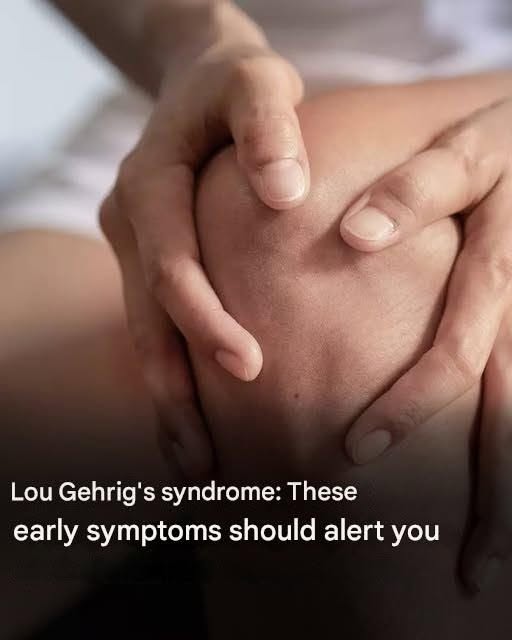
Learn the early signs of Lou Gehrig’s disease (ALS), including muscle weakness, twitching, and speech changes. Understand warning symptoms and when to seek medical help.
Lou Gehrig’s Syndrome (ALS)
Amyotrophic lateral sclerosis, also known as Lou Gehrig’s disease, is a condition that affects nerve cells in the brain and spinal cord. Over time, it leads to progressive muscle weakness.
Early symptoms can be subtle and are often mistaken for other less serious conditions.
Early Symptoms of ALS
1. Muscle Weakness
- Weakness in hands, arms, or legs
- Trouble gripping objects
- Difficulty lifting or holding items
2. Muscle Twitching (Fasciculations)
- Small, involuntary muscle movements
- Often seen in arms, legs, or tongue
3. Clumsiness or Tripping
- Difficulty walking normally
- Frequent stumbling or loss of balance
- Dropping objects more often
4. Speech Changes
- Slurred or slow speech
- Trouble forming words clearly
- Voice may sound strained
5. Difficulty Swallowing
- Food or liquids may feel hard to swallow
- Coughing during meals
6. Muscle Cramps or Stiffness
- Tightness in muscles
- Painful cramps, especially in limbs
Important Reality Check
Early symptoms of ALS can look similar to many other conditions such as:
- Vitamin deficiencies
- Nerve compression
- Stress or fatigue
- Benign muscle twitching
- Other neurological disorders
👉 Only a medical specialist can confirm diagnosis through neurological exams and testing.
When to Seek Medical Attention
See a doctor if you notice:
- Progressive weakness over time
- Difficulty speaking or swallowing
- Persistent muscle twitching with weakness
- Problems with coordination
Early evaluation is important, even though ALS is rare.
Bottom Line
Amyotrophic lateral sclerosis is a serious condition, but early symptoms are often subtle and non-specific. Muscle weakness, twitching, and speech changes are common early warning signs that should be medically evaluated.