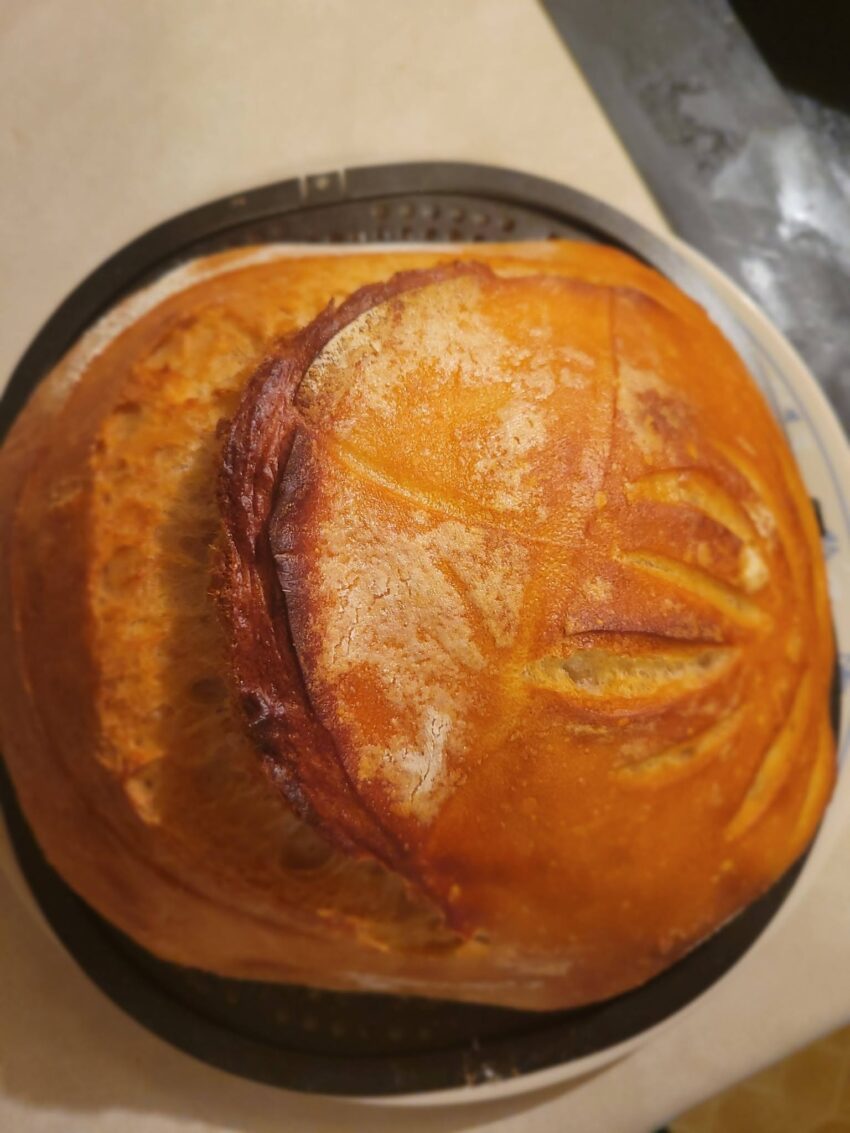
This sourdough bread recipe creates a crusty artisan loaf with a chewy crumb and deep tangy flavor. Made with natural fermentation, it’s perfect for beginners and experienced bakers alike.
Sourdough Bread
Sourdough bread is one of the oldest and most flavorful types of bread, made using a naturally fermented starter instead of commercial yeast. The long fermentation process gives it a distinct tangy taste, airy texture, and beautifully crisp crust.
While it takes time, the process is simple and deeply rewarding. Once you master it, homemade sourdough becomes a kitchen staple.
Why You’ll Love This Recipe
- Naturally fermented (no commercial yeast)
- Crispy crust with soft, airy interior
- Deep, tangy flavor
- Simple ingredients
- Highly customizable
- Great for sandwiches and toast
Recipe Information
Prep Time: 30 minutes
Fermentation Time: 8–12 hours (overnight bulk rise)
Proofing Time: 2–4 hours
Bake Time: 40–45 minutes
Total Time: About 24 hours
Yield: 1 large loaf
Ingredients
- 1 cup (200g) active sourdough starter
- 1½ cups (350ml) warm water
- 4 cups (500g) bread flour
- 1½ teaspoons salt
Equipment Needed
- Large mixing bowl
- Dutch oven or heavy baking pot
- Kitchen scale (recommended)
- Bench scraper
- Clean towel or proofing basket (banneton)
Step-by-Step Directions
Step 1: Activate the Starter
Make sure your sourdough starter is:
- Bubbly
- Active
- Doubled in size after feeding
Use it at peak activity for best rise.
Step 2: Mix the Dough
In a large bowl, combine:
- Active starter
- Warm water
Stir to dissolve.
Add flour and mix until a shaggy dough forms.
Cover and let rest for 30–45 minutes (this is called autolyse).
Step 3: Add Salt
Sprinkle salt over the dough.
Mix by hand until fully incorporated.
The dough will feel sticky at first but will strengthen over time.
Step 4: Bulk Fermentation
Cover the dough and let it rise at room temperature for 8–12 hours.
Every 30–60 minutes for the first 2–3 hours, perform stretch and folds:
- Pull dough up and fold over itself
- Rotate bowl and repeat
This builds gluten strength.
Step 5: Shape the Dough
Turn dough onto a lightly floured surface.
Gently shape into a round or oval loaf.
Let rest for 15–20 minutes.
Shape again tightly into final form.
Step 6: Final Proof
Place dough in a floured proofing basket or bowl lined with a towel.
Cover and let rise for 2–4 hours at room temperature or overnight in the refrigerator.
Step 7: Preheat Oven
Place Dutch oven inside oven.
Preheat to 450°F (230°C) for at least 30 minutes.
Step 8: Score the Dough
Carefully transfer dough onto parchment paper.
Use a sharp knife or lame to score the top.
This allows steam to escape and controls expansion.
Step 9: Bake
Place dough into hot Dutch oven.
Cover and bake for 20 minutes.
Remove lid and bake for another 20–25 minutes until deep golden brown.
Step 10: Cool Completely
Remove bread and cool on a wire rack for at least 1 hour before slicing.
This step is essential for proper texture.
Serving Suggestions
Enjoy sourdough bread with:
- Butter or olive oil
- Soups and stews
- Sandwich fillings
- Avocado toast
- Cheese and charcuterie boards
- Jam or honey
Storage
Room Temperature
Store in a paper bag or bread box for up to 3 days.
Freezer
Slice and freeze for up to 3 months.
Toast directly from frozen.
Tips for Success
- Use a strong, active starter for best rise
- Don’t rush fermentation—time builds flavor
- Use a Dutch oven for best crust development
- Let bread cool fully before slicing
- Weigh ingredients for consistent results
Final Thoughts
Sourdough bread is a rewarding baking project that combines patience, technique, and natural fermentation to create a truly artisan loaf. With its crisp crust and soft, tangy interior, it’s a timeless bread that’s worth every step of the process.