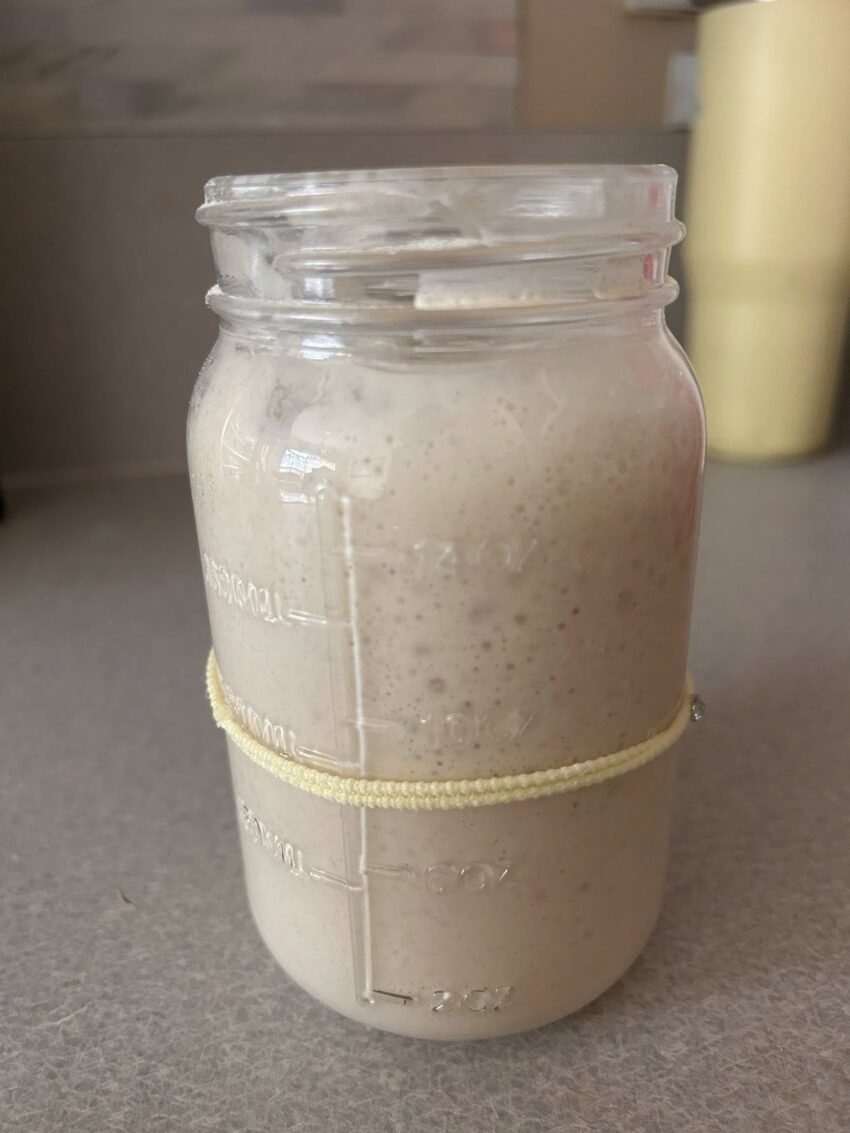
This sourdough starter guide shows how to create, feed, and maintain a natural wild yeast starter from scratch. Perfect for baking sourdough bread, pizza dough, and artisan recipes.
Sourdough Starter
A sourdough starter is a living mixture of flour and water that captures wild yeast and beneficial bacteria from the environment. This natural fermentation is what gives sourdough bread its signature tangy flavor, airy texture, and crisp crust—without using commercial yeast.
Once established, a sourdough starter can last for years with proper care and regular feeding.
Why You’ll Love Making a Starter
- No commercial yeast needed
- Natural fermentation process
- Long-lasting (can be kept for years)
- Enhances flavor and texture of baked goods
- Used for bread, pancakes, pizza, and more
- Cost-effective and sustainable
What You Need
- All-purpose flour or whole wheat flour
- Filtered or non-chlorinated water
- Glass jar or container
- Spoon or spatula
- Kitchen scale (optional but helpful)
Day-by-Day Instructions (7 Days)
Day 1: Start the Mixture
In a clean jar, mix:
- ½ cup flour
- ¼ cup water
Stir until no dry flour remains. Cover loosely (do not seal tightly).
Let sit at room temperature for 24 hours.
Day 2: First Signs
You may or may not see bubbles yet.
Discard half of the mixture and feed again:
- ½ cup flour
- ¼ cup water
Mix well and rest for 24 hours.
Day 3–4: Fermentation Begins
You should start seeing bubbles and a slightly sour smell.
Each day:
- Discard half
- Feed with ½ cup flour + ¼ cup water
Day 5–6: Active Growth
The starter should:
- Rise after feeding
- Become bubbly and airy
- Smell tangy but pleasant
Continue daily feeding.
Day 7: Starter Ready Test
Your starter is ready when it:
- Doubles in size within 4–6 hours after feeding
- Has many bubbles
- Smells pleasantly sour and yeasty
How to Maintain Your Starter
Daily (Room Temperature Use)
- Feed once every 24 hours
- Keep in a loosely covered jar
Refrigerator Storage (Less Frequent Baking)
- Feed once per week
- Store in a sealed container
- Bring to room temperature before baking
Feeding Ratio (Easy Method)
- Equal parts flour and water (by volume or weight)
- Example: ½ cup flour + ¼ cup water
Common Problems & Fixes
No bubbles
- Use whole wheat flour for faster fermentation
- Keep in a warmer spot
Bad smell
- Mild sour smell is normal
- Discard and refresh if it smells rotten
Not rising
- Feed more consistently
- Make sure water is not chlorinated
How to Use Your Starter
Once active, use it for:
- Sourdough bread
- Pancakes and waffles
- Pizza dough
- Crackers
- Muffins and cakes
Tips for Success
- Be consistent with feeding
- Use clean utensils
- Keep temperature warm (70–75°F / 21–24°C ideal)
- Don’t rush the process
- Watch for growth, not just time
Final Thoughts
A sourdough starter is the heart of naturally leavened baking. Once established, it becomes a living kitchen ingredient that can be used endlessly for baking flavorful breads and other recipes. With simple flour, water, and patience, you can build a starter that lasts for years.