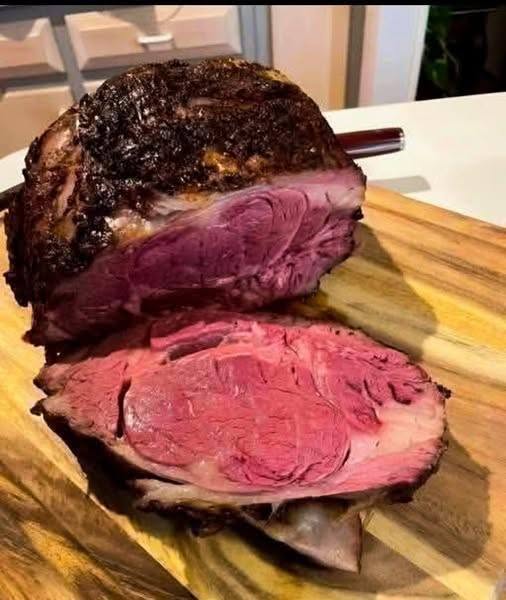
Learn how to cook a perfectly juicy prime rib roast with a flavorful crust using a simple oven method. Step-by-step instructions, seasoning guide, and carving tips included.
A prime rib roast is one of the most luxurious and flavorful beef cuts you can prepare at home. When cooked correctly, it delivers a crisp, seasoned crust on the outside and a tender, juicy, medium-rare center.
This guide walks you through the full process from seasoning to roasting and resting.
Ingredients
Main
- 1 standing rib roast (3–6 ribs, about 2.5–5 kg depending on servings)
Seasoning Rub
- 2–3 tablespoons kosher salt
- 1–2 tablespoons black pepper (freshly ground)
- 1 tablespoon garlic powder (or 6–8 minced garlic cloves)
- 1 tablespoon fresh rosemary (or 1 teaspoon dried)
- 1 tablespoon fresh thyme (or 1 teaspoon dried)
- 2–3 tablespoons olive oil
Optional
- Dijon mustard (for coating before seasoning)
- Butter (for extra richness)
Step 1: Bring the Meat to Room Temperature
- Remove the prime rib from the refrigerator.
- Let it sit uncovered for 2–3 hours.
- This ensures even cooking from edge to center.
Step 2: Prepare the Roast
- Pat the meat dry with paper towels.
- If your butcher hasn’t removed the bones, you can cook it bone-in for more flavor.
- Optional: Tie the roast with butcher’s twine for even shape.
Step 3: Season Generously
- Rub the entire roast with olive oil or Dijon mustard.
- Mix salt, pepper, garlic, rosemary, and thyme.
- Coat the roast thoroughly on all sides.
- Press seasoning into the surface so it sticks well.
Tip: Seasoning ahead of time (overnight in the fridge) enhances flavor significantly.
Step 4: Preheat and Prepare Oven
- Preheat oven to 230°C (450°F).
- Place roast on a rack inside a roasting pan.
- Insert a meat thermometer into the thickest part (avoid bone).
Step 5: High-Heat Roasting (Crust Formation)
- Roast at 230°C (450°F) for 20–25 minutes.
- This creates a flavorful browned crust.
Step 6: Slow Roasting (Even Cooking)
- Reduce oven temperature to 135°C (275°F).
- Continue roasting until desired doneness:
- Rare: 48–50°C internal temperature
- Medium rare: 52–54°C
- Medium: 57–60°C
Approximate cooking time:
- 15–20 minutes per 500 g (varies by oven and size)
Step 7: Resting (Very Important)
- Remove roast when it is 2–3°C below target temperature.
- Cover loosely with foil.
- Rest for 20–30 minutes.
This allows juices to redistribute, keeping the meat tender.
Step 8: Carving
- Remove twine and bones (if attached separately).
- Slice against the grain.
- Cut into thick or thin slices based on preference.
Serving Suggestions
Prime rib pairs well with:
- Mashed potatoes
- Roasted vegetables
- Yorkshire pudding
- Horseradish sauce
- Au jus (natural pan drippings sauce)
Simple Au Jus (Optional)
- Pour drippings from roasting pan into a saucepan.
- Add 1 cup beef broth.
- Simmer for 5–10 minutes.
- Season with salt and pepper.
Tips for Best Results
- Use a meat thermometer for accuracy.
- Do not skip resting time.
- Dry-aging in the fridge for 24 hours (uncovered) improves crust.
- Avoid overcooking; prime rib is best medium-rare.
Conclusion
A perfectly cooked prime rib roast depends on simple but precise steps: proper seasoning, controlled oven temperature, and resting time. When done correctly, it delivers a rich, buttery texture and restaurant-quality flavor at home.