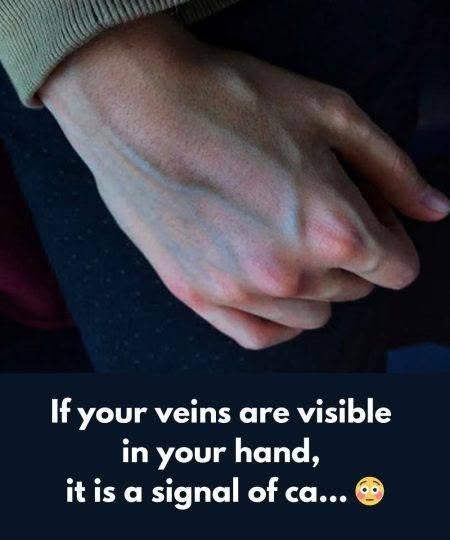
When you look down at your hands, those visible blue or greenish veins might seem like a simple sign of thin skin, low body fat, or even just aging. But in certain medical contexts, changes in how veins appear—especially when combined with other symptoms—can sometimes offer indirect clues about your liver health.
It’s important to be clear from the start: hand veins alone are not a reliable diagnostic tool for liver disease. However, understanding how liver problems affect circulation and the skin can help you recognize when something more serious may be going on.
Why Hand Veins Become Visible
Visible veins on the hands are usually normal and influenced by:
- Low body fat
- Aging (skin becomes thinner)
- Heat or exercise (veins dilate)
- Genetics
- Dehydration
In most cases, they are completely harmless.
But the liver enters the picture because it plays a central role in blood flow regulation, protein production, and hormone metabolism.
The Liver’s Role in Circulation
Your liver is responsible for:
- Filtering toxins from the blood
- Producing proteins like albumin that maintain blood pressure balance
- Regulating clotting factors
- Managing hormone levels that affect blood vessel tone
When the liver is damaged—especially in advanced conditions like Cirrhosis—blood flow through the liver can become restricted. This can lead to a backup of pressure in the portal circulation, a condition called portal hypertension.
While this mainly affects abdominal and esophageal blood vessels, it can also contribute to more generalized vascular changes in the body.
Can Liver Disease Change Hand Veins?
On their own, hand veins do NOT directly indicate liver disease. However, in advanced liver conditions, you might notice indirect vascular and skin-related signs such as:
1. Spider Angiomas
Small, spider-like red blood vessels on the skin, often on the hands, face, or chest.
These are linked to elevated estrogen levels, which the liver normally helps break down.
2. Palmar Erythema
A redness of the palms caused by changes in blood vessel dilation.
This is also associated with hormone imbalance in chronic liver disease.
3. Thinning Skin and Prominent Veins
In long-term liver disease, poor nutrition and protein imbalance can lead to:
- Loss of subcutaneous fat
- Thinner skin
- More visible veins on hands and arms
This is not specific, but it can appear in advanced stages.
4. General Vascular Changes
In severe liver dysfunction, blood circulation can become more “high-output,” meaning vessels may appear more prominent due to altered blood flow dynamics.
Important: Veins Alone Are NOT a Liver Test
It’s critical to emphasize:
- Prominent hand veins are usually normal
- Liver disease cannot be diagnosed by vein appearance alone
- Many people with liver disease have no visible hand changes
Doctors rely on:
- Blood tests (ALT, AST, bilirubin)
- Imaging (ultrasound, CT scan)
- Physical exam findings
- Symptoms like jaundice, swelling, fatigue
Warning Signs of Liver Problems
If visible veins are accompanied by other symptoms, it may be worth investigating further:
- Yellowing of skin or eyes (jaundice)
- Persistent fatigue
- Abdominal swelling
- Easy bruising
- Dark urine or pale stools
- Itchy skin
- Loss of appetite
These are far more meaningful indicators than hand vein visibility alone.
When Should You Be Concerned?
You don’t need to worry about your liver just because your veins are visible.
But you should consider medical evaluation if:
- Veins appear suddenly more prominent with other symptoms
- You notice skin changes like redness or spider-like vessels
- You have risk factors such as alcohol overuse, hepatitis infection, or metabolic disease
- You experience ongoing fatigue or jaundice
The Bottom Line
Visible veins on your hands are usually a normal part of anatomy, not a hidden sign of liver disease. However, in advanced conditions like cirrhosis, the liver’s failure to regulate hormones and blood flow can contribute to broader vascular and skin changes.
Think of hand veins as a background feature, not a diagnostic signal. The liver speaks more clearly through systemic symptoms and medical tests than through the surface of your hands.
If you want, I can also break down early vs late signs of liver disease, or explain what your liver blood test results actually mean in simple terms.