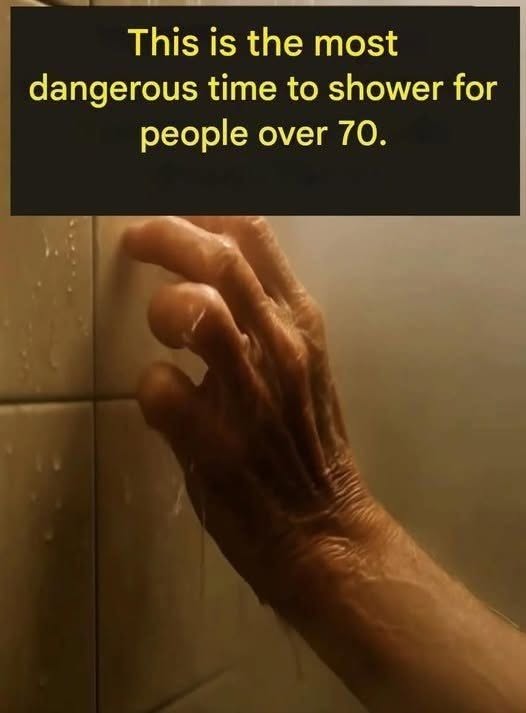
You may have seen dramatic claims online suggesting there is a “riskiest time to shower after 70,” often ending with a tease like “find out in the first comment.” While these posts grab attention, they oversimplify something that is actually more about physiology, environment, and daily health patterns than a specific hour of the day.
The truth is: there is no medically recognized single “dangerous time” to shower for older adults. However, there are certain conditions and time-related situations when the risk of dizziness, imbalance, or falls can increase.
Understanding these factors is important because bathroom-related falls are one of the most common household injuries in older adults—and most are preventable.
Why Showering Can Become Riskier With Age
As we age, several normal changes in the body can affect safety in the bathroom:
- Blood pressure regulation becomes slower
- Balance and reflexes may weaken
- Muscle strength decreases
- Medication side effects become more common
- Sensitivity to heat increases
When these factors combine with a slippery, wet environment, even a small moment of dizziness can become dangerous.
So, Is There a “Riskiest Time”?
Not exactly—but there are higher-risk situations that often happen at certain times of day.
1. Early Morning Right After Waking Up
For many older adults, mornings can be one of the more sensitive times:
- Blood pressure is naturally lower after sleep
- The body is still transitioning from rest to activity
- Sudden standing + hot water can trigger dizziness
This is especially relevant for people with orthostatic hypotension (a drop in blood pressure when standing up quickly).
A hot shower right after getting out of bed may cause:
- Lightheadedness
- Blurred vision
- A feeling of weakness or “nearly fainting”
2. Late Evening When Fatigue Sets In
Evening showers are common—but they can carry risk when the body is tired:
- Reaction time is slower
- Balance control is reduced
- Muscle fatigue makes slips more likely
- Awareness of surroundings may be slightly dulled
If someone already feels sleepy or weak, a shower can become a setting where a small misstep matters more than it normally would.
3. After Heavy Meals
Showering immediately after eating a large meal can sometimes increase discomfort or dizziness:
- Blood flow is directed toward digestion
- The body may feel heavier or sluggish
- Combined with warm water, this can lower blood pressure slightly
While not dangerous for everyone, it can contribute to a “lightheaded” feeling in some older adults.
4. After Taking Certain Medications
Many older adults take medications that affect balance or blood pressure, such as:
- Blood pressure medications
- Diuretics (“water pills”)
- Some heart medications
- Certain sedatives or sleep aids
Depending on timing, these can increase the chance of:
- Dizziness when standing
- Sudden drops in blood pressure
- Reduced alertness
The Real Culprit Is Often the Shower Itself
More than timing, the environment inside the bathroom is usually the bigger risk factor:
- Wet, slippery floors
- No grab bars for support
- Standing for too long
- Hot water causing blood vessel dilation
- Poor lighting
- Getting up too quickly after sitting or bending
Even a healthy older adult can be vulnerable under these conditions.
Warning Signs to Take Seriously
If any of the following happen during or after showering, it’s worth paying attention:
- Frequent dizziness or near-fainting
- Sudden weakness in the legs
- Feeling “cold sweat” or nausea
- Unsteadiness when stepping out of the shower
These can signal blood pressure issues, dehydration, or medication side effects that should be discussed with a healthcare professional.
How to Make Showering Safer After 70
Simple changes can significantly reduce risk:
- Use warm (not hot) water
- Install grab bars in the shower area
- Use non-slip mats inside and outside the tub
- Consider a shower chair for stability
- Take showers slowly—no rushing
- Sit down if feeling dizzy at any point
- Keep bathroom well-lit
- Avoid locking the door if fall risk is present
Final Thoughts
The idea of a “riskiest time to shower after 70” is more social media hook than medical reality. Risk doesn’t come from the clock—it comes from how the body is feeling at that moment and how safe the environment is.
For older adults, the safest approach is not about choosing a perfect time of day, but about:
- Listening to the body
- Managing medications properly
- Creating a safer bathroom environment
- Avoiding sudden physical strain or heat exposure
In other words, it’s not when you shower that matters most—it’s how you do it.