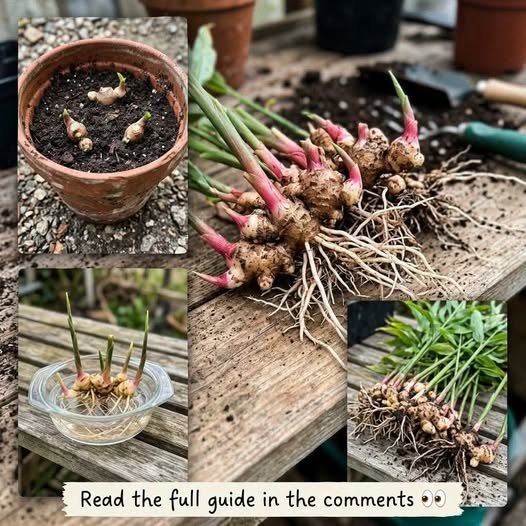
Imagine stepping into your garden—or even onto your balcony—and harvesting fresh ginger whenever you need it. Even better, with the right care and a little patience, you might be rewarded with ginger’s beautiful, hidden blooms that many people never get to see.
The good news? Growing ginger at home is surprisingly easy, even for beginners.
Why Grow Your Own Ginger?
Fresh ginger is a favorite in kitchens around the world, adding bold flavor to teas, soups, stir-fries, and baked goods. Beyond its culinary uses, ginger has a long history in traditional medicine and has been studied for potential benefits such as helping relieve nausea and supporting digestion.
Growing your own means you’ll always have a fresh supply while avoiding unnecessary packaging and trips to the store.
Choosing the Right Ginger
Start with a healthy, firm ginger rhizome from a grocery store or garden center. Look for pieces with visible “eyes” or small buds, similar to those found on potatoes. These buds are where new shoots will emerge.
If your ginger is large, you can cut it into smaller sections, making sure each piece has at least one healthy bud. Let the cut surfaces dry for a day before planting to help reduce the chance of rot.
Planting Ginger
Ginger grows best in wide, shallow containers because its rhizomes spread horizontally beneath the soil.
Use loose, well-draining potting mix rich in organic matter. Plant the rhizome about 1 to 2 inches (2.5–5 cm) below the soil surface with the buds facing upward. Water gently until the soil is evenly moist but not waterlogged.
Give It the Right Conditions
Ginger thrives in warm, humid environments.
For the best results:
- Place it in bright, indirect sunlight or partial shade.
- Keep the soil consistently moist but not soggy.
- Protect it from cold temperatures and frost.
- Feed it occasionally with a balanced fertilizer or compost during the growing season.
Patience is key. Ginger grows slowly, but healthy green shoots should begin appearing within a few weeks.
When Can You Harvest?
Young ginger can often be harvested after about 4 to 6 months if you want a milder flavor and tender texture. For mature rhizomes, allow the plant to grow for 8 to 10 months, or until the leaves naturally begin to yellow and die back.
You don’t have to harvest the entire plant. Carefully dig around the edges and remove only what you need, leaving the rest to continue growing.
Will It Flower?
Many people don’t realize that ginger can produce striking flowers. While flowering is less common in containers and may take several years, mature, healthy plants grown in warm, stable conditions can reward patient gardeners with unique cone-like blooms.
Even if your plant never flowers, its lush green foliage and steady supply of fresh rhizomes make it well worth growing.
Simple Care Tips
- Water regularly, but avoid standing water.
- Increase humidity if growing indoors.
- Remove dead leaves to keep the plant healthy.
- Repot if the container becomes overcrowded.
- Bring potted plants indoors if temperatures become too cold.
A Rewarding Plant for Every Home
Growing ginger is more than just a gardening project—it’s a satisfying way to produce one of the world’s most versatile spices right at home. With a little warmth, moisture, and patience, you’ll enjoy fresh harvests for cooking, soothing teas, and perhaps even the rare beauty of ginger’s hidden flowers.
Sometimes the most rewarding garden begins with a single piece of ginger from your kitchen.