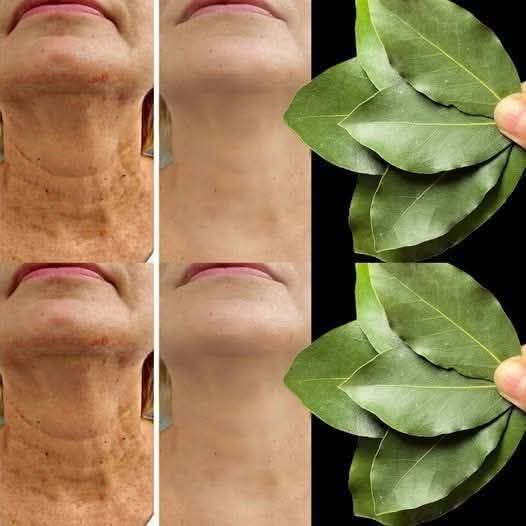
Claims that bay leaf is “100,000 times stronger than Botox” frequently appear on social media, health blogs, and promotional content. However, there is no credible scientific evidence showing that bay leaf is 100,000 times stronger than Botox for reducing wrinkles, relaxing facial muscles, or producing cosmetic effects similar to Botox.
To understand why this claim is misleading, it’s important to examine what Botox actually does, what bay leaf contains, and how the two compare.
What Is Botox?
Botox is a purified form of botulinum toxin used in cosmetic and medical treatments.
When injected into specific muscles, Botox temporarily blocks nerve signals that tell those muscles to contract. As the muscles relax, wrinkles caused by repeated facial movements—such as forehead lines and crow’s feet—become less visible.
Botox has been extensively studied in clinical trials and is approved by regulatory agencies around the world for various medical and cosmetic uses.
Its effects are:
- Targeted
- Measurable
- Temporary
- Clinically documented
What Is Bay Leaf?
Bay leaf comes from the bay laurel tree.
Bay leaves contain numerous natural compounds, including:
- Polyphenols
- Flavonoids
- Tannins
- Essential oils
- Antioxidants
Researchers have investigated bay leaf for potential properties such as:
- Antioxidant activity
- Anti-inflammatory effects
- Antimicrobial activity
- Blood sugar regulation (preliminary studies)
These properties may have health benefits, but they are very different from the mechanism of Botox.
Where Does the “100,000 Times Stronger” Claim Come From?
There are several possibilities:
Misinterpretation of Antioxidant Research
Some plant compounds are extremely potent antioxidants in laboratory experiments. A study might find that a specific molecule extracted from a plant shows strong antioxidant activity compared with another substance under test-tube conditions.
Over time, marketing content can exaggerate these findings into statements such as:
- “Natural Botox”
- “Stronger than Botox”
- “100,000 times more powerful”
These statements often lose the original scientific context.
Marketing Language
Many beauty products use dramatic comparisons to attract attention.
Phrases such as:
- “Better than Botox”
- “Natural Botox alternative”
- “Botox in a leaf”
are usually marketing descriptions rather than scientifically verified conclusions.
Confusion Between Different Effects
A homemade bay leaf mask might temporarily make skin appear:
- Tighter
- Smoother
- Less oily
This temporary cosmetic effect is not equivalent to Botox’s muscle-relaxing action.
Why Bay Leaf Cannot Be Directly Compared to Botox
The comparison is problematic because the substances work in completely different ways.
Botox Acts on Nerves and Muscles
Botox:
- Blocks neurotransmitter release
- Prevents muscle contraction
- Reduces expression lines
- Has predictable dosing
Bay Leaf Acts Primarily Through Plant Compounds
Bay leaf:
- Provides antioxidants
- May reduce oxidative stress
- May have mild anti-inflammatory effects
- Does not block facial nerve signals
No evidence shows that applying bay leaf to the skin can reproduce Botox’s primary mechanism.
Could Bay Leaf Benefit Skin?
Possibly, but for different reasons.
The antioxidants found in bay leaf may help protect skin from damage caused by:
- Pollution
- Ultraviolet radiation
- Oxidative stress
Some skincare formulations include botanical extracts because they can:
- Support skin health
- Reduce irritation
- Improve overall appearance
However, these effects are generally subtle and occur over time.
They are not comparable to the visible wrinkle reduction achieved by Botox injections.
What Would Scientists Need to Prove the Claim?
To support a statement such as “bay leaf is 100,000 times stronger than Botox,” researchers would need:
- A clear definition of “stronger.”
- Controlled laboratory studies.
- Human clinical trials.
- Direct comparisons with Botox.
- Reproducible results from independent research groups.
Currently, such evidence does not exist.
The Scientific Verdict
The statement that bay leaf is 100,000 times stronger than Botox is not supported by established scientific evidence.
Bay leaf contains beneficial plant compounds and may contribute to skin health through antioxidant and anti-inflammatory effects. Botox, on the other hand, is a medical treatment that works by temporarily relaxing muscles through a well-understood neurological mechanism.
Rather than viewing bay leaf as a replacement for Botox, it is more accurate to think of it as a culinary herb with potentially useful bioactive compounds that may support general health and possibly skin wellness, but not as a proven equivalent—or superior alternative—to Botox.